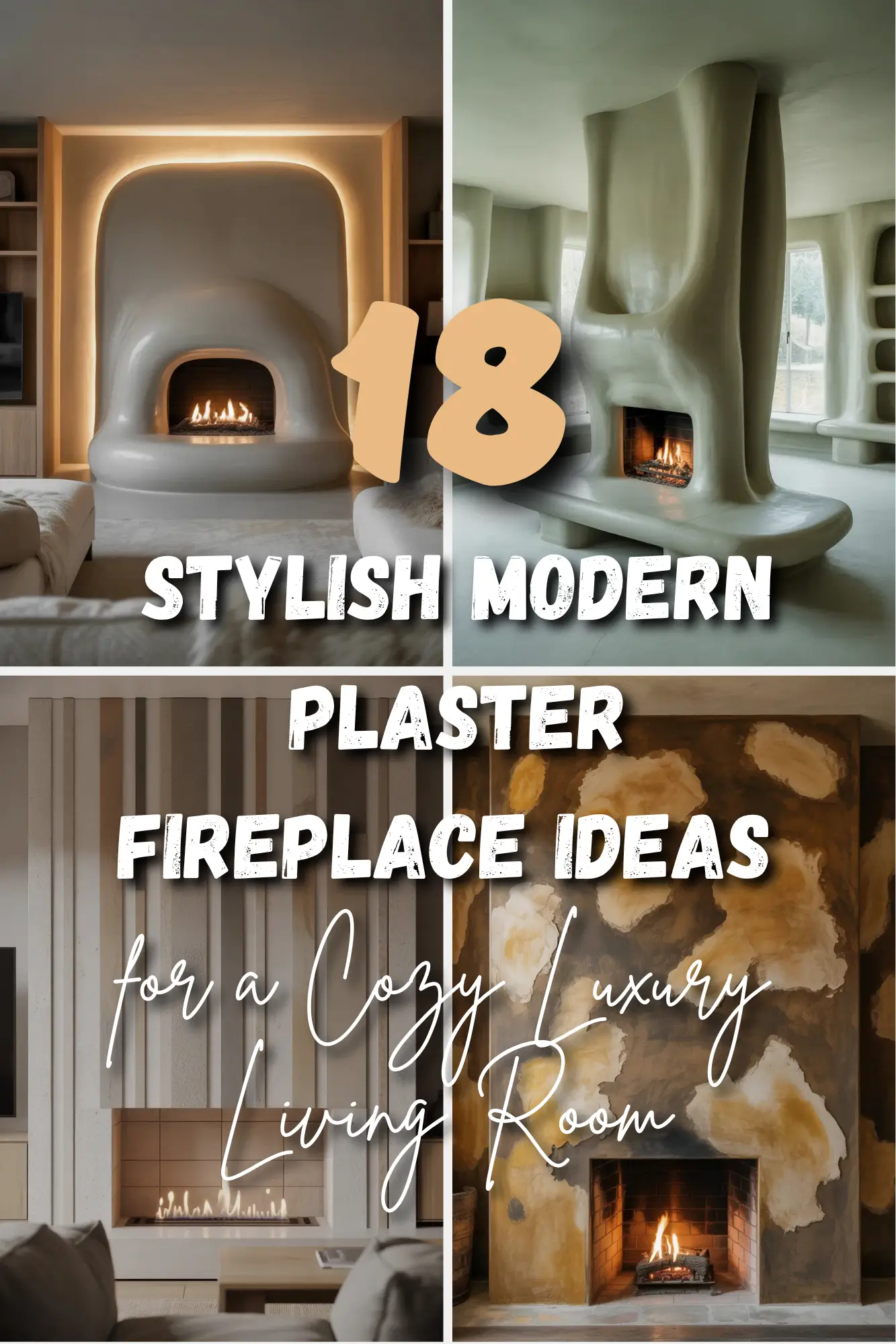
18 Stylish Modern Plaster Fireplace Ideas
A plain drywall fireplace feels like a missed chance. But a plaster one? That’s a conversation starter.
You want your living room to feel special. Not cold. Not boring. Just right. A fireplace is often the first thing people see when they walk in. So why leave it looking flat and forgotten?
Modern plaster fireplaces are having a big moment. They are not your grandma’s rough stucco walls. Today’s plaster is smooth, soft, and full of depth. It can look like old Italian villas or new Scandinavian apartments. It works with farmhouse style, boho rooms, and even ultra-modern spaces.
Plaster is also tough. It hides small cracks. It does not chip easily. And it has a natural, earthy feel that paint cannot copy. No shiny glare. No fake texture. Just a quiet, rich surface that changes slightly with the light.
In this article, you will see 18 stylish plaster fireplace ideas. Each one is different. Some are bold. Some are whisper quiet. All of them are made to turn your fireplace into the best part of your room. No fluff. Just real ideas you can actually use.
Let’s jump in.
1. Smooth White Minimalist
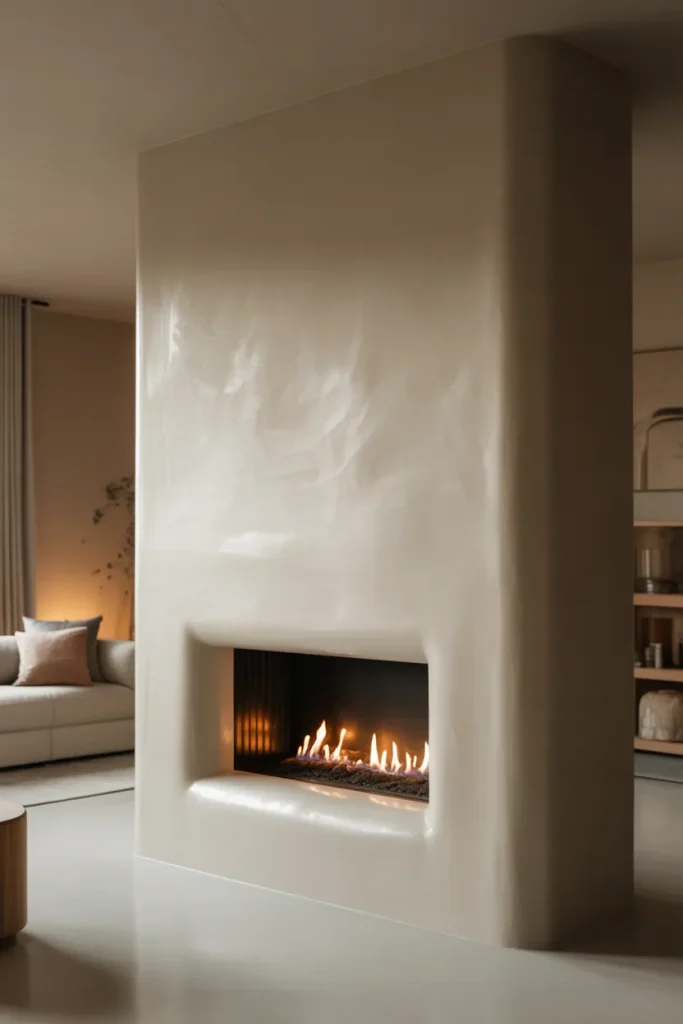
Start with the cleanest look. Smooth white plaster from top to bottom. No ledge. No extra bricks. Just a flat, seamless rectangle around the firebox.
This idea shines in small rooms because it does not fight for attention. Your eye goes straight to the flames. The plaster acts like a calm background. But look closer. White plaster is never truly white. It has tiny shifts in tone—warm near the fire, cool in the shadows.
To make it feel modern, keep the plaster edge razor thin. Half an inch thick at most. Pair it with a simple gas fire or a narrow wood burning insert. No mantel. No art above. Just the plaster and the fire.
2. Curved Corner Plaster
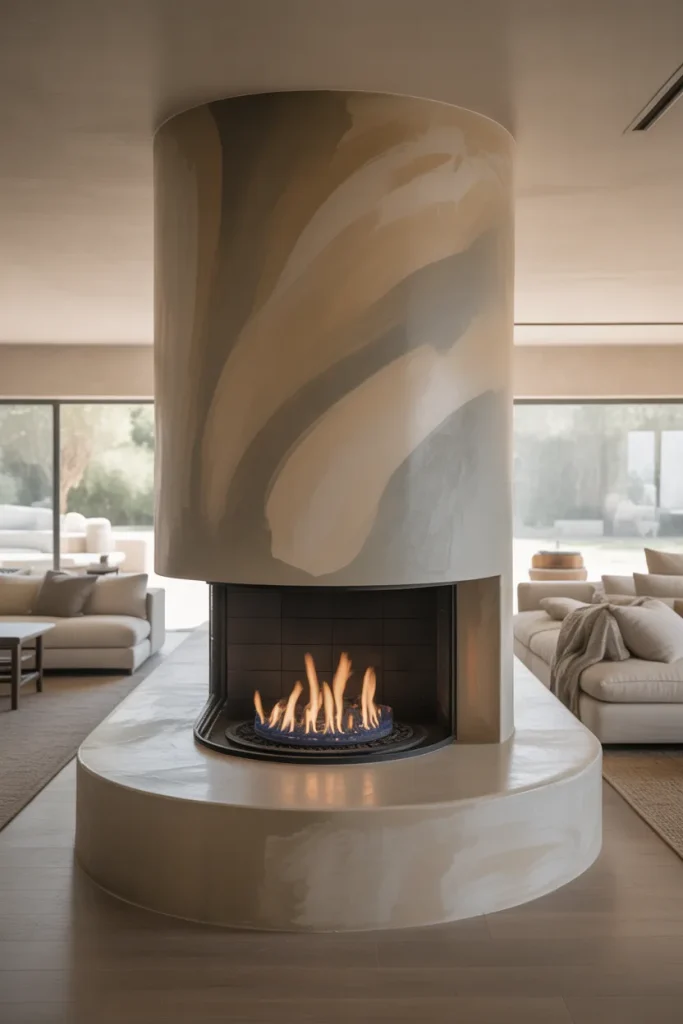
Most fireplaces are flat against one wall. Boring. A curved plaster fireplace wraps around a corner instead. It changes how you use the whole room.
The plaster here is troweled on in long, swooping strokes. The corner becomes soft and round like a river stone. You can put chairs on both sides of the fire. Suddenly, the fireplace is not at the end of the room. It is in the middle of the action.
Use a light beige or warm grey plaster. Keep the curve gentle—no sharp angles anywhere. This idea works best in open floor plans where you need to connect two living zones.
3. Venetian Plaster with Metallic Glow
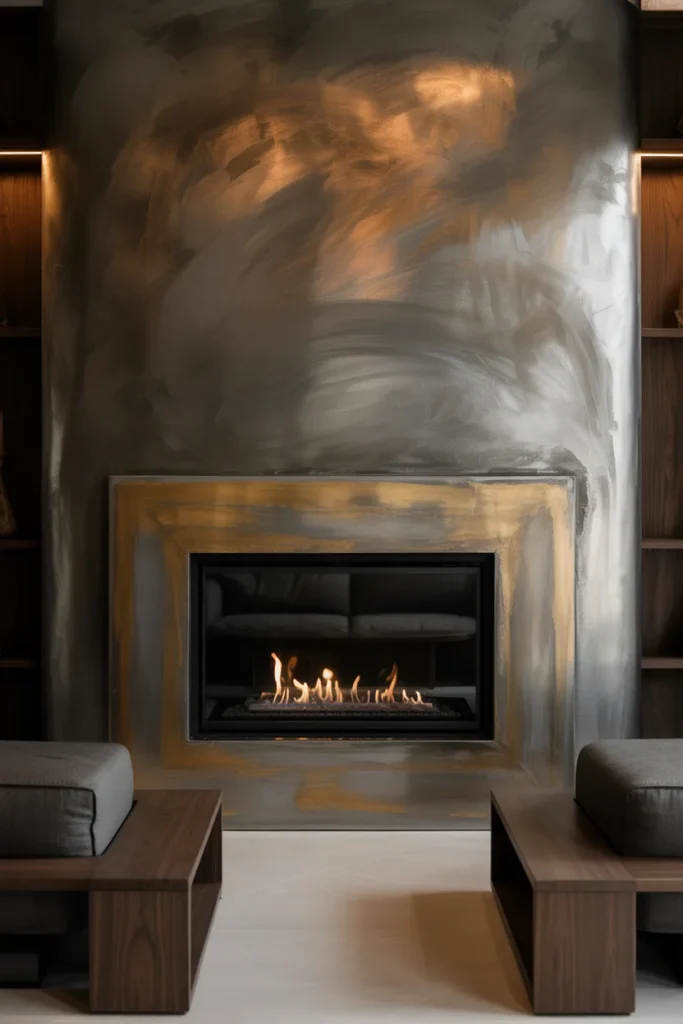
Venetian plaster is old. Really old. Romans used it. But today’s version can include a little metallic wax for a quiet shine.
Imagine a fireplace that looks like aged bronze or worn silver. Not glittery. Not shiny like glass. Just a soft glow when light hits from an angle. The rest of the time, it looks like rich, dark plaster.
Apply three thin layers of Venetian plaster. Then burnish with a flat steel trowel until it feels like polished stone. Rub on a tiny bit of metallic wax—copper, bronze, or pewter. Buff lightly.
This fireplace becomes the jewel of a formal living room or a swanky basement den. Keep furniture low and dark so the fireplace stays the star.
4. Matte Black Statement
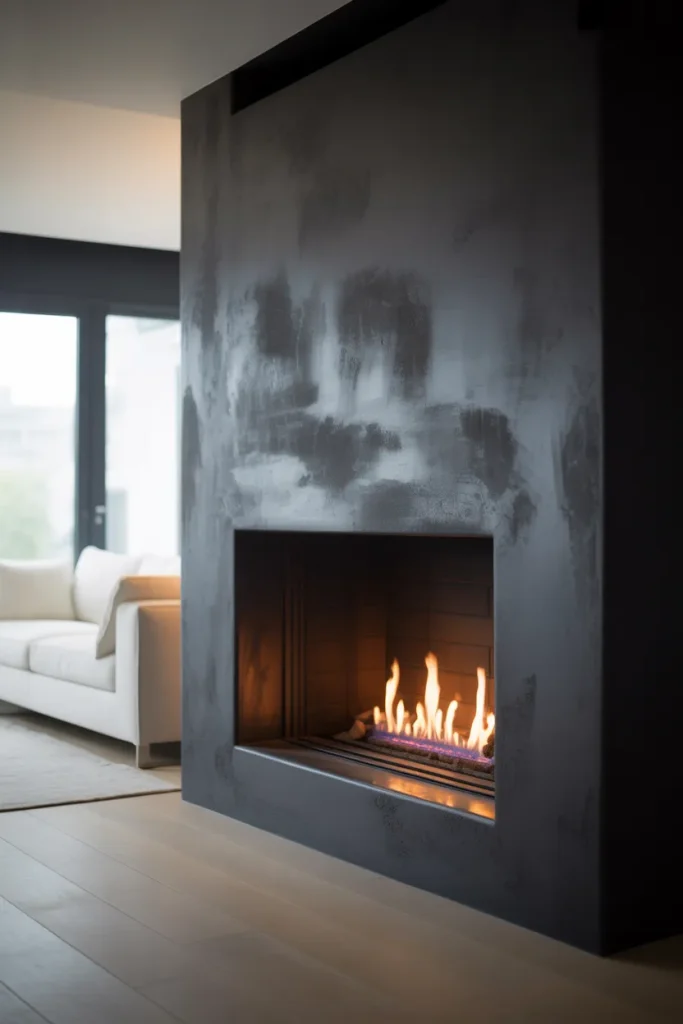
Black is not just for goths and rock stars. A matte black plaster fireplace feels dramatic but grown up. It swallows light in a cozy way.
Use a lime-based plaster tinted deep charcoal or true black. The surface should be rough to the touch, not slippery. When the fire is off, the fireplace almost disappears into a dark wall. When the fire is on, the black makes the flames look ten times brighter.
Pair with pale blonde wood floors or a white sofa. The contrast is stunning. Avoid shiny black tiles or glass. Stick to matte, chalky, dry plaster.
5. Sand-Textured Plaster for Beach Vibes
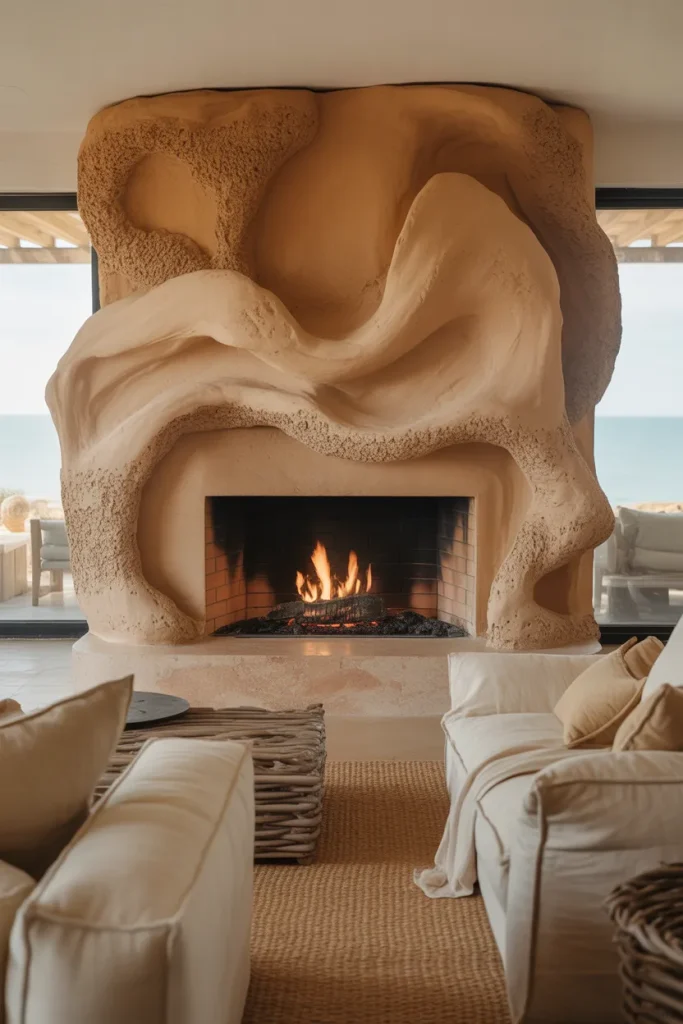
Not everyone wants smooth. A sand-textured plaster fireplace feels like sun-warmed cliffs by the sea. It is grainy. It is organic. It begs you to touch it.
Mix plaster with fine silica sand or crushed marble dust. Apply with a skipping motion using a sponge float. The result looks like dried mud from a desert canyon—but in a good way.
Use warm terracotta, pale sand, or sun-bleached clay colors. This idea pairs perfectly with linen sofas, jute rugs, and driftwood accents. No cold blues or stark whites. Just warm, earthy, beachy calm.
6. Two-Tone Plaster Split
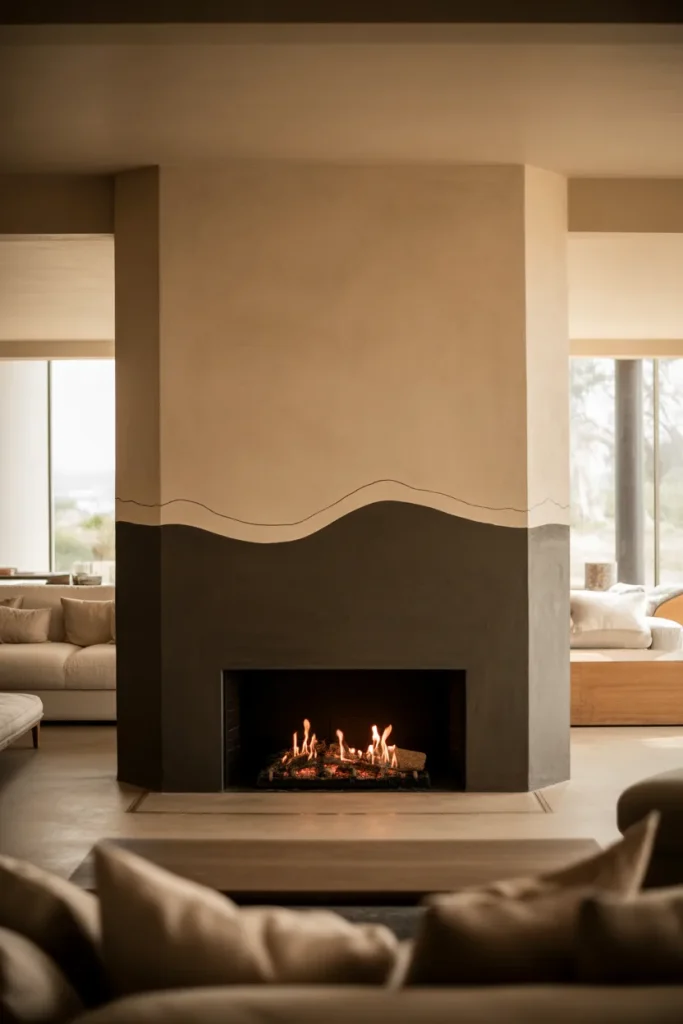
Why pick one color when two look better? A two-tone plaster fireplace splits the height right in the middle. Lower half is dark charcoal or deep brown. Upper half is soft cream or pale grey.
The line between them should be slightly wavy, not perfectly straight. That is where the plaster magic lives. You see the hand of the worker. It feels human.
This trick makes a low ceiling feel taller. The dark part anchors the room. The light part floats up toward the ceiling. Use the same plaster type on both halves so the texture matches. Only the color changes.
7. Bas-Relief Carved Plaster
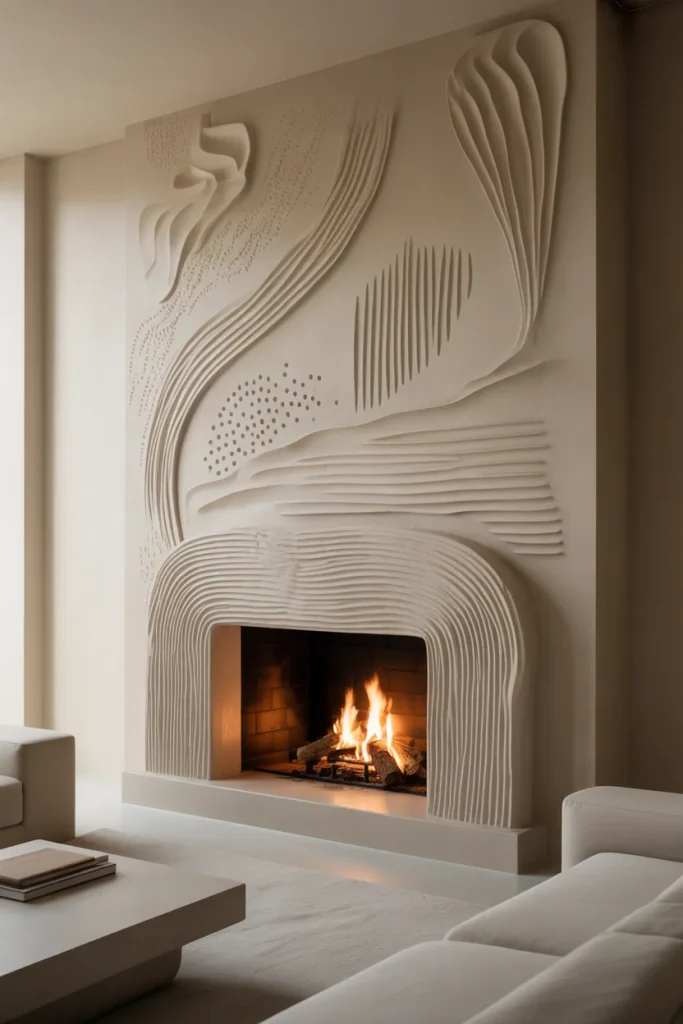
Plaster can be sculpted while it is still wet. A bas-relief fireplace has shallow shapes carved right into the surface. Think leaves, waves, or abstract lines.
You do not need to be a pro sculptor. Simple vertical grooves look amazing. Or a pattern of small dots like falling rain. The carvings catch firelight and throw soft shadows across the room.
Keep the rest of the room very simple. No busy wallpaper. No patterned rug. Let the carved plaster be the only decoration. White or light grey plaster works best so shadows show up clearly.
8. Plaster Over Brick (The Quick Update)
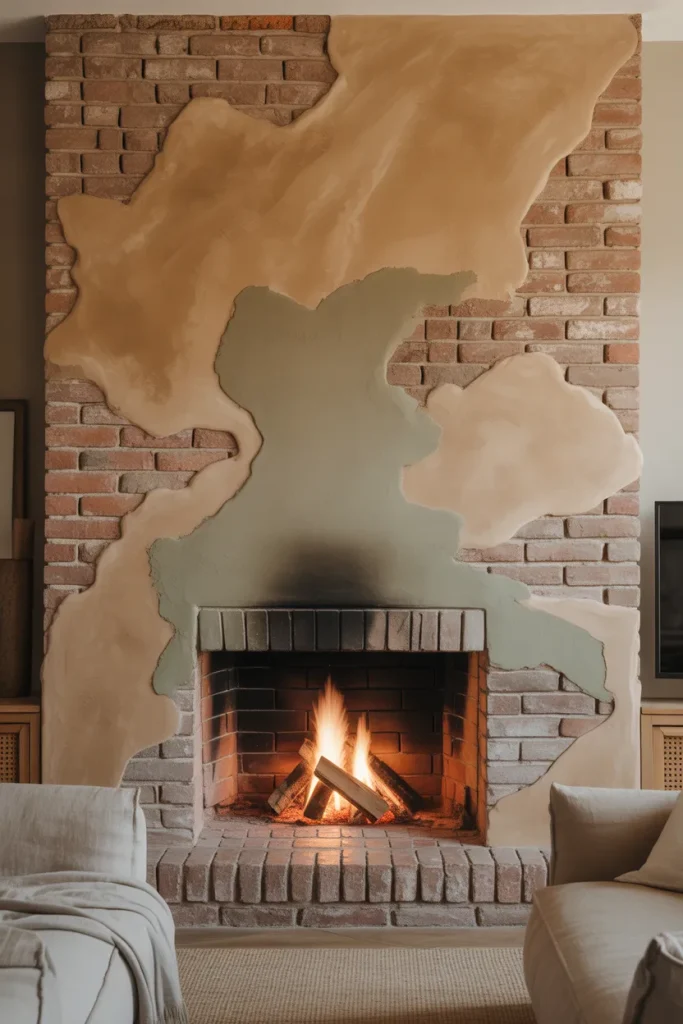
Got old red brick you hate? Do not tear it out. Plaster right over it. This is one of the fastest modern plaster fireplace ideas.
Clean the brick well. Apply a bonding agent. Then trowel on two coats of coarse plaster. Leave some brick corners peeking through for texture. The final look is rustic but tidy—like an old European farmhouse that got a gentle upgrade.
Use a warm putty color or a soft sage green. The uneven brick underneath makes the plaster surface bumpy and full of character. No two square inches look the same.
9. Extra Tall Slab Plaster
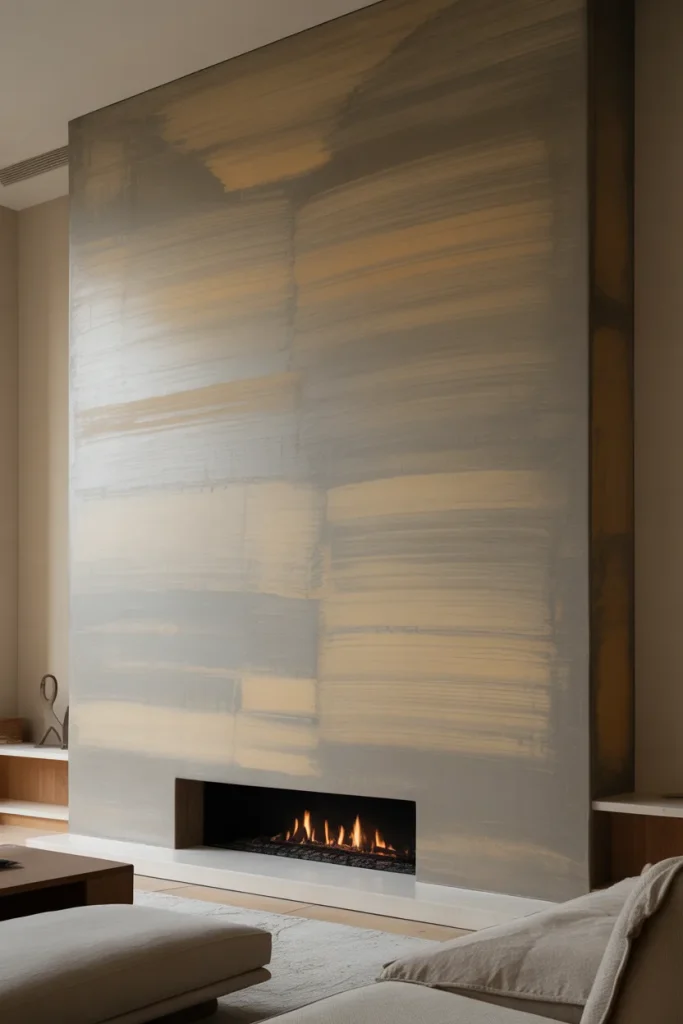
Most fireplaces stop around five feet tall. Not this one. Take your plaster all the way to the ceiling. Even better, run it up a whole wall from floor to ceiling.
The plaster acts like a single tall slab. It draws your eye up and makes the room feel much bigger. Keep the firebox low, almost sitting on the floor. The plaster above becomes a giant canvas for shadows.
Use a neutral tone like warm grey or oatmeal. No mantel. No shelves. Nothing to break that tall, clean line. This is the opposite of cluttered. It breathes.
10. Tinted Terracotta Plaster
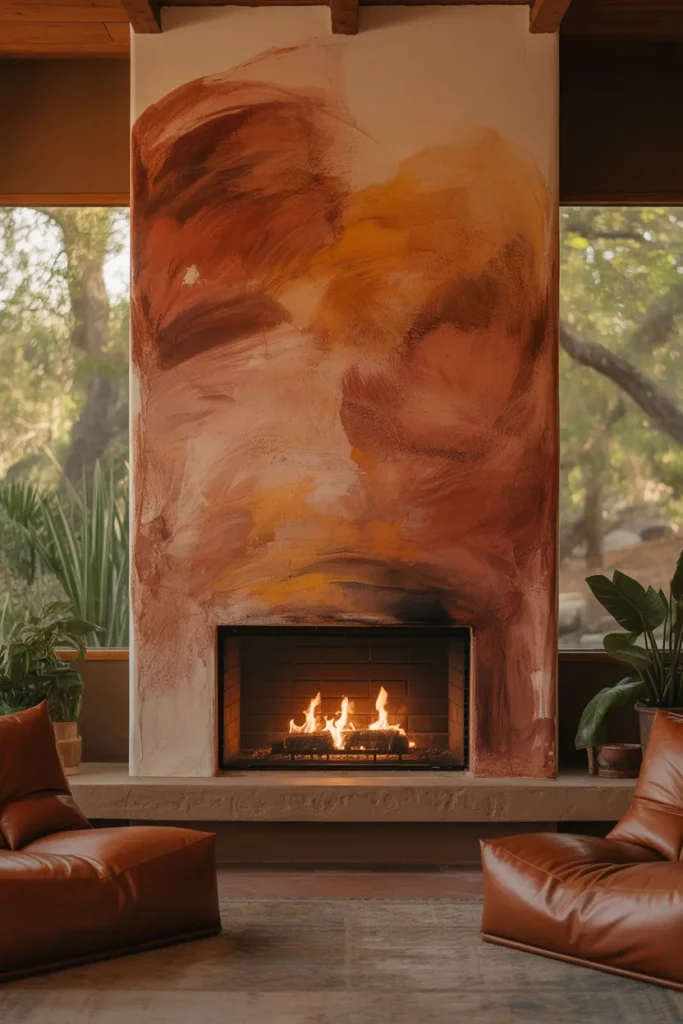
Terracotta is not just for flower pots. A terracotta-tinted plaster fireplace brings heat without a single log burning. The color itself feels warm.
Mix red iron oxide pigment into lime plaster. Aim for the shade of a new clay pot or a dusty Arizona sunset. Apply roughly so you get darker and lighter patches. The firelight will bounce off the red tones and make everyone’s skin look healthier.
Pair with olive green plants, leather chairs, and raw wood shelves. Avoid cool greys and blues. They fight the warmth.
11. Plaster with Exposed Stone Inlay
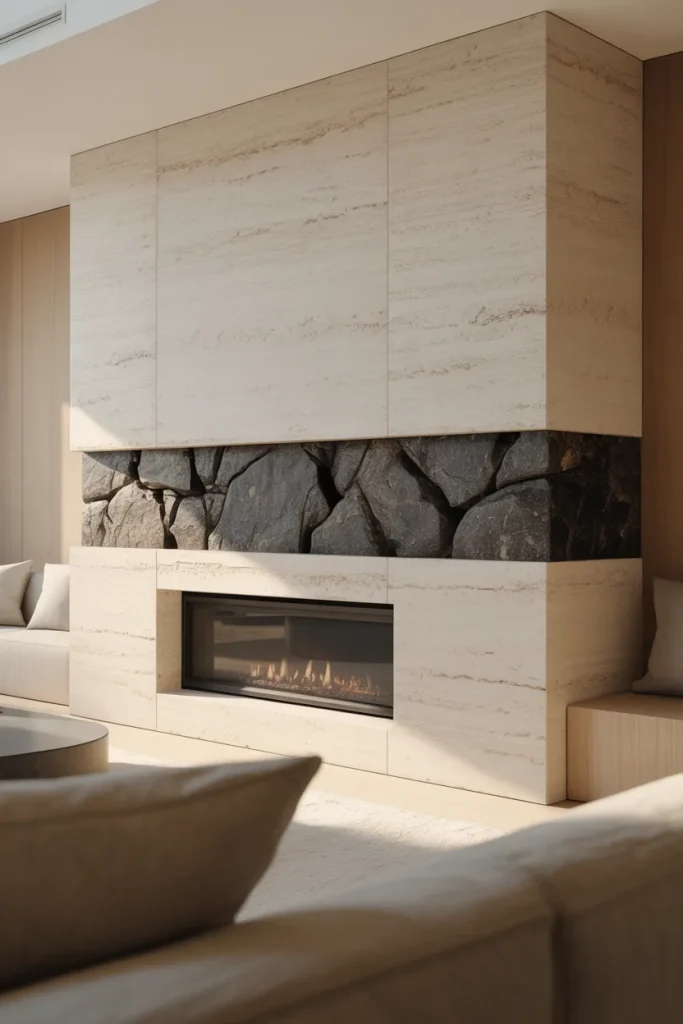
Smooth plaster feels modern. Stone feels ancient. Put them together for the best of both worlds.
Leave a band of raw stone running through the middle of your plaster fireplace. Maybe a horizontal stripe of slate or a vertical column of river rocks. The plaster surrounds the stone like a soft frame.
Use limestone plaster in a creamy white. The stone should be dark and rough—basalt or unpolished granite. The contrast between soft plaster and hard stone makes people stop and stare.
12. Wavy Organic Edge
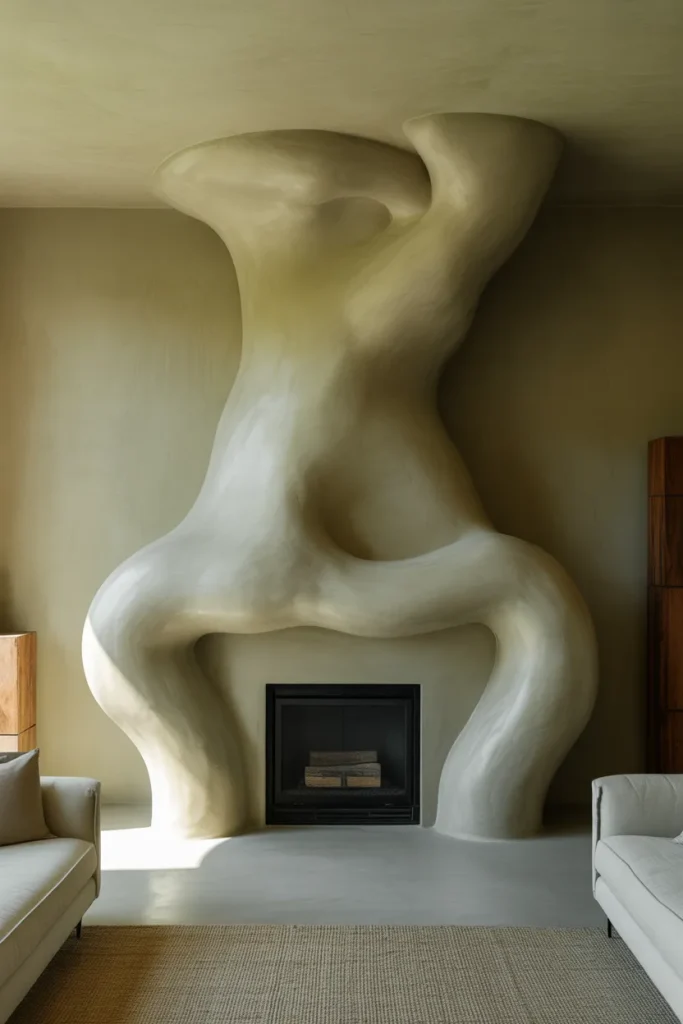
Forget straight lines. A wavy organic edge plaster fireplace has no right angles anywhere. The sides curve in and out like a freehand drawing.
This look takes skill. The plasterer works without guides or tape. They just feel the shape as they go. The final fireplace looks like it grew out of the floor, not like it was built.
Paint the plaster with a thin, watery wash of color so the highs and lows of the waves show up. Pale olive or dusty rose works well. Keep the firebox simple—a black rectangle is fine because the wavy plaster already does all the work.
13. Two-Faced Plaster (Different on Each Side)
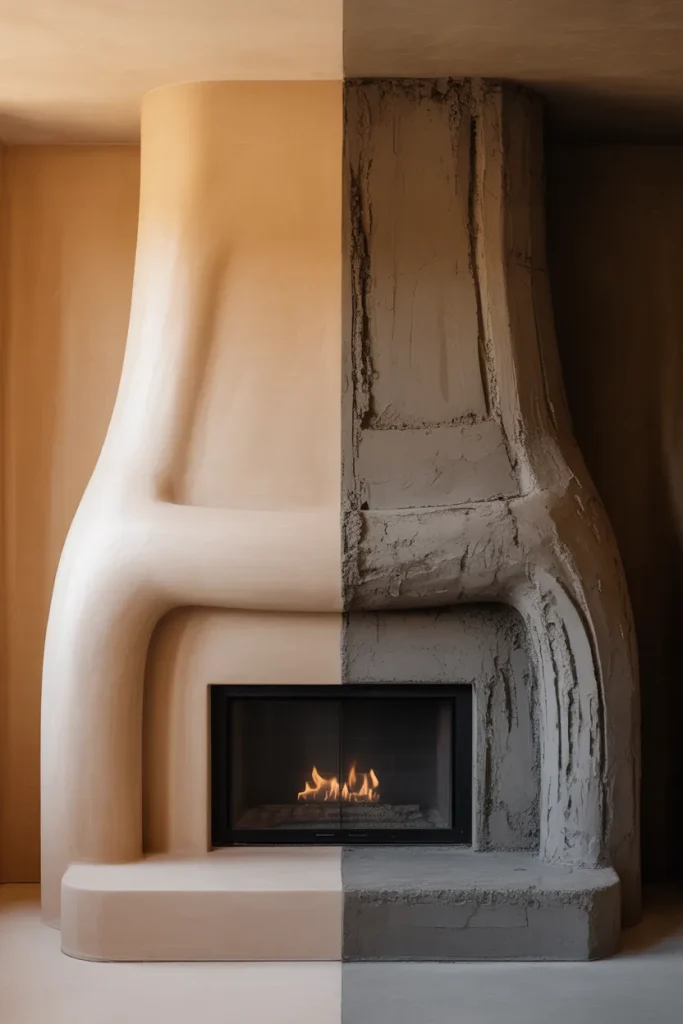
If your fireplace sticks out into the room, give each side a different plaster feel. One side smooth and pale. The other side rough and dark.
From the sofa, you see the calm smooth side. From the dining table, you see the rugged dark side. It is like having two fireplaces in one room.
Use the same base plaster type so they stay connected. Just change the trowel finish and the pigment load. This trick fools the eye and makes a small space feel more complex.
14. Plaster Niche for Firewood
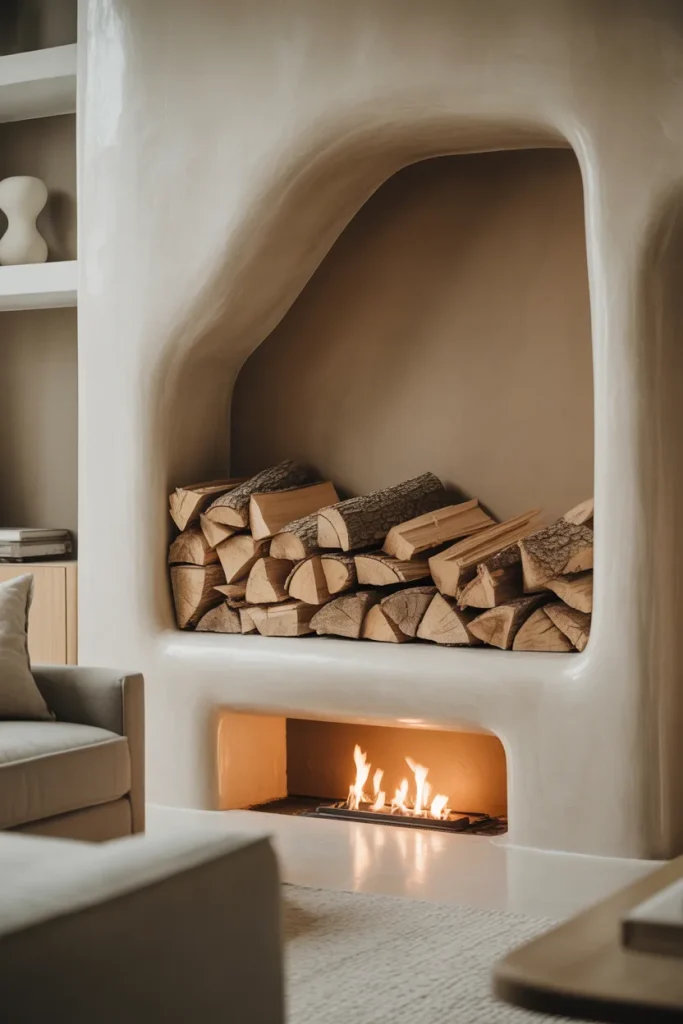
A modern plaster fireplace can include a built-in niche. Not a mantel. A deep, scooped out hollow right in the plaster wall.
Stack firewood inside the niche. The rough bark against the smooth plaster looks fantastic. Keep the niche shallow enough so the wood sticks out a little. It becomes part of the design.
Paint the niche inside a shade darker than the rest of the plaster. A warm taupe niche against a creamy plaster wall creates gentle depth. No metal log holder needed. The plaster holds everything.
15. Faux Aged Patina
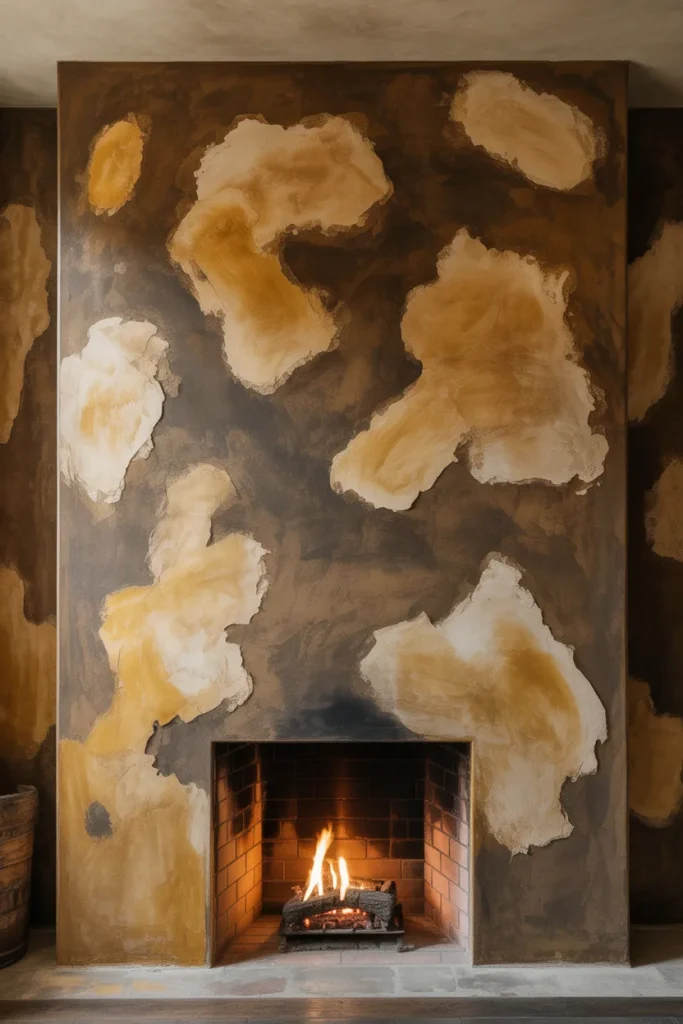
New plaster can look old on purpose. A faux aged patina fireplace looks like it survived a century in a Tuscan villa.
Start with a dark brown plaster base. Then dab on a lighter cream or yellow plaster with a sponge. Sand some edges down to the dark layer underneath. The result is chipped, faded, and full of fake history.
This works best in rooms with vintage furniture or reclaimed wood beams. Do not use it in a super modern glass-and-steel room. The old look needs old friends around it.
16. Plaster Stripes (Vertical Only)
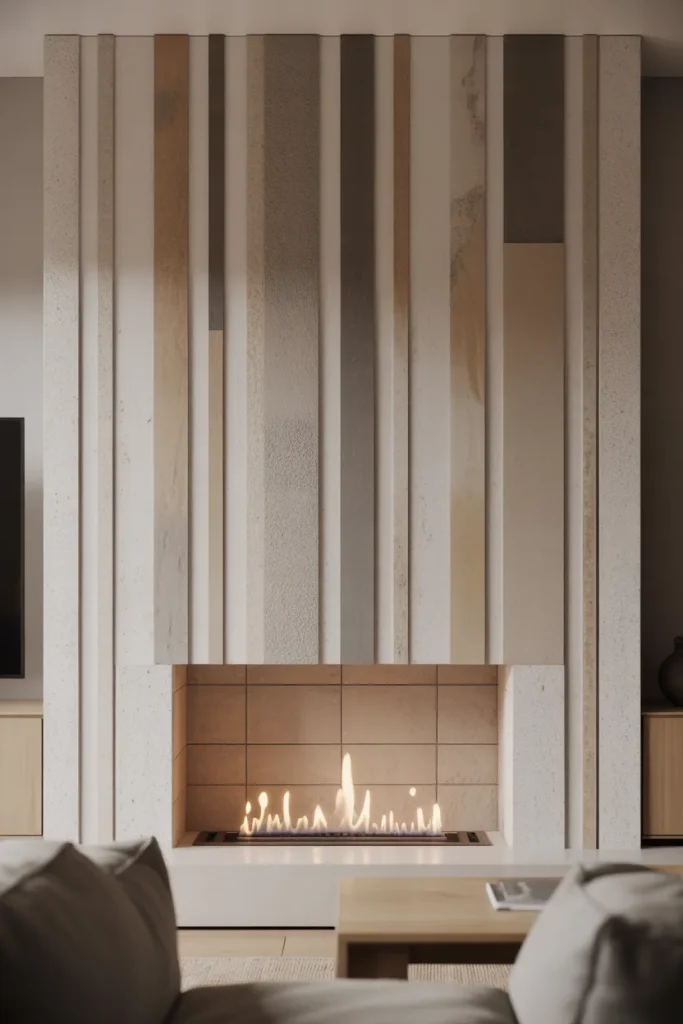
Stripes on a fireplace sound loud. But plaster stripes are quiet. They are not painted on. They are built right into the surface.
Run vertical bands of slightly different plaster textures. One band smooth, next band rough, next band smooth again. Or use the same texture but different undertones—warm beige next to cool beige.
The stripes should be wide, maybe six inches each. Thin stripes look too busy. Wide stripes feel architectural. This idea makes a low ceiling appear taller because the lines go up and down.
17. Monolithic Floor-to-Floor Plaster
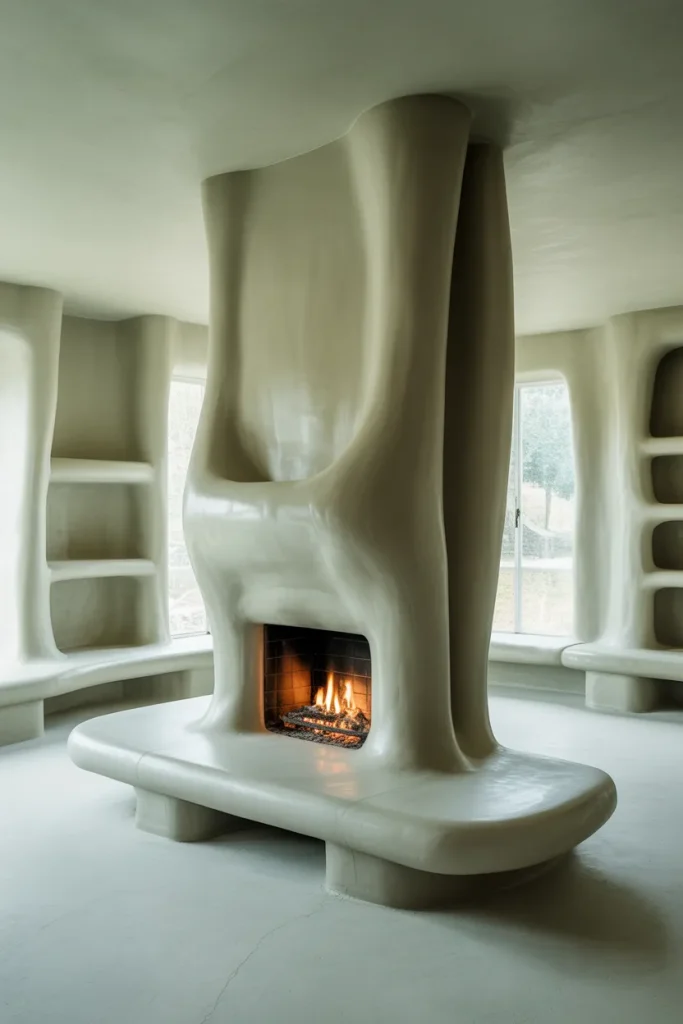
Most fireplaces sit on the floor and stop at mantel height. A monolithic plaster fireplace connects floor to ceiling with no breaks. Better yet, it also turns into a bench or a side table.
Imagine a thick plaster column that holds the firebox in the middle. The bottom widens into a seating ledge. The top widens into a shelf. It is one continuous plaster form.
This takes serious construction. But the result is unforgettable. Use a very pale grey plaster so you see every shadow and curve. No other furniture needed near it. The fireplace is the furniture.
18. Glowing White with Backlight
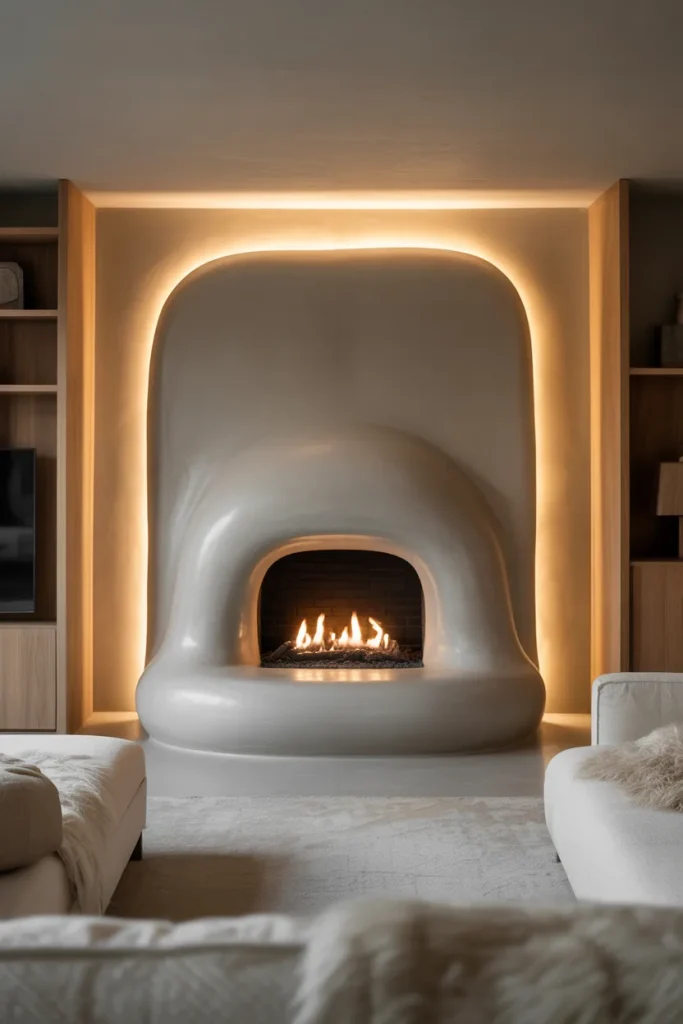
Last idea. Save the best for near the end. A glowing white plaster fireplace with hidden LED strips behind the edges.
The plaster itself is pure white and very smooth. Behind the outer edge, you tuck a warm-white LED strip. The light shines out along the wall, making the plaster look like it is floating.
When the fire is on, you have two lights—the flames and the glow. When the fire is off, the LEDs alone keep the room feeling warm. This is the most futuristic of all modern plaster fireplace ideas. But it still feels cozy because plaster softens the hard light.
Conclusion
A plaster fireplace is not a trend. It is a return to honest materials shaped by human hands. Drywall is cheap and fast. Tile is hard and cold. But plaster sits in the middle—warm, textured, and alive.
You have seen 18 different ways to do it. Smooth white for minimalist rooms. Wavy edges for free spirits. Dark black for drama. Sand textures for beach lovers. Carved relief for artists. Even two-faced plaster for people who cannot decide.
The best part? Plaster lasts for decades. It gets better with age. Small bumps and dings just add to the story. And unlike a painted wall, you never need to repaint a plaster fireplace. The color is in the plaster, not on top of it.
So pick the idea that makes you smile. Call a plaster pro or try a small DIY patch yourself. Then light a fire, pull up a chair, and watch the shadows dance across that beautiful, bumpy, perfect surface.
Your living room will thank you. And so will anyone lucky enough to sit in front of it.