14 Concrete Pool Deck Ideas That Don’t Look Boring

You walk out to your pool. The water looks perfect. But the concrete around it? Gray. Flat. Dull. Like a parking lot with a swimming hole. You know concrete is tough and cheap. But you also know it does not have to look like a prison yard.
Guess what. Concrete can be beautiful. You can stamp it. Stain it. Cut lines in it. Add colors. Even make it look like wood or stone. And the best part? It still fights cracks, handles pool chemicals, and stays cool enough for bare feet.
I have put together 14 concrete pool deck ideas that change everything. These are not fake magazine tricks. Real homeowners use them. They last for years. And they turn your pool area into a place you actually want to show off.
Let us jump in.
1. Stamped Concrete That Looks Like Flagstone

Plain concrete is a blank canvas. Stamped concrete is art. Workers pour fresh concrete. Then they press rubber mats into the wet surface. The mats have stone patterns. Flagstone is a top pick for pools because it looks natural but feels smooth.
You can add release powder to create color variations. The final look is a stone patio without the jagged edges. No tripping toes. No weeds between cracks. Just a beautiful surface that handles chlorine and sun. This idea costs more than plain concrete but way less than real stone.
2. Cool Deck Acrylic Coating Over Old Concrete

Maybe your concrete is already poured. It is gray and hot. You cannot afford to rip it out. That is fine. An acrylic cool deck coating goes right over the top. This coating has tiny bumps and a light color. The bumps create shade on the surface. The light color reflects sun.
Your feet stay cool even on a ninety degree day. The coating also hides small cracks and stains. Pick tan, beige, or light gray. Dark colors defeat the purpose. Roll it on yourself or hire a pro. Either way, your old deck feels brand new.
3. Exposed Aggregate With Smooth Pebbles
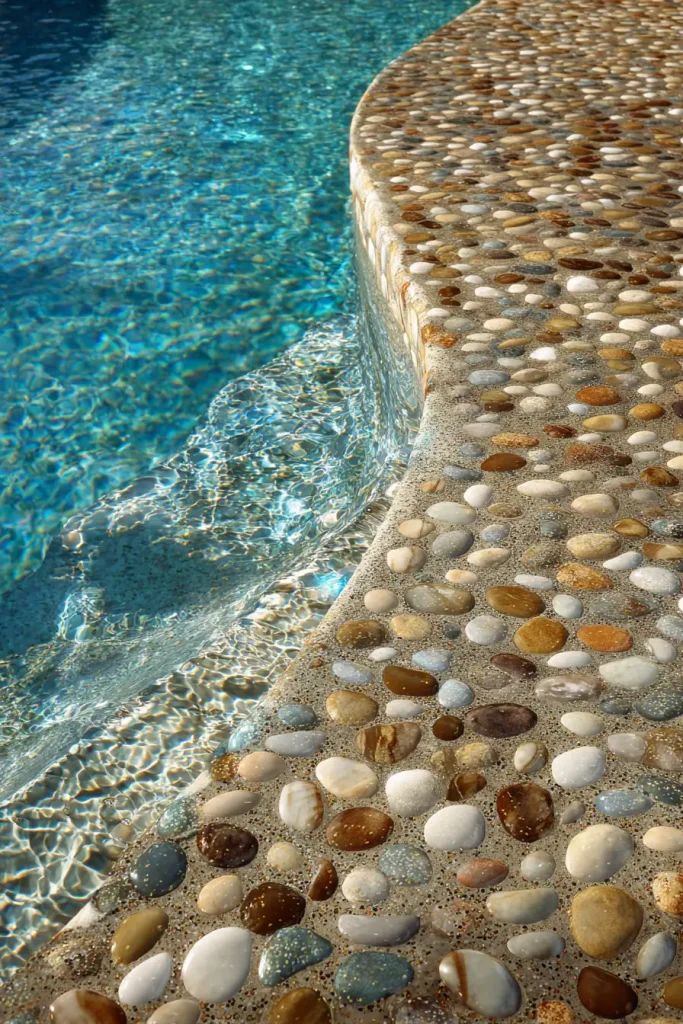
Exposed aggregate means you wash away the top layer of cement paste. Tiny pebbles underneath show through. The pebbles are smooth and round. They feel nice on bare feet. They also scatter light so the surface stays cooler than flat gray.
Choose river rock pebbles in earthy tones. Brown, cream, and soft gray mix well. You can also add glass beads for a little sparkle. The texture gives grip when wet. That means fewer slips. This is one of the safest concrete pool decks for families with kids.
4. Sawcut Patterns With Diagonal Lines
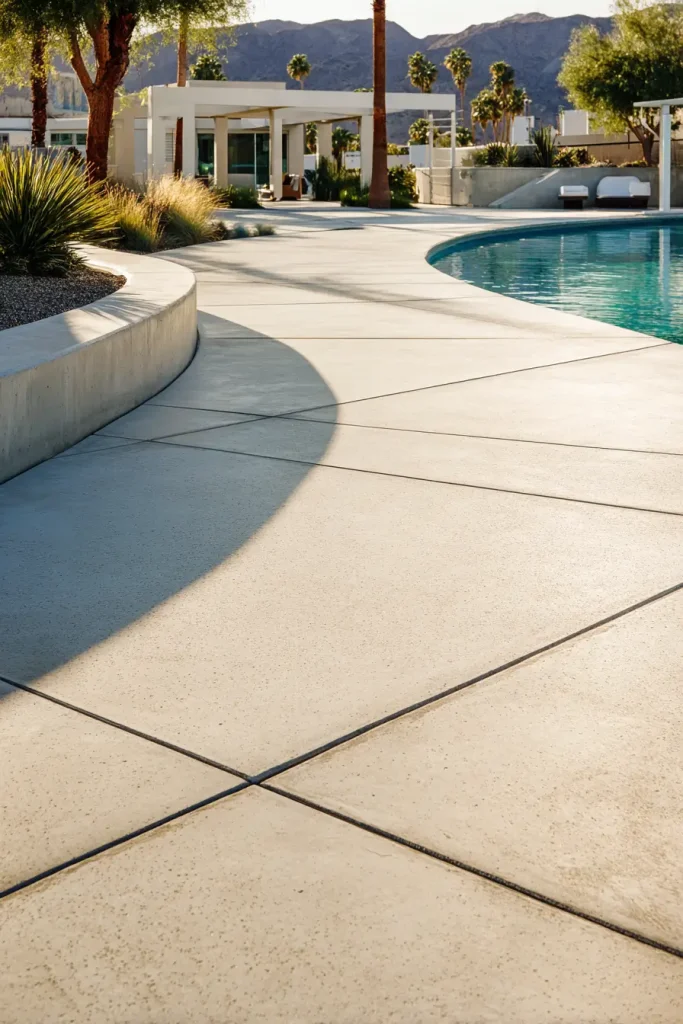
Fresh concrete gets control joints. Those are the lines cut into the surface to stop random cracking. Most people cut boring straight lines in a grid. That looks like a giant checkerboard. Not pretty.
Instead, ask for diagonal lines. Cut them at forty five degrees. Or make diamonds. Or use long curved lines that follow the pool shape. The cuts still do their job of stopping cracks. But they also add visual movement. Your deck looks designed, not just poured. Combine diagonal cuts with a light stain for extra punch.
5. Acid Stain in Terra Cotta or Mission Brown

Acid stain is not paint. It chemically reacts with the concrete. The result is a translucent, marbled look that never peels. Terra cotta and mission brown are top choices for pools. They look warm like old clay tiles.
The stain soaks in deep. Sun and pool water will not wash it away. You can apply it to new or old concrete. Then seal it with a glossy or matte sealer. The final look has swirls and color variations. Every deck turns out unique. No two look the same. That is the beauty of acid.
6. Broom Finish With a Curved Swirl

A broom finish is when workers drag a broom across wet concrete. That creates tiny grooves for grip. The normal way is straight lines from the pool edge outward. Boring again.
Ask for a curved swirl finish instead. The worker moves the broom in half circles or arcs. The pattern looks like wind on water. It still gives great traction. But it feels softer and more artistic. This trick costs almost nothing extra because the tools are the same. Only the hand motion changes.
7. Concrete Pavers Over a Gravel Base

Wait. These are not actual concrete pavers. They are poured concrete slabs that look like individual pavers. Workers pour the concrete. Then they use a special tool to stamp deep grout lines. The lines make the big slab look like many small separate stones.
The benefit over real pavers? No weeds growing between joints. No shifting or sinking over time. You get the look of a paver patio with the strength of a solid concrete slab. Pick square or rectangular patterns. Add a contrasting color in the grout lines for a high end look.
8. White Concrete With Mica Sparkles

White concrete is not common. Most concrete is gray because cement is gray. But you can buy white cement and white sand. The result is a bright, clean surface that reflects serious heat. Add mica flakes or crushed glass into the mix.
When the sun hits, the mica sparkles like tiny diamonds. Kids love it. Adults love it too. The white color stays cooler than gray. But it does show dirt faster. Plan to hose it down weekly. A clear sealer helps repel stains. This idea works best in dry climates without much mud.
9. Colored Border With a Plain Center
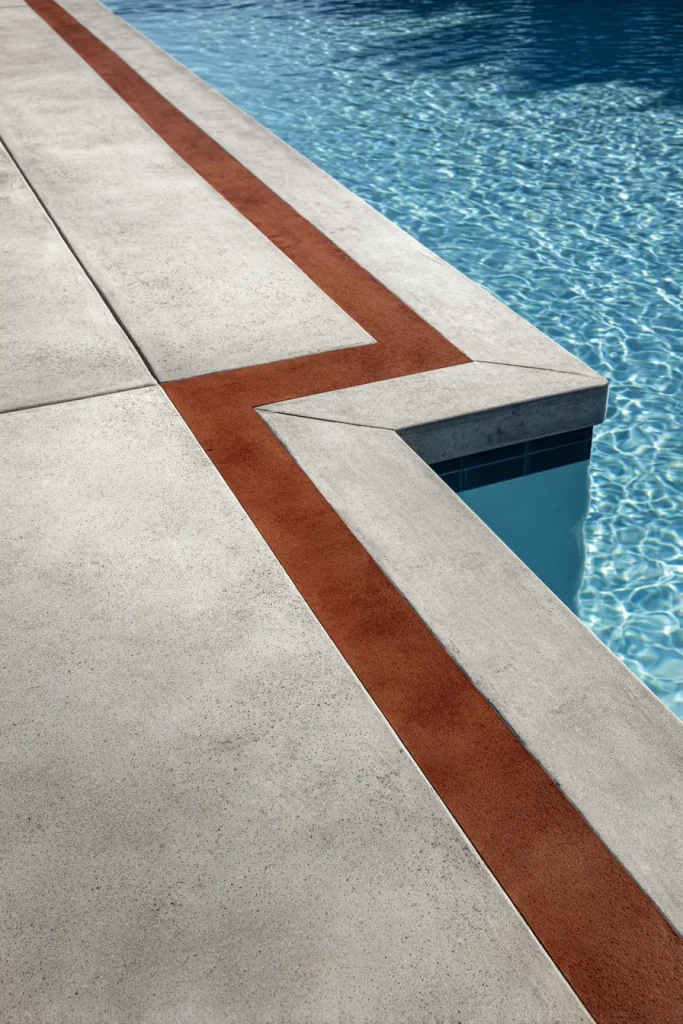
Full color on a big deck gets expensive. Here is a budget trick. Leave the main area plain gray. Then pour a colored concrete border around the edges and between the pool and deck. Use a contrasting color like terracotta, slate blue, or charcoal.
The border frames the pool like a picture frame. Your eye goes to the color first. The gray becomes background. This trick saves money because colored concrete costs more per bag. But you only need it for the border. Use a simple wood form to pour the border separately or stamp it in.
10. Salt Finish for a Soft Texture
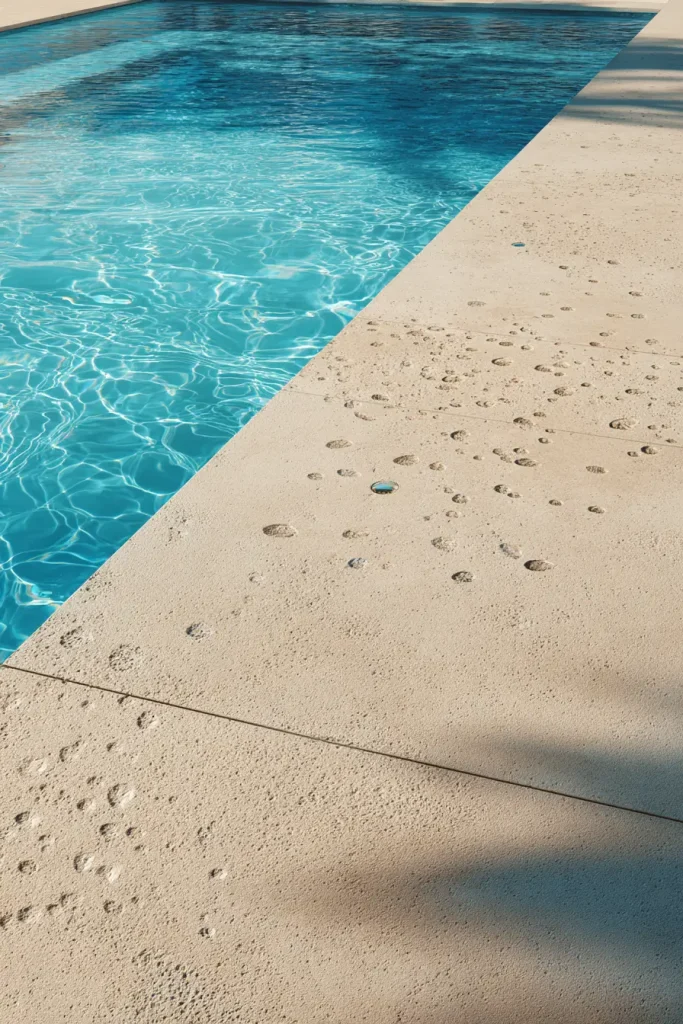
Salt finish is old school but works great. After pouring concrete, workers sprinkle rock salt onto the wet surface. They roll it in lightly. Later, they hose off the salt. The salt leaves behind small pits and craters.
The texture looks like natural stone. It feels slightly bumpy but not sharp. Water drains into the tiny pits and evaporates faster than on smooth concrete. That means less slippery spots. Salt finish also hides footprints and dirt well. Just do not use this if your concrete is near delicate plants. Leftover salt can wash into soil.
11. Geometric Stamped Patterns Like Herringbone
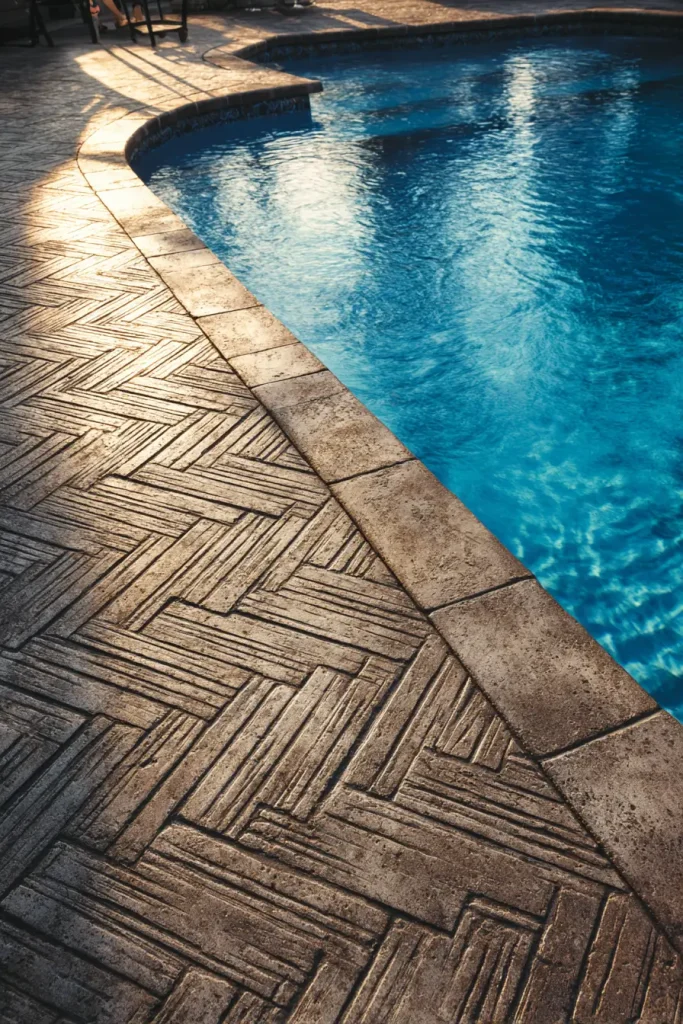
Flagstone is nice. But maybe you want something modern. Try herringbone or basket weave stamp patterns. These look like interlocking bricks or wood planks. Herringbone has zigzag lines. Basket weave has squares within squares.
These patterns work best on large decks. The repeating shapes trick the eye into seeing more space. Use two colors of release powder. A dark base and a lighter top coat. When the stamp presses in, the two colors mix. You get depth and shadow without any extra work.
12. Polished Concrete With a High Gloss

Polished concrete is not just for indoor garages. You can do it outside too. Grinders with diamond pads smooth the surface to a mirror shine. Then a penetrating sealer locks it in. The result looks like wet stone all the time.
Polished concrete resists stains and pool chemicals better than any other finish. Bird poop wipes right off. Spilled sunscreen does not soak in. The downside? It gets slippery when wet. You need to add a non slip additive to the sealer. And polished concrete costs more because of the grinding labor. But for a modern, sleek look, nothing beats it.
13. Radial Lines Cut From the Pool Edge

Instead of straight cut lines, ask for radial cuts. Imagine the pool as the center of a wheel. The cut lines start at the pool edge and go outward like spokes. Between the spokes, add curved lines that follow the pool shape.
This pattern makes your deck look like a sunburst. It directs the eye toward the water. The cuts still control cracking. But they become a design feature instead of an eyesore. Radial cuts work best on round or kidney shaped pools. For rectangular pools, try lines that angle away from each corner.
14. Stenciled Concrete With Tile Patterns
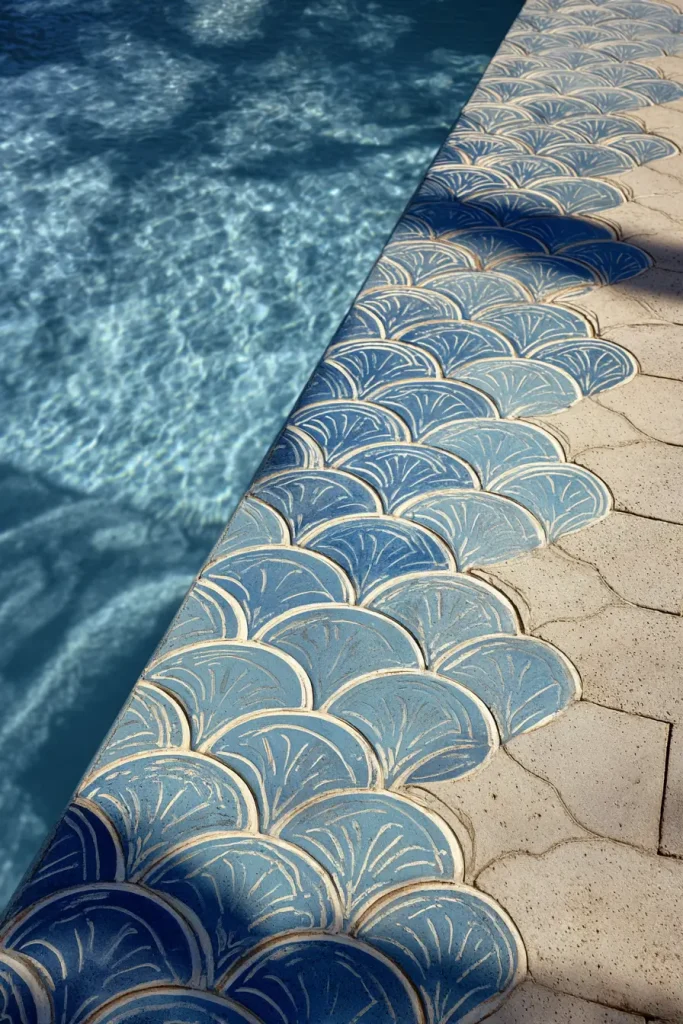
Stenciling is the newest trick in concrete. You pour a solid base color, usually light tan or gray. Then you lay a plastic stencil over the surface. You spray or roll on a darker color through the stencil holes. Peel off the stencil. Now you have a repeating pattern.
Popular patterns include Moroccan fish scale, Spanish tile, or diamond lattice. The pattern looks like expensive inlaid tile. But it is just two layers of colored concrete with a sealer. This idea requires a skilled contractor. Bad stenciling looks blurry and cheap. Good stenciling looks like art. If you find a pro, the result is jaw dropping.
How to Keep Your Concrete Pool Deck Safe and Long Lasting
Before you run off to call a contractor, let me give you three quick tips. First, always seal your concrete. A good sealer blocks pool chemicals, sun damage, and stains. Reapply every two to three years. Second, add a non slip additive. Even textured concrete gets slick with algae. A little sand in the sealer saves bones.
Third, fix small cracks fast. Pool water seeps into cracks. Then it freezes and makes the crack bigger. A simple crack filler from the hardware store stops the problem early. Ignoring a hairline crack today means a twenty dollar repair turns into a two thousand dollar replacement.
Also, keep your pool water balanced. Acidic water splashes onto the deck. Over time, it eats the sealer and etches the concrete. Test your water weekly. Keep pH between 7.2 and 7.8. Your concrete will thank you.
Which Idea Fits Your Budget?
Let me break it down simple.
Low budget (under $3 per square foot):
Broom finish with swirl, salt finish, or cool deck coating over old concrete.
Medium budget ($3 to $8 per square foot):
Exposed aggregate, colored border, sawcut patterns, acid stain, or stenciled concrete.
High budget ($8 to $15+ per square foot):
Stamped flagstone, polished concrete, geometric patterns, or radial cuts with multiple colors.
Remember, cheaper does not mean bad. A simple swirl broom finish with a light stain looks great. Do not break your bank. Pick something that fits your yard and your wallet.
Putting Two Ideas Together
You do not have to choose one. Mix two ideas for a custom look. For example, use a cool deck coating on the main area. Then add a stamped border around the edge. Or pour white concrete with mica sparkles. Cut radial lines and fill them with dark stain.
Another cool mix: exposed aggregate for the main deck. Then a polished concrete band right around the pool edge. The contrast between rough pebbles and glossy smooth is stunning. Get creative. Just make sure the same contractor does both finishes so they blend well.
Conclusion
Concrete does not have to be boring. You have fourteen ways to turn a gray slab into a pool deck you actually love. Stamped stone, cool coatings, sparkly mica, salty textures, and stenciled tiles. Some ideas cost little. Others cost more. But every single one beats plain gray.
Look at your current deck. What bothers you most? The heat? The dull color? The boring lines? Pick one problem. Then pick one idea from this list that fixes it. Call a concrete pro or rent a few tools. You can even DIY some of these like acid stain or cool deck coating.
Next time your friends come over to swim, let them step onto your new deck. Watch their eyes get big. Hear them say, “Wait, this is concrete?” You smile. You nod. And you know you made the smart choice.
Now grab your hose, test your pool water, and start planning your upgrade. Summer is coming. Your deck should be ready.