15 Green-and-Brown-Bedroom Ideas
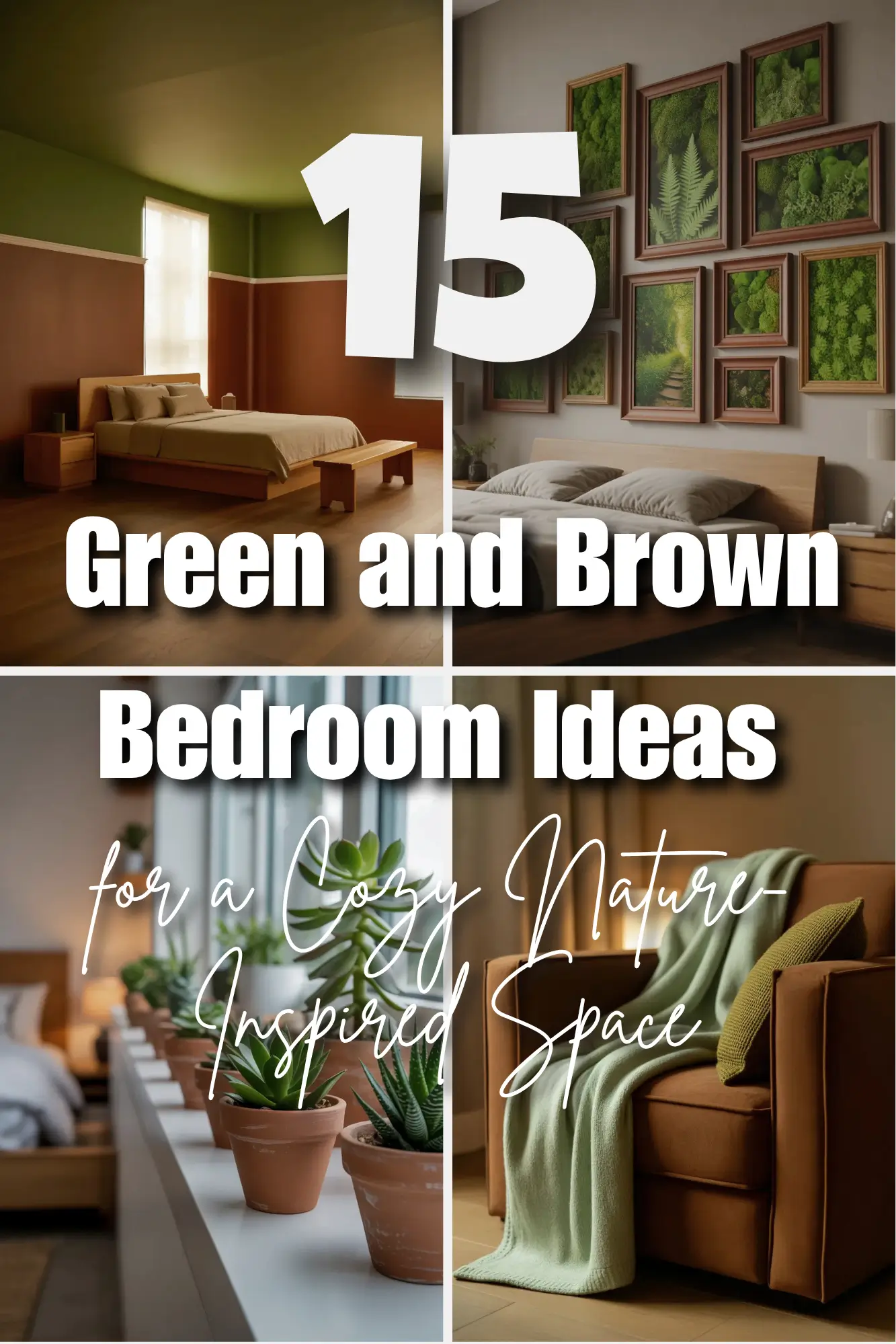
Ever walked into a room that felt like a warm hug from the woods? That is what green and brown do together. They turn a boring bedroom into a calm den.
You do not need fancy decor or a big budget to make your bedroom feel like a forest retreat. Green and brown are nature’s own color pair. Think of tree trunks and mossy rocks. Think of a grassy hill after rain. These two shades work because one feels fresh (green) and the other feels steady (brown). Together, they lower stress and help you sleep. No screaming reds or cold grays here.
In this guide, I will walk you through 15 real-world ideas. Each one is simple, cheap to try, and fits small or large rooms. You will learn exactly which shades to pick, where to put them, and how to avoid a muddy mess. Let us dig in.
1. Moss Green Walls with a Walnut Bed Frame
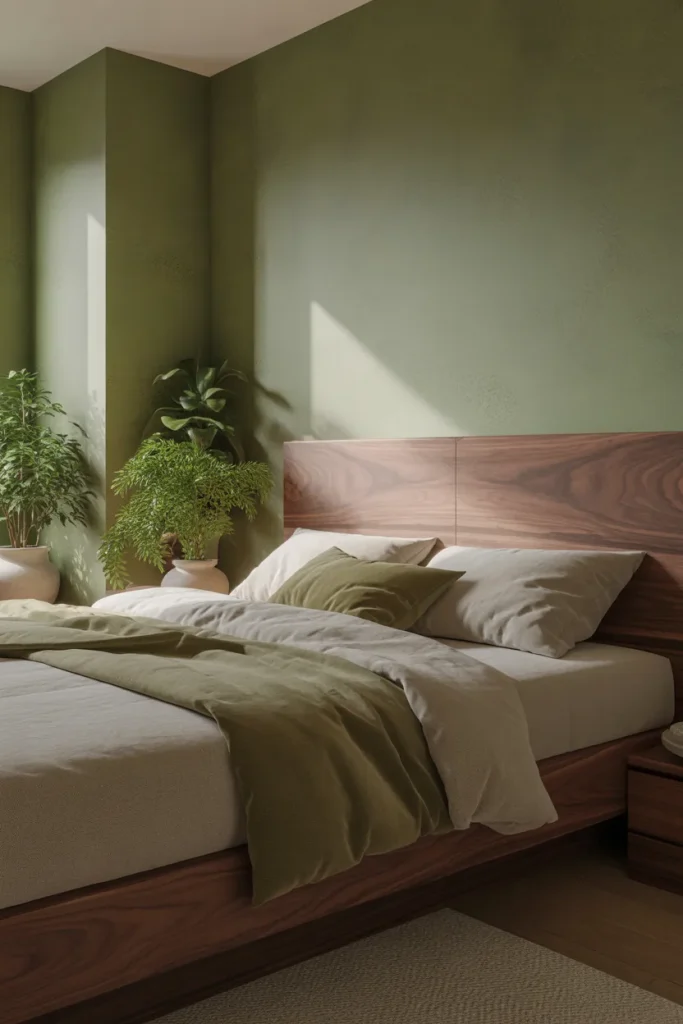
Paint is the fastest way to change a room. Pick a moss green that looks like wet forest floor. Not too bright like a tennis ball. Not too dark like seaweed. Just a medium, dusty green.
For the bed, find a walnut frame. Walnut is a brown wood with deep swirls. It is not orange like oak or pale like pine. Walnut feels rich but not fancy. The green walls make the walnut look warmer. The walnut makes the green look softer.
If you cannot paint, use peel-and-stick wallpaper in moss green. Or hang a giant green tapestry behind the bed. For the frame, a secondhand walnut headboard works fine. You do not need a whole set.
This pair works because both colors have yellow undertones. They share a common base, so they never fight.
2. Brown Leather Headboard with Sage Green Bedding
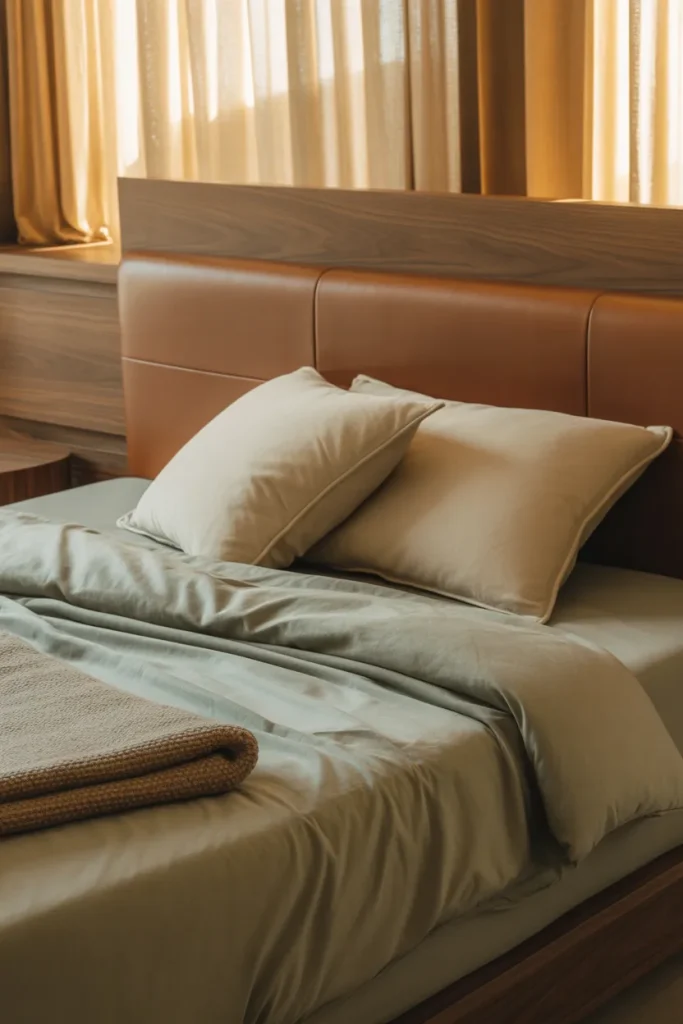
Leather feels tough and lived-in. A brown leather headboard (tufted or plain) gives a room an old-library smell. Pair it with sage green bedding. Sage is a gray-green, like dried herbs. It calms down the leather’s strength.
Do not use shiny leather. Look for matte or oiled leather. It reflects less light and blends better with soft cotton sheets.
Fold the sage blanket at the foot of the bed. Add two green pillows against the headboard. The brown leather will peek through the middle. This layering trick makes the bed look styled, not messy.
If a full leather headboard is too costly, buy a leather strap hanging. Stretch it across a plain wood board. Same look for half the price.
3. Olive Green Paint + Dark Brown Floor
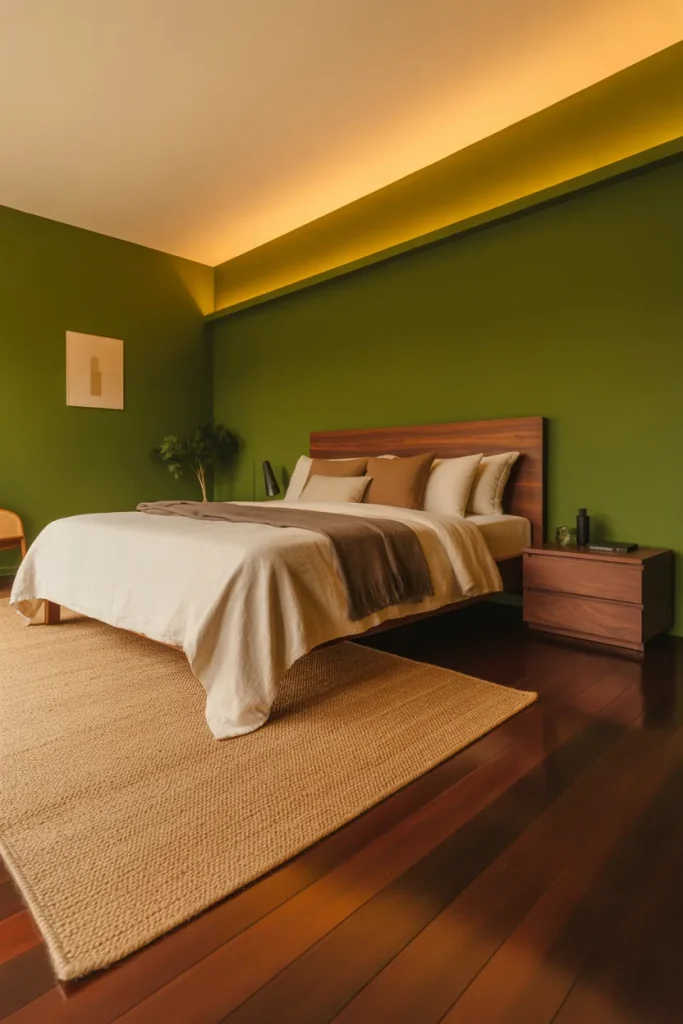
Olive green has a yellow bite. It is the color of unripe apples or army jackets. On walls, olive feels bold but not loud. Match it with dark brown floors. I mean espresso-dark, almost black-brown.
The dark floor anchors the room. Without it, olive walls might float and feel weird. With dark brown underfoot, the room feels grounded like a tree trunk in soil.
Use a light brown rug on top of the dark floor to break up the heaviness. A jute or sisal rug adds texture without adding more color. Then your eyes travel from dark floor to light rug to green walls. That path feels calm.
Pro tip: Paint your ceiling a pale cream. It keeps the room from feeling like a cave.
4. Green Velvet Pillows on a Brown Linen Couch
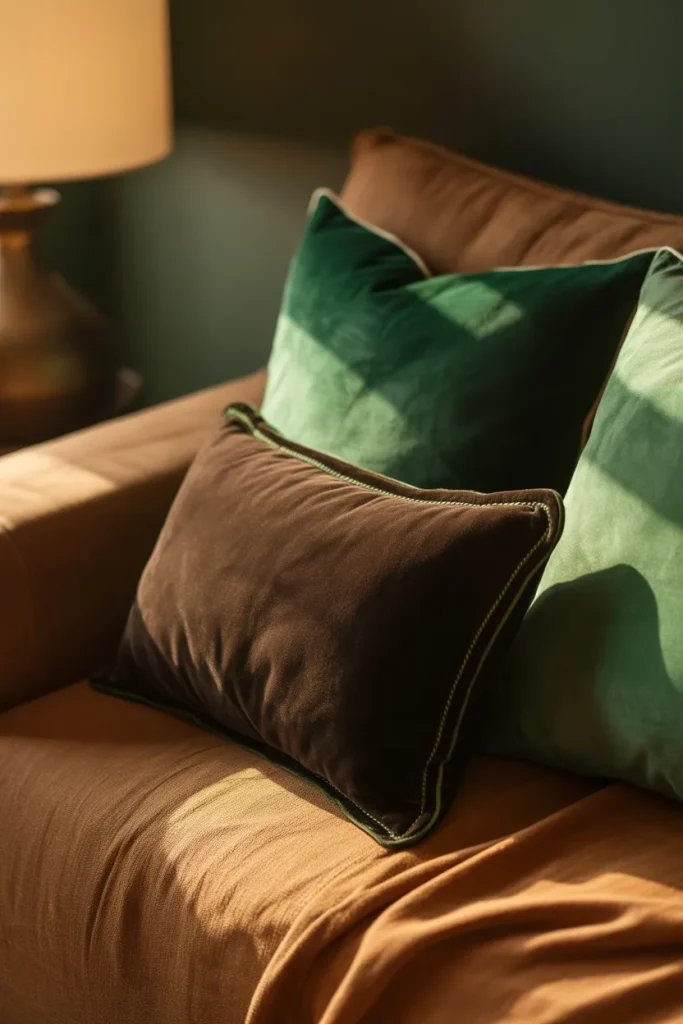
Many bedrooms have a small chair or a loveseat. If yours is brown linen, great. If not, buy a slipcover in camel brown or chocolate. Then load it with green velvet pillows.
Velvet shines in low light. It catches just enough glow from a bedside lamp to look like wet leaves. Brown linen is rough and breathable. The mix of rough and smooth feels good to touch.
Use three pillows: one emerald green, one forest green, and one dark brown with green stitching. Stack them leaning against one arm of the couch. This little pile draws the eye and invites you to sit.
Do not use shiny satin or cheap fleece. Velvet and linen are natural fabrics. They look expensive even when they are not.
5. Brown Wicker Lamps with Green Vines
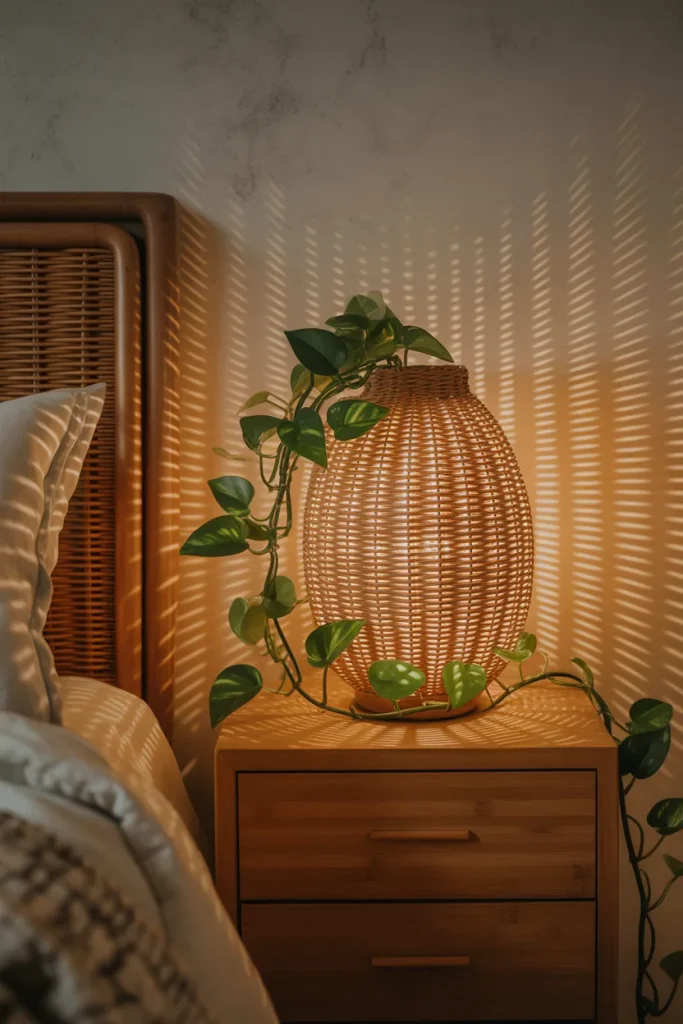
Lighting is the secret hero of any color scheme. Find a lamp with a brown wicker shade. Wicker has tiny holes that cast dotted shadows. Place it on a nightstand. Then drape a fake or real green vine around the lamp base.
Pothos or ivy works best. Let one strand hang down the side of the nightstand. The brown wicker matches the pot’s earthy feel. The green vine brings life.
At night, turn on the lamp. The light glows through the vine leaves. Your wall will show leaf-shaped shadows. That tiny detail makes the whole room feel like a jungle hideout.
If wicker is hard to find, use a brown rattan or bamboo lamp. Same natural weave, same effect.
6. Dark Brown Ceiling + Light Green Walls
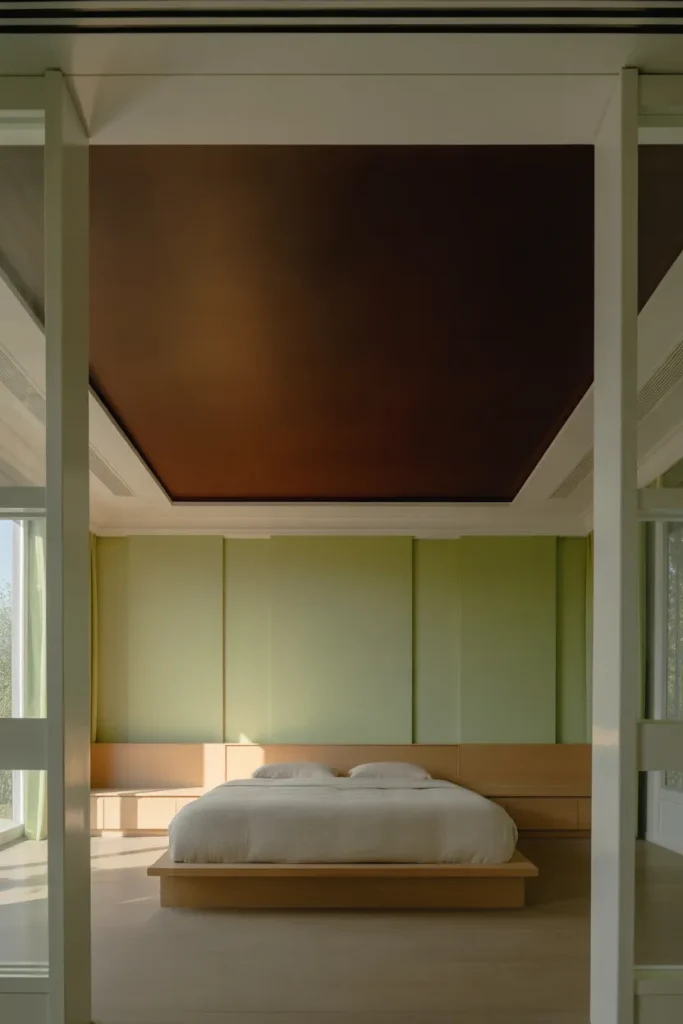
Most people forget the ceiling. But a dark brown ceiling pulls a room together like nothing else. Paint it the color of dark chocolate or espresso. Then paint the walls a light pistachio or mint green.
Your eye goes up to the ceiling last. So the dark brown acts like a lid on a cozy box. The light green walls keep things airy. This trick works best in rooms with tall ceilings. In a short room, it might feel cramped.
To test before painting, staple a dark brown bedsheet to the ceiling. Live with it for two days. If you do not feel trapped, go ahead with paint.
Add white trim around windows and doors to separate the two colors cleanly.
7. Green and Brown Plaid Blanket
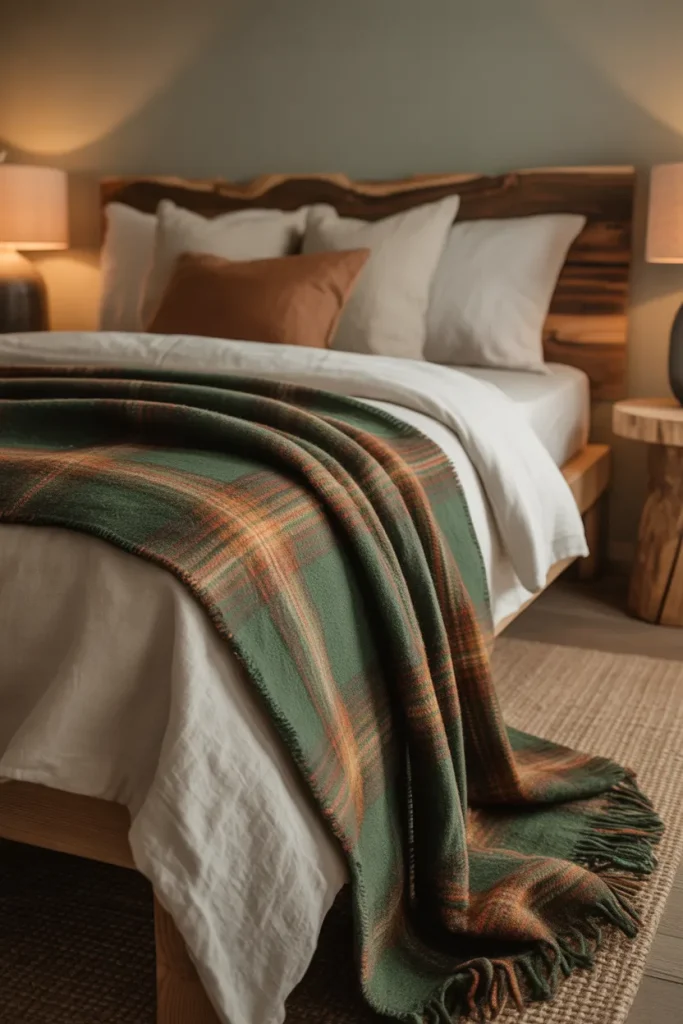
A plaid blanket is an easy win. Look for a pattern that mixes forest green, pine green, and warm brown (like cinnamon). Fold it at the end of the bed or drape it over a chair.
Plaid works because the stripes trick your eye. The green and brown touch each other in tiny squares. That closeness makes the colors look like they belong together forever.
Do not use a neon or pastel plaid. Stick to deep, muted tones. Wool or cotton flannel feels best. Avoid acrylic—it looks shiny and cheap.
You can also use a plaid rug or plaid curtains. But a blanket is the cheapest test. If you like the look, then buy more plaid pieces.
8. Brown Bamboo Shades + Green Leafy Prints
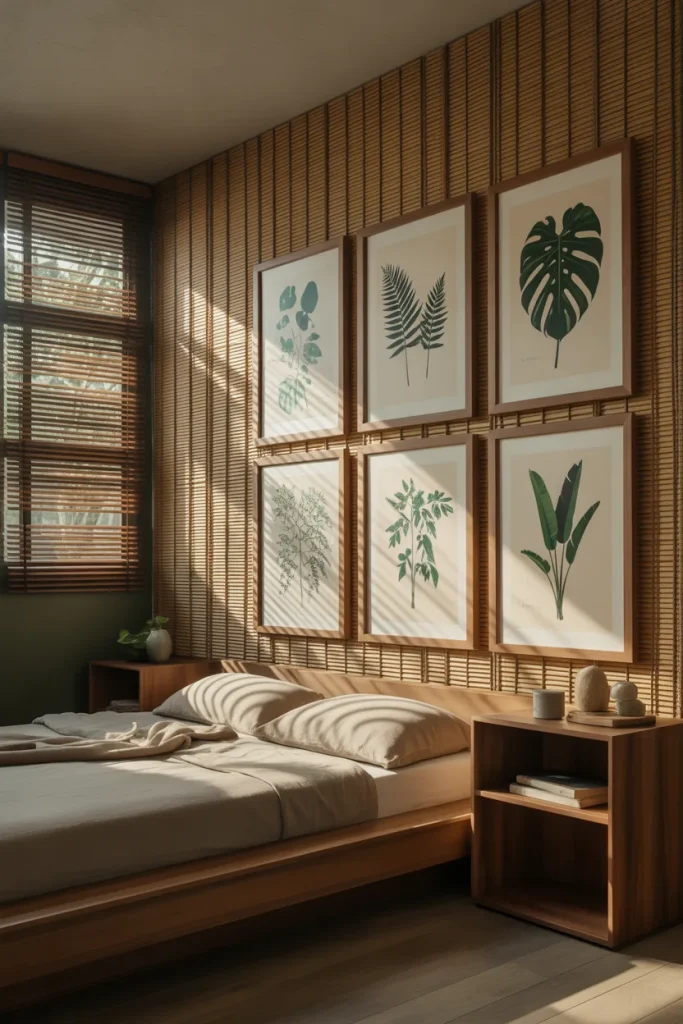
Windows need covering. Skip white blinds. They kill the green-brown mood. Instead, hang brown bamboo or matchstick shades. They roll up and down easily. The natural wood slats have tiny gaps that let in stripes of light.
On the walls, hang two or three prints of large green leaves. Think monstera, fern, or banana leaf. Black and white leaf prints are fine, but green ink on cream paper is better.
The bamboo shades add brown texture at the window. The leaf prints add green shape on the walls. Together, they make the room feel like a greenhouse.
Keep the frames simple. Dark brown wood or black metal. No gold or silver.
9. Forest Green Rug on Brown Hardwood
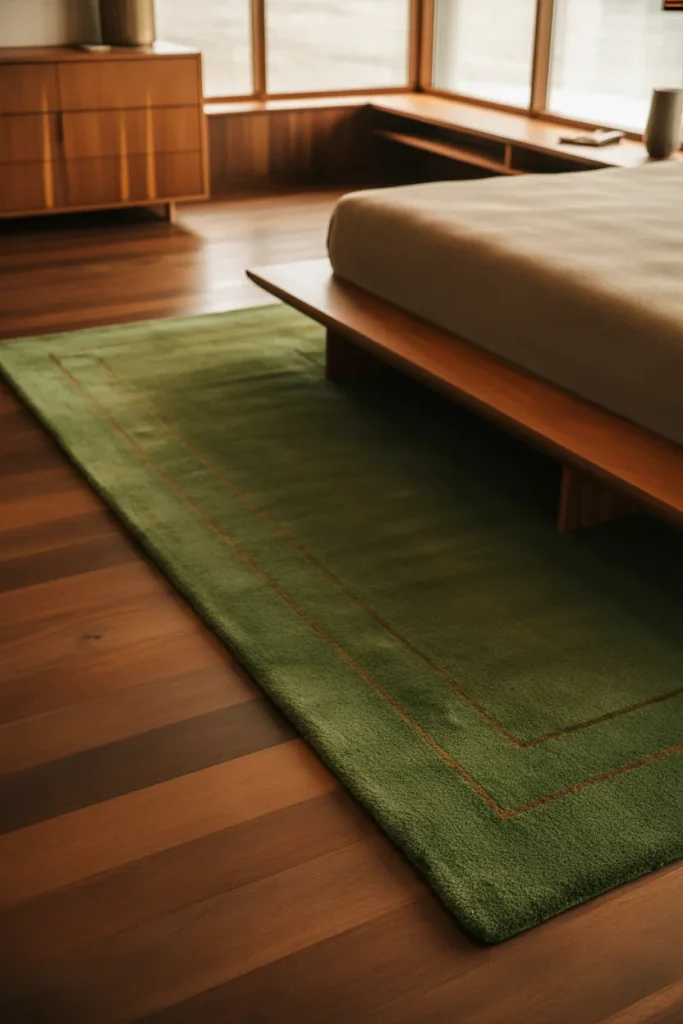
If you have brown hardwood floors, a forest green rug is your best friend. Forest green is dark, almost black-green. It hides stains and crumbs. It also makes the brown floor look lighter by contrast.
Choose a rug with a low pile (short fibers). Shag rugs trap dust and look messy. A flat-woven wool or cotton rug is easier to clean.
Make the rug big enough to go under the bed and stick out two feet on each side. When you wake up, your feet touch green first, then brown floor. That small moment feels like stepping onto moss.
For extra points, pick a rug with a subtle brown border. That ties the two colors together without adding a third.
10. Brown Rattan Headboard + Eucalyptus Green Accents
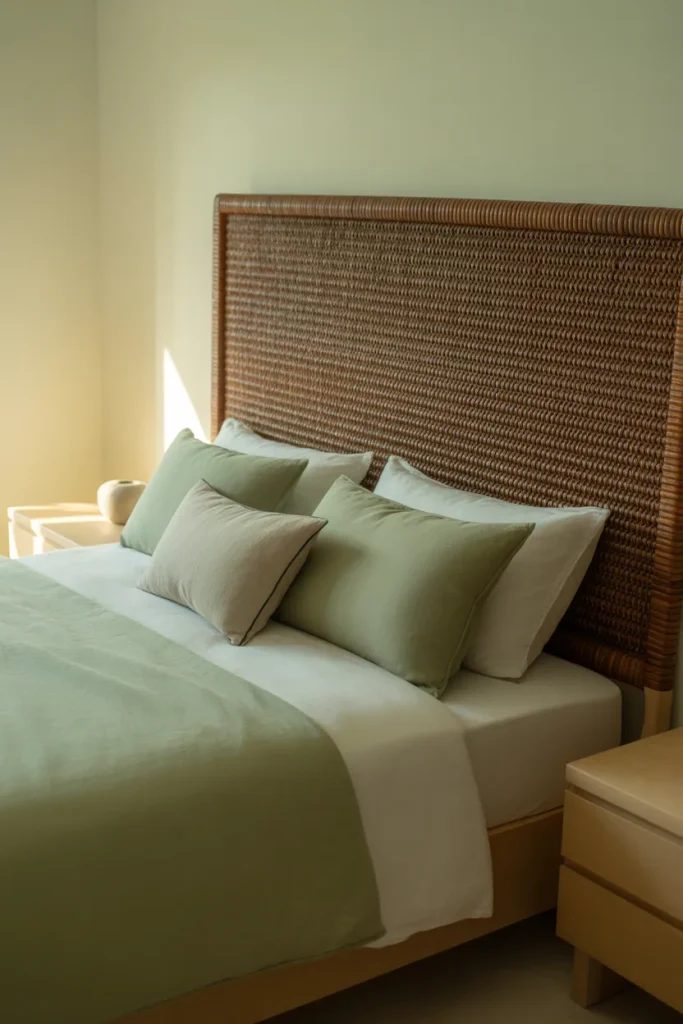
Rattan is woven wood. A brown rattan headboard looks like a basket turned into furniture. It is light, airy, and full of tiny holes. Pair it with eucalyptus green accents.
Eucalyptus green is a blue-green with a silver tint. It is the color of the leaves you put in a shower. Use it on pillowcases, a throw blanket, or even painted drawer knobs.
The rattan’s open weave lets wall color show through. So if your wall is pale cream or white, the rattan acts like a brown filter. The eucalyptus green sits on top of the bed. The mix feels breezy and spa-like.
Do not clutter the headboard with too many pillows. One or two eucalyptus green shams are plenty.
11. Green Painted Dresser with Brown Knobs
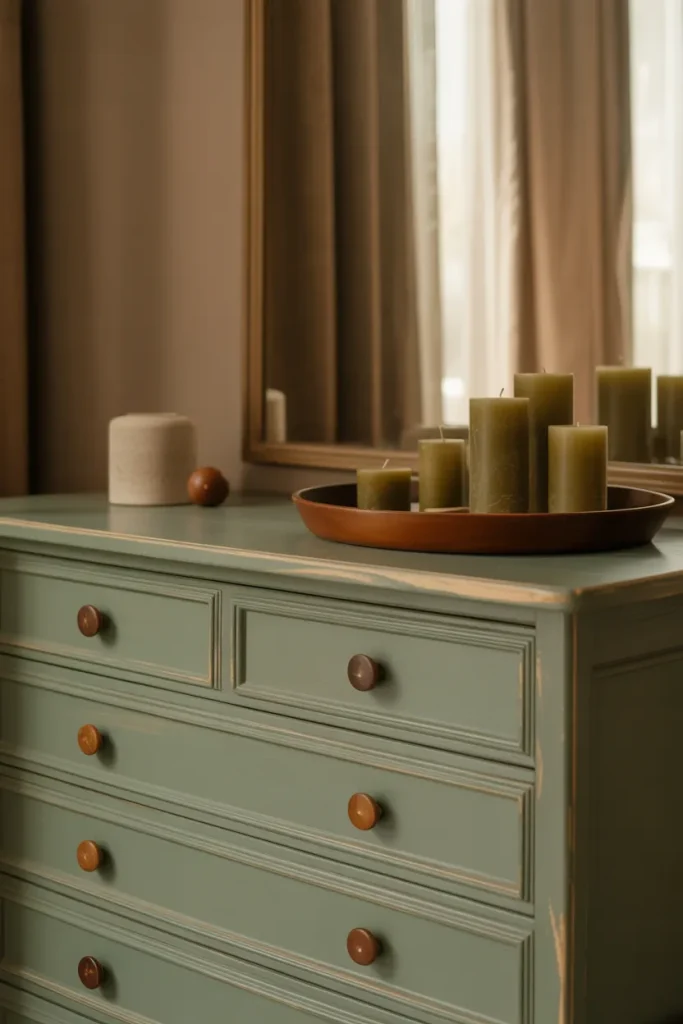
Got an old wood dresser? Paint it green. Not bright green. Pick a muted olive or sage. Then swap the old handles for brown knobs made of leather, wood, or ceramic.
The green body of the dresser becomes the main color. The brown knobs act like little buttons. They break up the green without screaming for attention.
Paint the dresser with chalk paint so you do not have to sand first. Two coats are usually enough. Let it dry for a full day before putting on knobs.
On top of the dresser, place a brown tray with green candles. That repeats the color pair at eye level. Now your dresser is not just storage. It is art.
12. Brown Clay Pots with Green Succulents
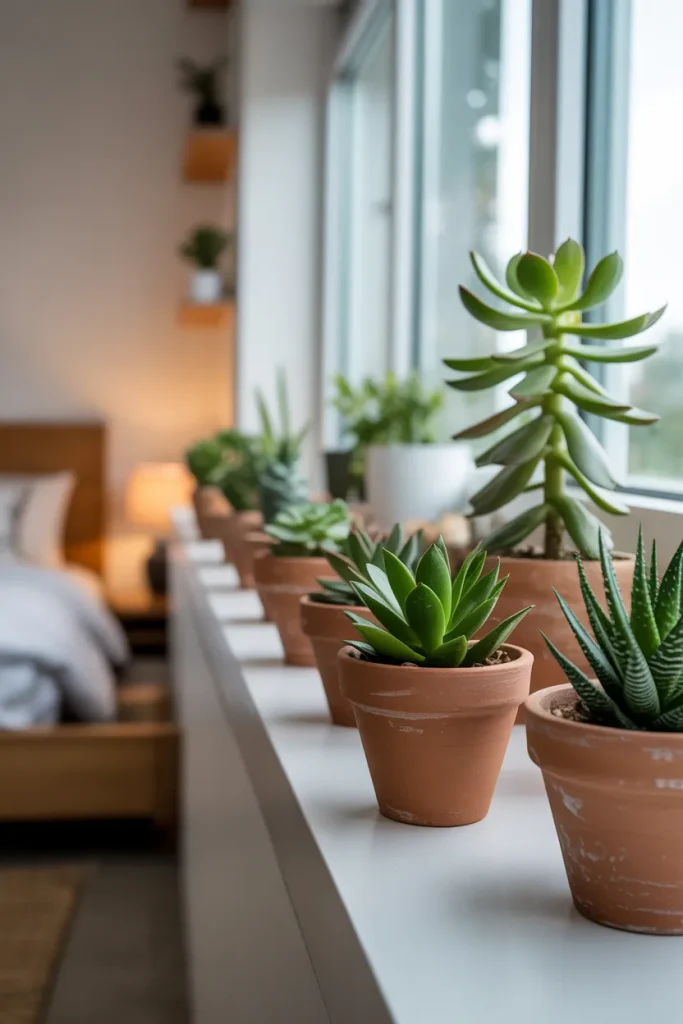
You do not need a garden to bring green and brown into your bedroom. Just buy three or four brown clay pots. Terra cotta is perfect—that reddish-brown color. Fill them with small green succulents like jade, haworthia, or aloe.
Group the pots on a windowsill or a floating shelf. The clay’s rough texture and warm brown tone contrast with the succulents’ plump green leaves.
Water them once a week. Succulents are hard to kill. If you have no sunlight, use fake succulents made of green plastic or silk. No one will know.
This idea works because the pots and plants are small. You can move them around until the placement feels right. Try one pot on the nightstand, one on the dresser, and one on a bookshelf.
13. Green Throw Blanket over a Brown Armchair
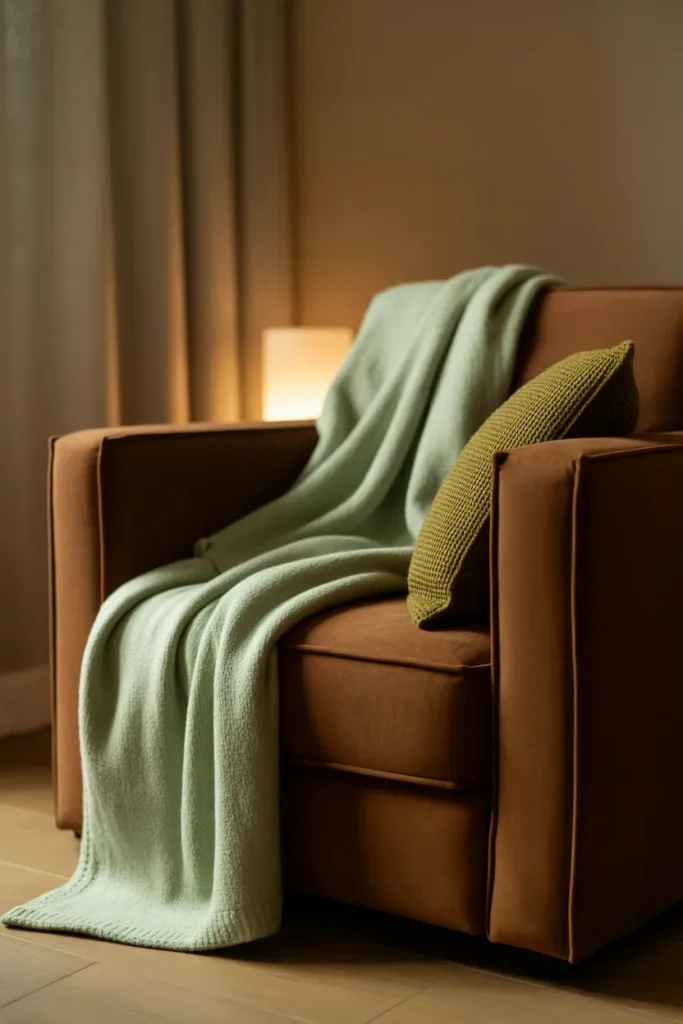
A brown armchair in the corner can look sad by itself. Drape a green throw blanket over the back. Let it hang down one side unevenly. Then place a small brown pillow on the seat.
The blanket should be a different green from the pillow’s green. For example, a mint green blanket and an olive green pillow. That small difference keeps the eye interested.
Use a chunky knit or a soft fleece blanket. The texture matters more than the price. A $15 blanket from a discount store works fine if it feels fuzzy.
This chair becomes your reading spot. The green blanket invites you to wrap up. The brown pillow holds your head. Every night, you will want to sit there for ten minutes before bed.
14. Brown Picture Frames with Green Nature Art
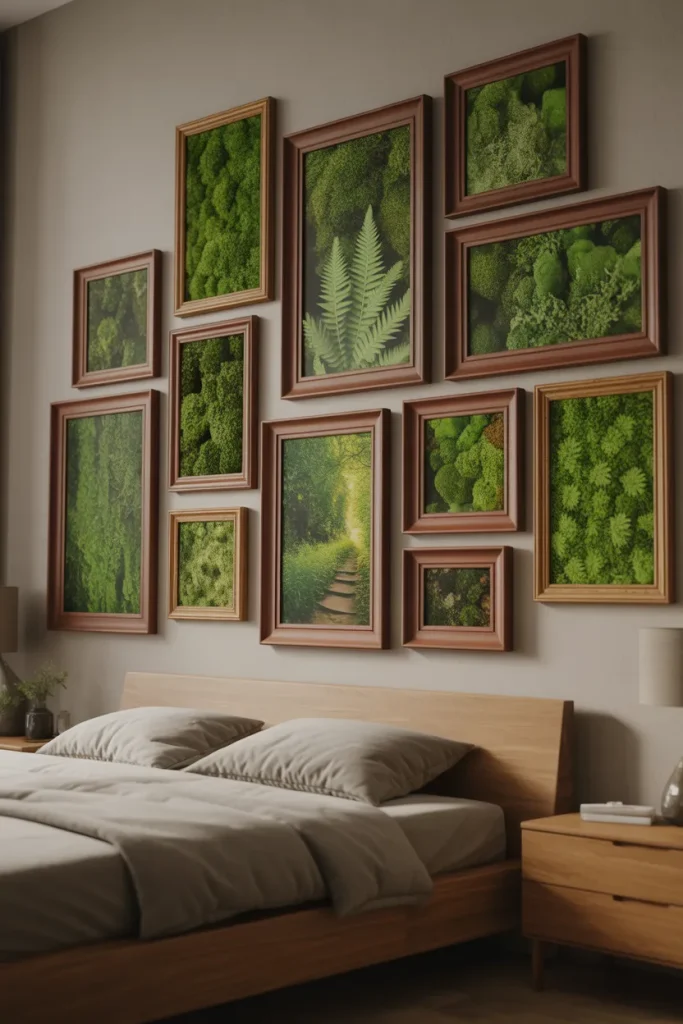
Gather four or five brown picture frames. They do not have to match. One can be dark walnut, another light oak, another bamboo brown. Mix wood types on purpose.
Inside the frames, put art that is mostly green. Nature photos work best: a forest path, a close-up of moss, a fern leaf, a green meadow. Black and white photos of trees are okay, but full green images are stronger.
Hang them in a cluster on one wall. Stagger the heights. The brown frames will look like tree branches holding up leaves. The green art will fill the room with calm.
Do not use family photos here. Save those for another wall. This cluster is about color, not memory.
15. Two-Tone Wall: Brown Lower Half, Green Upper Half
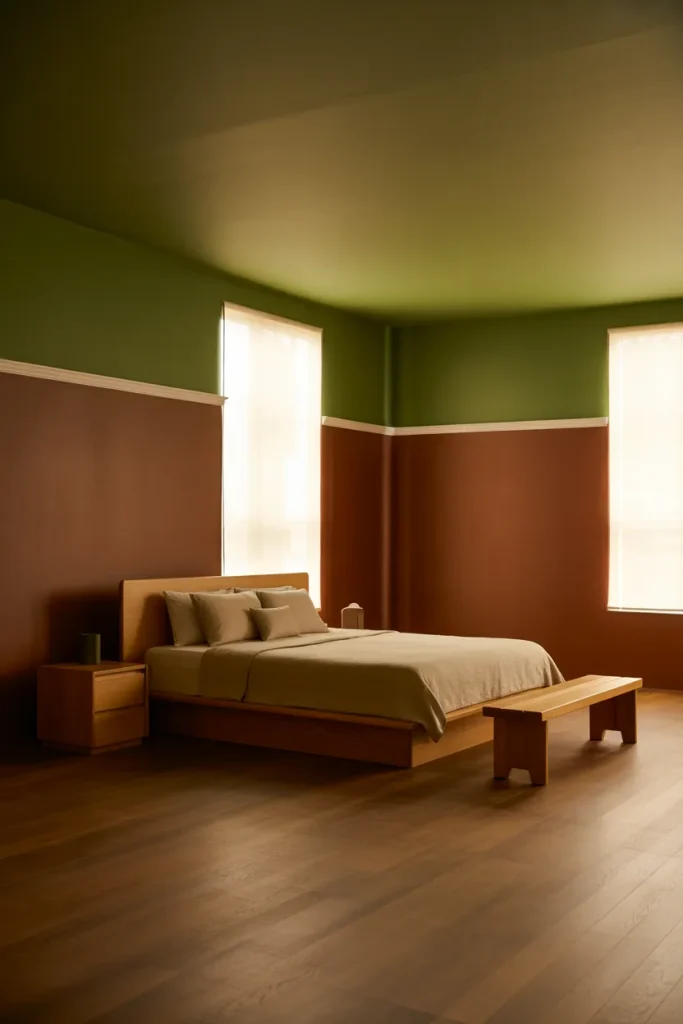
This is the boldest idea. Paint the bottom half of your walls dark brown (up to three feet high). Paint the top half light green. Separate them with a thin strip of white trim or a brown chair rail.
The brown lower half hides dirt from shoes and vacuum bumps. It also makes the room feel wider because the dark color pushes the walls out. The green upper half keeps the airy forest feeling.
Choose a brown like roasted coffee bean. Choose a green like young fern or limewashed sage. Do not pick shiny paint. Flat or eggshell finish looks softer.
This two-tone trick works great in a kid’s room or a small guest room. It adds character without needing expensive furniture.
Conclusion
Green and brown are not boring. They are the colors of the world outside your window. A brown tree trunk. A green leaf. A muddy trail through a fern patch. When you bring these two into your bedroom, you bring in quiet.
You do not need to do all 15 ideas. Pick one or two that fit your room and your wallet. Start with something small: a brown clay pot with a green succulent on your nightstand. Or a plaid blanket folded at the foot of your bed. Live with it for a week. Then add another piece.
The goal is not a perfect magazine room. The goal is a bedroom that helps you breathe slower at the end of a loud day. Green calms your eyes. Brown holds you steady. Together, they whisper: Rest now.
Now go find that moss green pillow or that walnut frame. Your cozy den is waiting.