15 Inspiring Ideas for Fence Plants
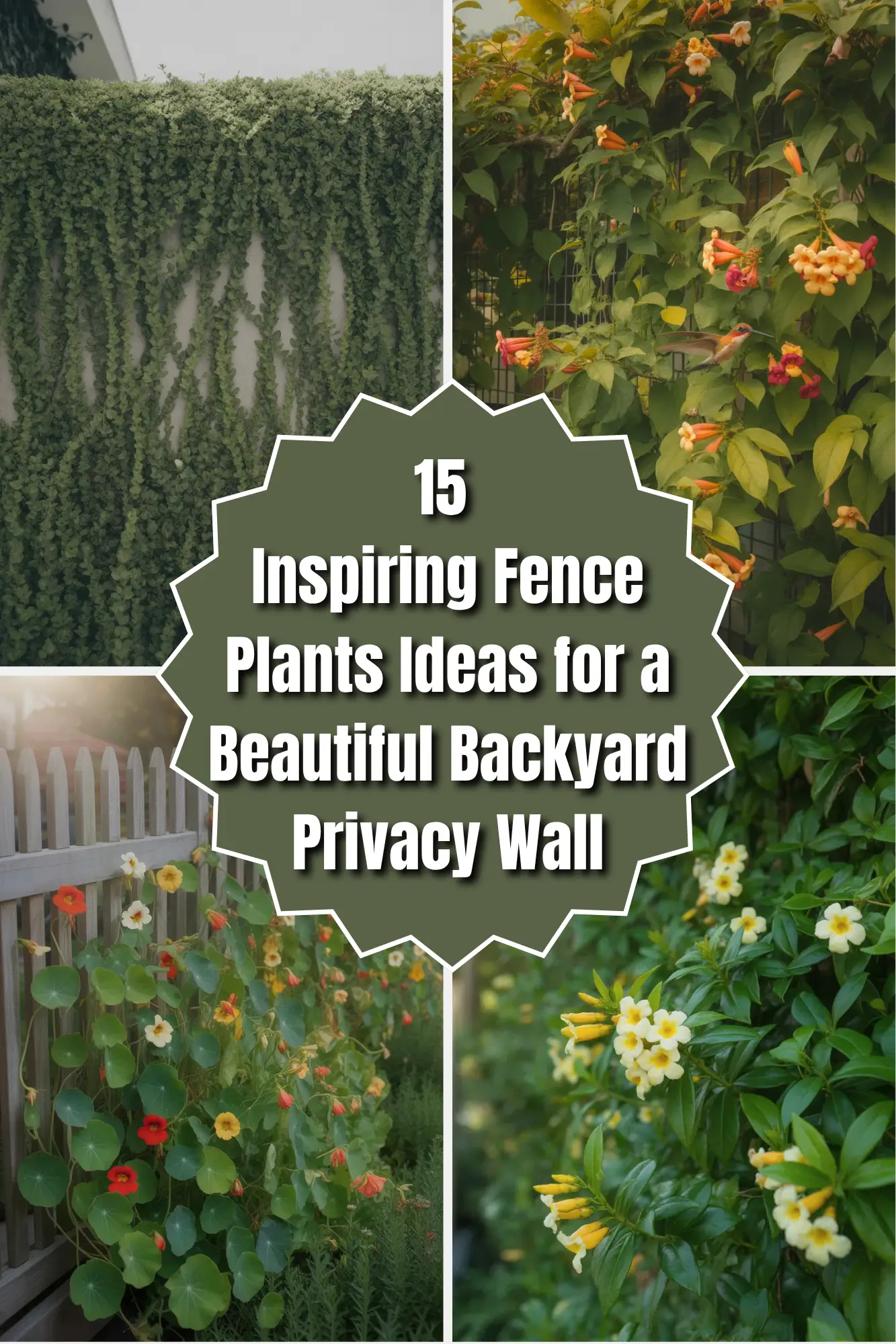
Introduction
A fence does not have to be just a fence. Think of it like a blank canvas. You can turn it into a green wall, a privacy screen, or a snack bar for bees and butterflies. The best fence plants do more than look nice. They cool your yard, muffle street noise, and give you a reason to go outside.
I have grown plants along fences for over ten years. I made mistakes. I bought the wrong vines. I planted things that died in summer. But I also found winners that come back every year and ask for almost nothing. In this article, I will share fifteen fence plant ideas that work for sunny fences, shady fences, dry spots, and wet spots. You do not need a green thumb. You just need dirt, water, and a little patience.
Let us get our hands dirty.
1. Climbing Roses for a Fence That Feels Like a Fairy Tale
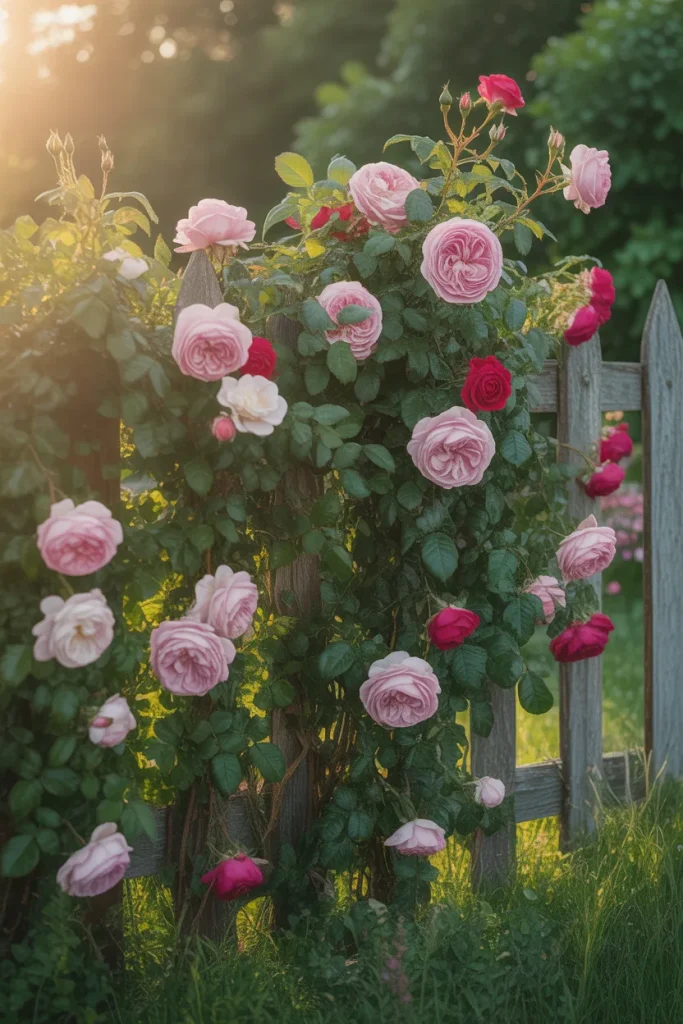
Imagine walking along your fence in June and seeing hundreds of pink or red roses dripping from every post. That is what climbing roses do. They are not actually climbers like ivy. They send out long canes that you tie to the fence. The flowers smell sweet, and they bloom again and again from spring to fall.
Pick a variety called ‘New Dawn’ for soft pink flowers that keep going for months. Or try ‘Don Juan’ for deep red blooms that look like velvet. Plant your rose where the fence gets at least six hours of sun. Dig a hole twice as wide as the pot. Mix in compost before you backfill. Water deeply once a week, not every day. Roses hate wet feet.
Why do roses work so well on fences? They turn a boring boundary into something romantic. Plus, birds eat the rose hips in winter, and you can cut flowers for your kitchen table. Just wear gloves when you tie the canes. Those thorns are no joke.
2. Clematis for Nonstop Color Without Taking Over
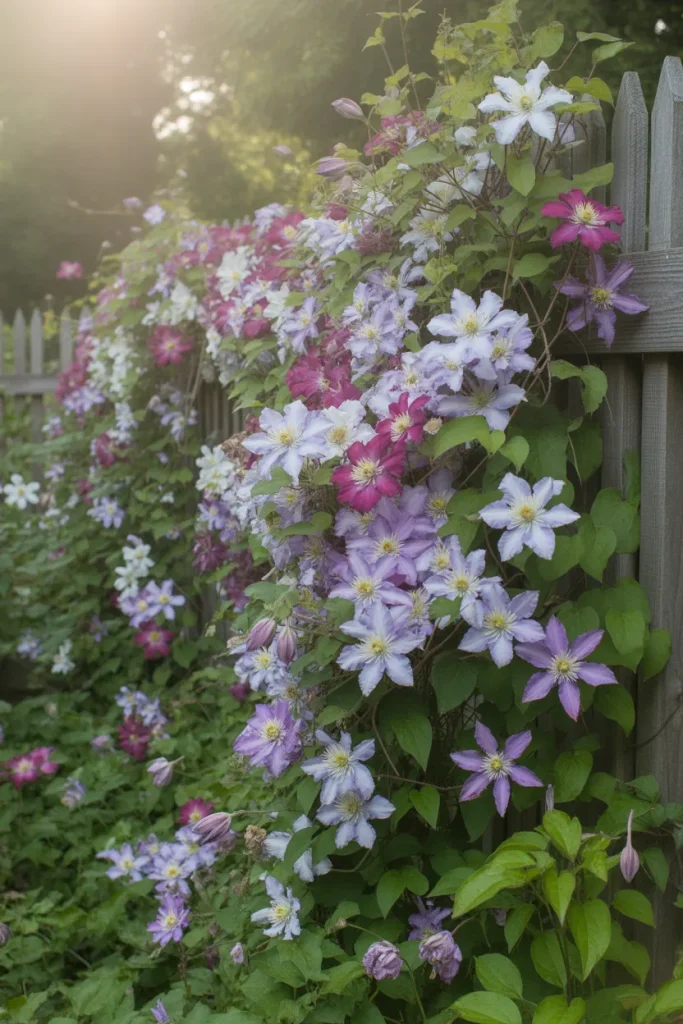
Clematis is the polite neighbor of the plant world. It climbs without strangling your fence. It blooms in purple, white, blue, or pink. And it does not grow twenty feet in one summer like some crazy vines.
Here is a trick that most people do not know. Clematis likes its head in the sun and its feet in the shade. That means the leaves and flowers want bright light, but the roots want to stay cool. Plant low-growing flowers like small marigolds or creeping phlox right at the base of your clematis to shade the soil.
Choose ‘Jackmanii’ for huge purple flowers that last from July to September. Or ‘Nelly Moser’ for pink stripes that look like candy. You will need to tie the young vines to the fence with soft twine. After a year, it holds on by itself. Clematis dies back to the ground in winter in cold places. Do not panic. It comes back stronger in spring.
3. Boston Ivy for a Fence That Turns Red in Fall
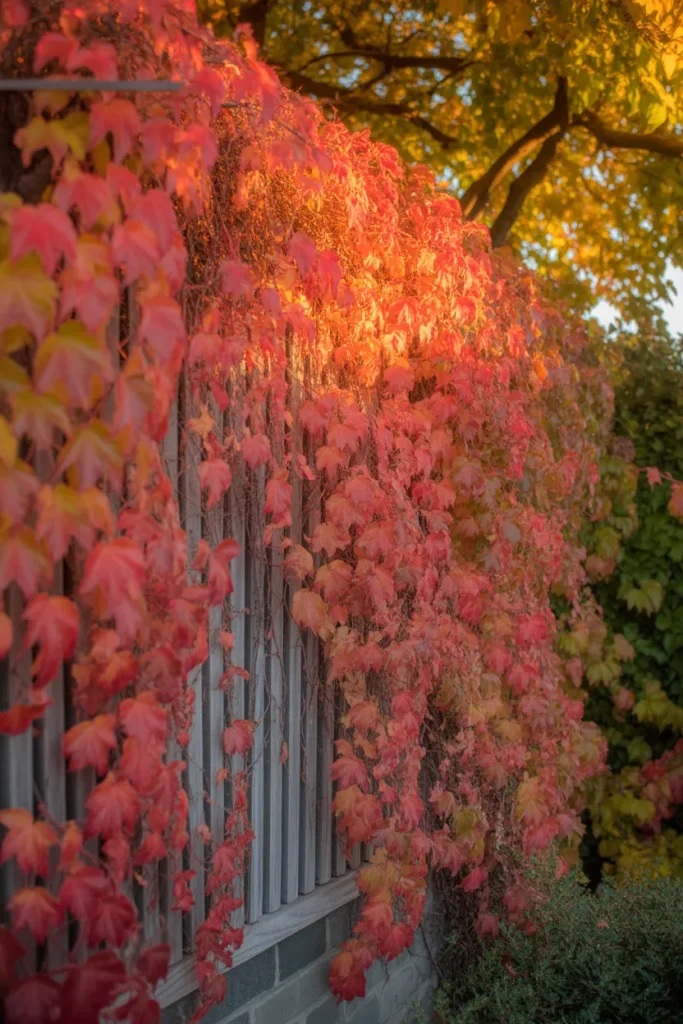
If you want a fence that changes with the seasons, Boston ivy is your plant. In spring, tiny green leaves appear. In summer, those leaves grow into a thick green curtain. Then autumn hits, and the whole thing turns fiery red and orange. It looks like the fence is on fire in the best way possible.
Boston ivy attaches itself with little suction cups. You do not need to tie anything. Just plant it at the base of your fence and walk away. It grows fast, about three to five feet per year. In three years, a bare fence becomes a living wall.
But listen to this warning. Boston ivy sticks to everything. If your fence is wood, the ivy will grip so hard that removing it later might damage the boards. That is fine if you want it there forever. If you think you might change your mind, plant Virginia creeper instead. It holds on but comes off easier.
4. Star Jasmine for Sweet Smells on Warm Evenings
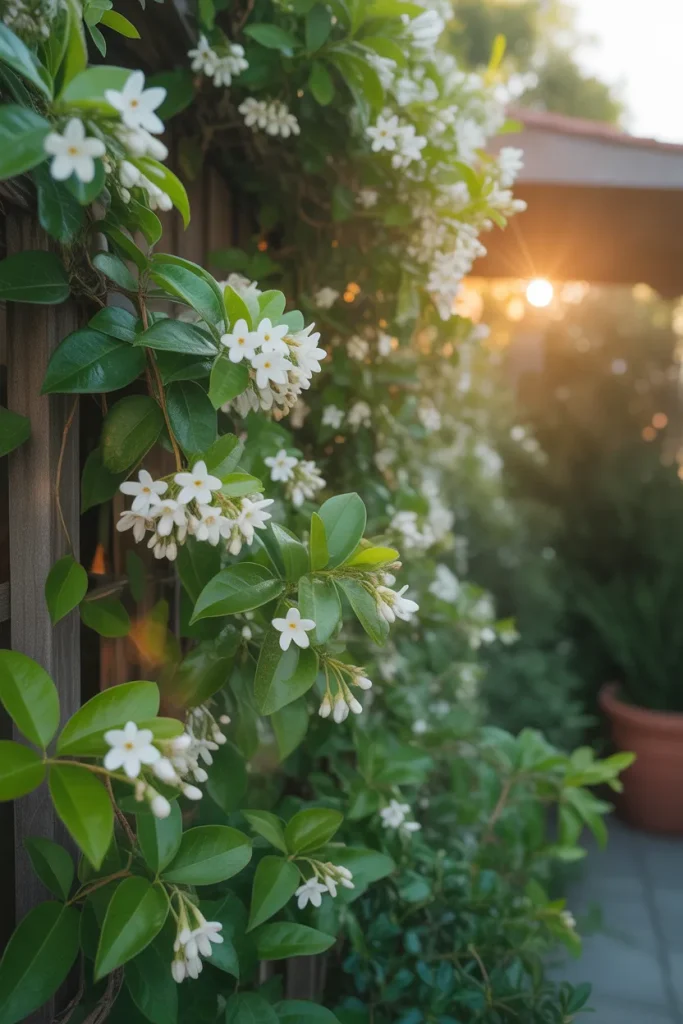
Some plants look nice. Some plants smell nice. Star jasmine does both. Its small white flowers release a perfume that reminds people of vanilla and honey. On a summer evening, that smell drifts across your whole yard. Neighbors will ask what you planted.
Star jasmine is evergreen in warm climates. That means it keeps its glossy green leaves all year. In colder places, the leaves turn bronze but stay on the vine. Plant it along a fence where you sit outside often. Maybe near a patio or a grill. The smell makes dinner taste better.
Give star jasmine well-drained soil and water it when the top inch of dirt feels dry. It grows slowly at first, then speeds up after year two. If you live where winter drops below ten degrees, grow it in a big pot and bring it inside for the coldest months. Otherwise, it stays happy outdoors.
5. Hops for a Fence That Produces Your Own Tea
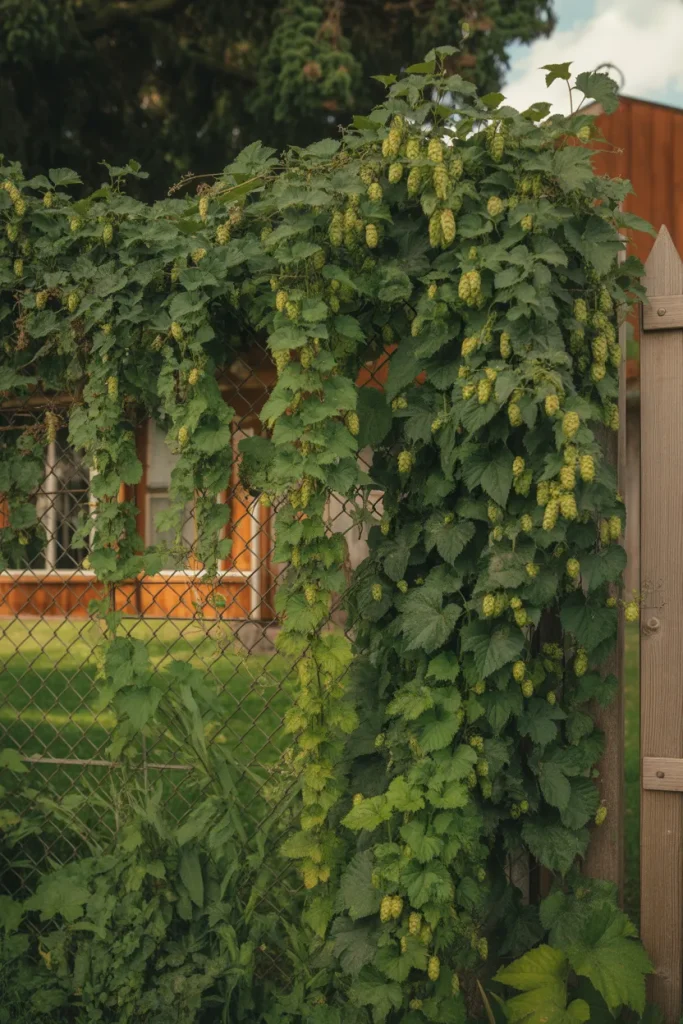
Most people think of beer when they hear hops. But hop vines are beautiful plants that grow like rockets. They shoot up twelve to fifteen feet in a single summer. The leaves look like rough sandpaper, and the flowers are green cones that smell piney and fresh.
You can dry those hop cones and make a bedtime tea that helps you sleep. Or just let them climb your fence for a wild, cottage look. Hops die to the ground every winter, so you get a clean slate each spring. That makes them perfect for chain link fences because you never have to untangle old dead vines.
Plant hop rhizomes, which are just chunky roots, about two inches deep in spring. Give them a sunny fence and lots of water. Keep an eye on them in July. Hops grow so fast that you can almost watch them move. Train the new shoots onto the fence every few days, and they will take over from there.
6. Climbing Hydrangea for Shady Fences That Nothing Else Will Grow On
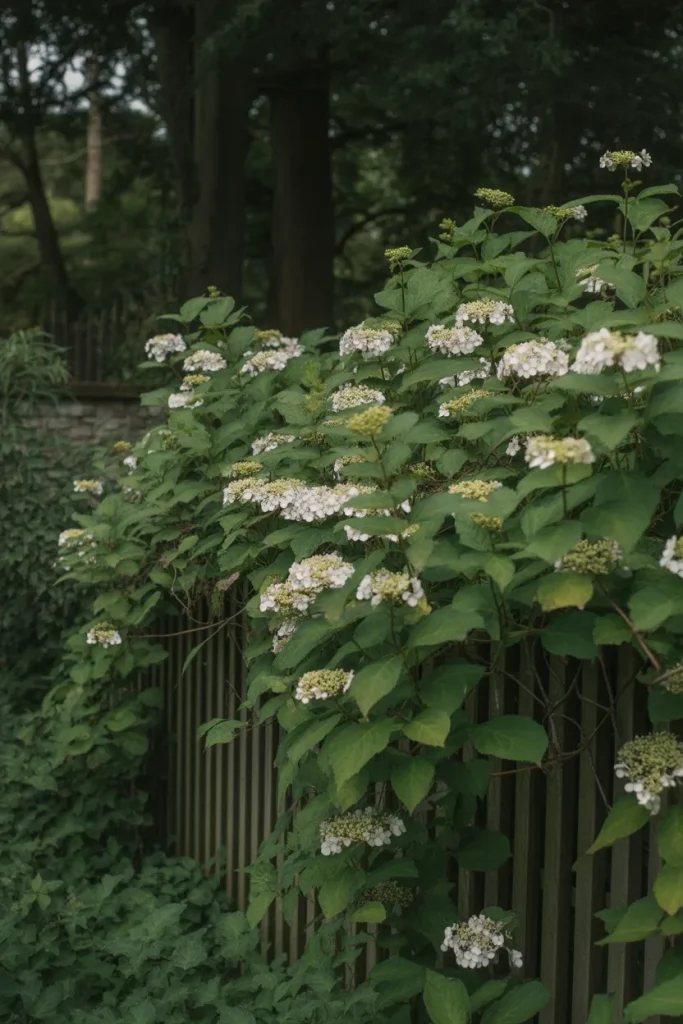
Do you have a fence on the north side of your house? Does it stay in shadow all day? Most vines need sun, but climbing hydrangea is different. It thrives in deep shade. It attaches to wood, brick, or stone without any help. And in early summer, it explodes with white lacecap flowers that smell like fresh linen.
The only thing you need is patience. Climbing hydrangea takes about three years to start climbing. For the first two seasons, it sits there looking small and sad. Do not dig it up. That third year, it wakes up and grows four feet. By year five, your fence disappears under a mountain of green and white.
Water it weekly for those first two years. After that, it almost never needs a drink unless you have a long drought. This plant is a slow burn, but the payoff is a fence that looks like an English garden painting.
7. Black-Eyed Susan Vine for Quick Color on a Small Budget
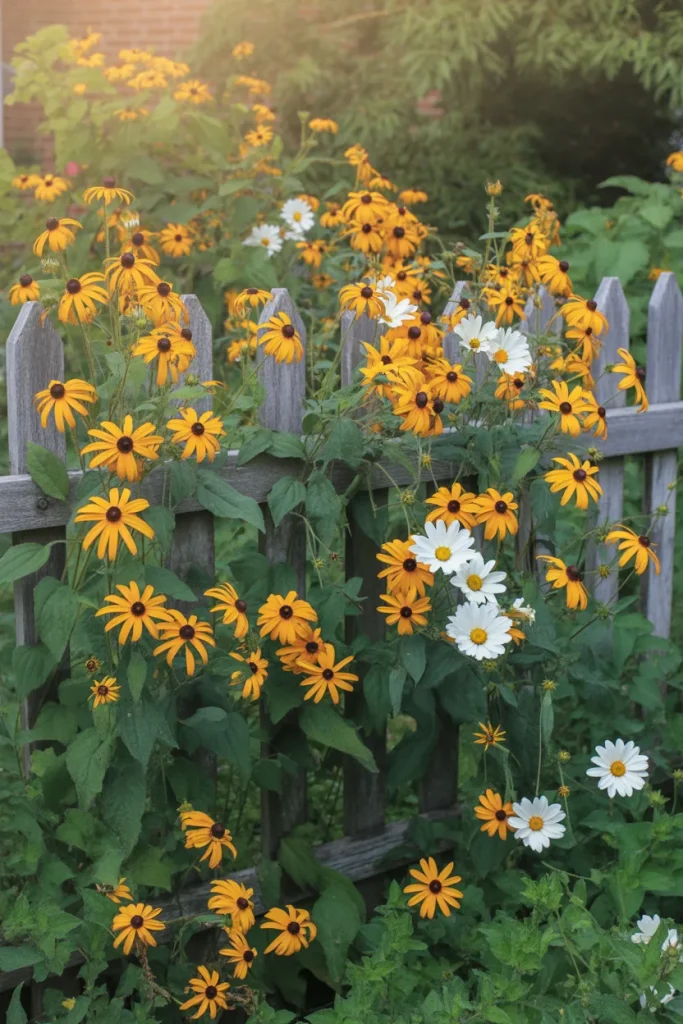
Maybe you rent your house. Maybe you do not want to wait three years for a plant to grow. That is where black-eyed Susan vine comes in. You buy a small pot for five dollars in May. By July, that same plant covers four feet of fence with yellow, orange, or white flowers. Each bloom has a dark brown center that looks like an eye staring back at you.
Black-eyed Susan vine is an annual in most places. That means it grows, flowers, and dies in one season. But it drops seeds that come up again next year on their own. Or you can collect the little black seeds and plant them wherever you want.
Give this vine full sun and average soil. Do not overwater. It actually likes being a little dry between drinks. Pinch back the tips when the plant is six inches tall to make it bushy instead of stringy. Then stand back and watch the show.
8. Passionflower for Exotic Blooms That Attract Butterflies
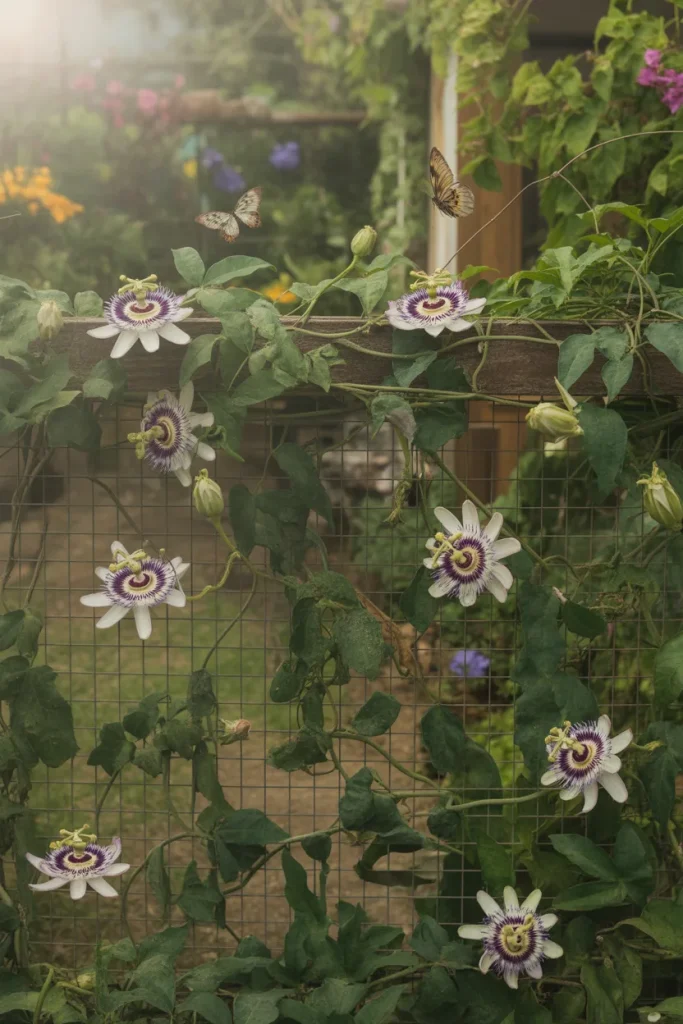
Passionflower looks like it came from another planet. The flowers have purple threads, white petals, and little knobs in the center that look like tiny spaceship parts. They only last one day, but the plant makes a hundred of them over summer. Gulf fritillary butterflies go crazy for passionflower. They lay eggs on the leaves, and the caterpillars eat the plant down to stems. Do not panic again. The plant grows back fast.
Choose maypop passionflower if you live in a cold winter area. It dies to the ground but returns each spring. Choose blue passionflower if you live where it never freezes. That one stays green all year and grows twenty feet or more.
Plant passionflower at the base of a sunny fence and give it something to grab. The tendrils look like little curly springs. They wrap around chain link, wire, or thin wooden slats. Water deeply twice a week until it takes off. After that, it handles its own business.
9. Scarlet Runner Bean for a Fence That Grows Snacks
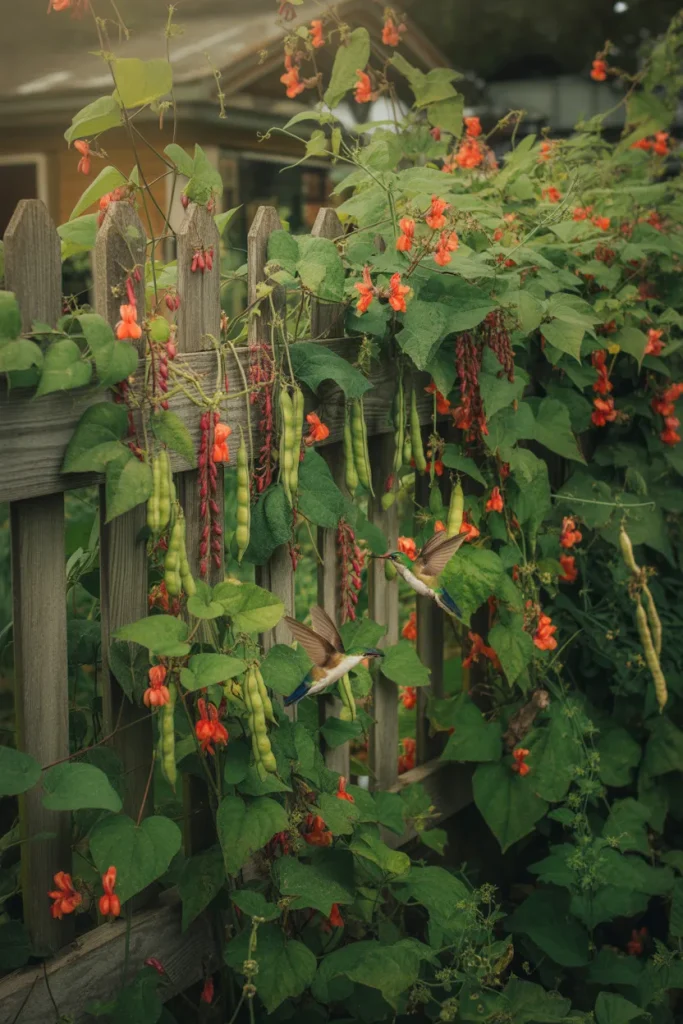
Here is a two for one deal. Scarlet runner bean gives you bright red flowers that hummingbirds love, plus green bean pods that taste great in stir fry. The flowers look like little red rockets. The beans inside the pods have purple stripes that kids think are cool.
Plant the seeds directly in the ground next to your fence after the last spring frost. Push each seed one inch deep and six inches apart. In two weeks, you see baby leaves. In two months, you have a twelve foot tall green wall full of red flowers. Pick the bean pods when they are young and flat. If you let them get fat and bumpy, the beans inside are still tasty but tougher.
Scarlet runner beans are annuals, so you replant every spring. But the seeds are cheap. One packet costs two dollars and covers thirty feet of fence. Kids love helping with this one because the seeds are big and easy to handle.
10. English Ivy for a Classic Look That Stays Green in Winter
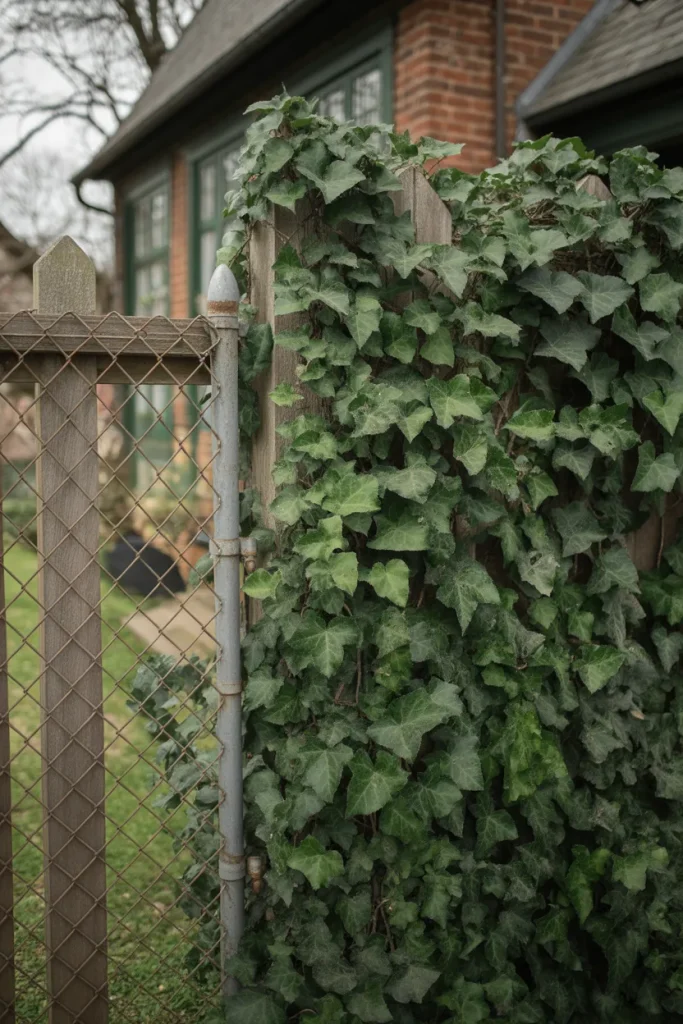
English ivy is the old reliable of fence plants. It stays dark green even when snow piles up. It clings to wood, vinyl, or metal with tiny rootlets. And it grows in sun or shade, wet or dry. That is why people have used it for hundreds of years.
But here is the honest truth. English ivy can get bossy. In warm climates like the Pacific Northwest, it grows so fast that it can climb trees and weigh them down. If you live in a mild winter zone, choose a less aggressive variety like ‘Baltica’ or ‘Thorndale.’ Those stay better behaved.
For everyone else, plant English ivy three feet apart along your fence. Water it for the first summer. After that, ignore it completely. Trim it back once a year if it tries to go where you do not want it. English ivy on a wooden fence looks like a storybook cottage. On a chain link fence, it turns ugly metal into a green hedge.
11. Trumpet Vine for Hummingbirds and Fences That Need Total Coverage
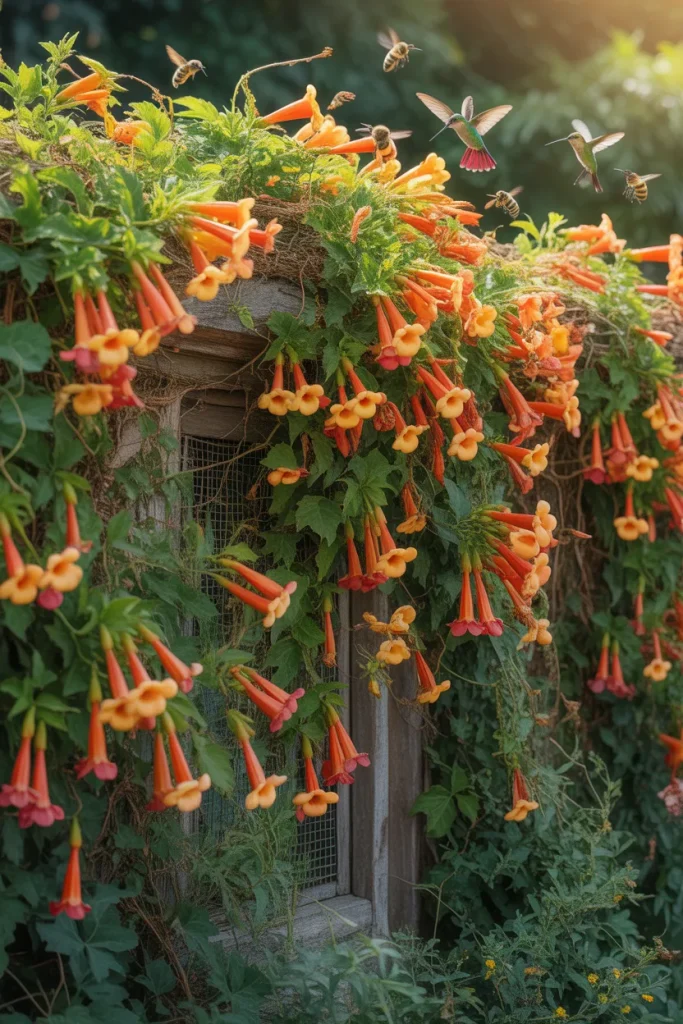
Do you want your fence to disappear completely? Trumpet vine is the answer. It grows twenty to thirty feet tall. It spreads ten feet wide. It sends out roots that pop up new vines three feet away. Some people call it a monster, but those people planted it too close to their house. Put trumpet vine on a lonely fence away from buildings and trees, and it becomes a hummingbird hotel.
The flowers look like orange or red trumpets, which is where the name comes from. Hummingbirds fight over them. Bees love them too. Blooms start in July and keep going until the first frost. The plant grows in any soil and survives drought, flood, and neglect.
To keep trumpet vine from taking over your whole yard, plant it inside a bottomless bucket. Dig a hole, sink a five gallon bucket with the bottom cut out, and plant the vine inside that bucket. The roots cannot spread sideways. You get all the flowers without the invasion.
12. Carolina Jessamine for Early Spring Hope
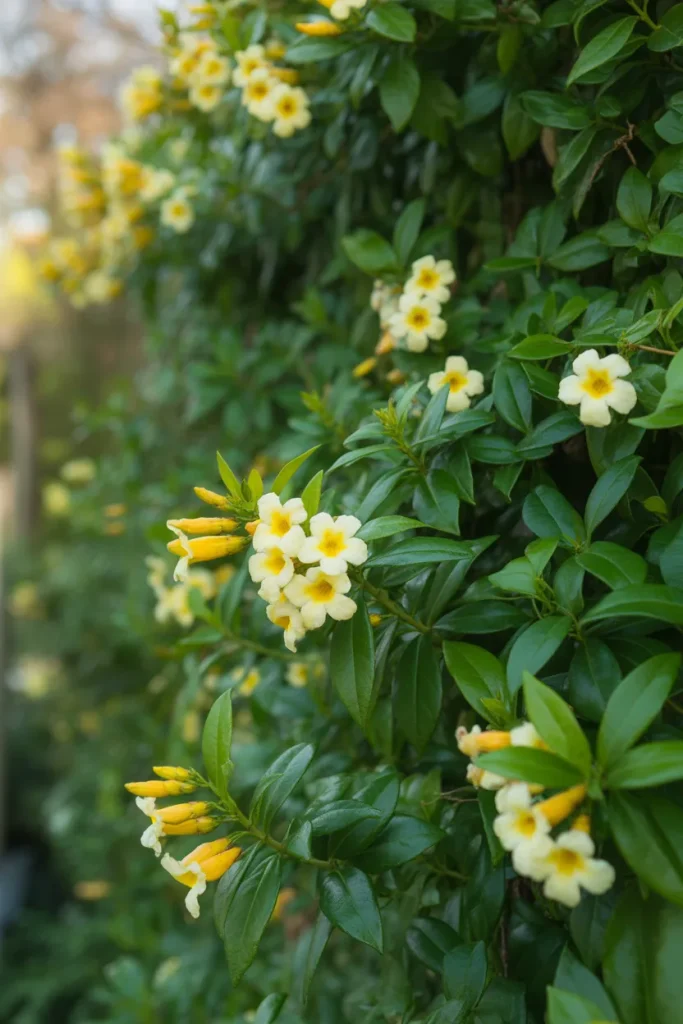
Most plants wait until May to flower. Carolina jessamine gets impatient. In February or March, when everything else is still brown, this vine covers itself in tiny yellow bells. That pop of color after a long winter feels like medicine for your soul. The flowers smell like honey, and the glossy green leaves stay on all year in warm zones.
Carolina jessamine grows twenty feet tall and twines around fence posts without any help. It likes sun to part shade and does not need much water after the first year. Plant it where you see it from a window. On gray winter days, those yellow blooms will make you smile.
One warning that matters. All parts of this plant are poisonous if you eat them. That is true for people and pets. If you have a dog that chews on everything or a toddler who puts things in their mouth, pick a different vine. For everyone else, Carolina jessamine is a spring miracle.
13. Crossvine for Evergreen Shine and Heat That Does Not Quit
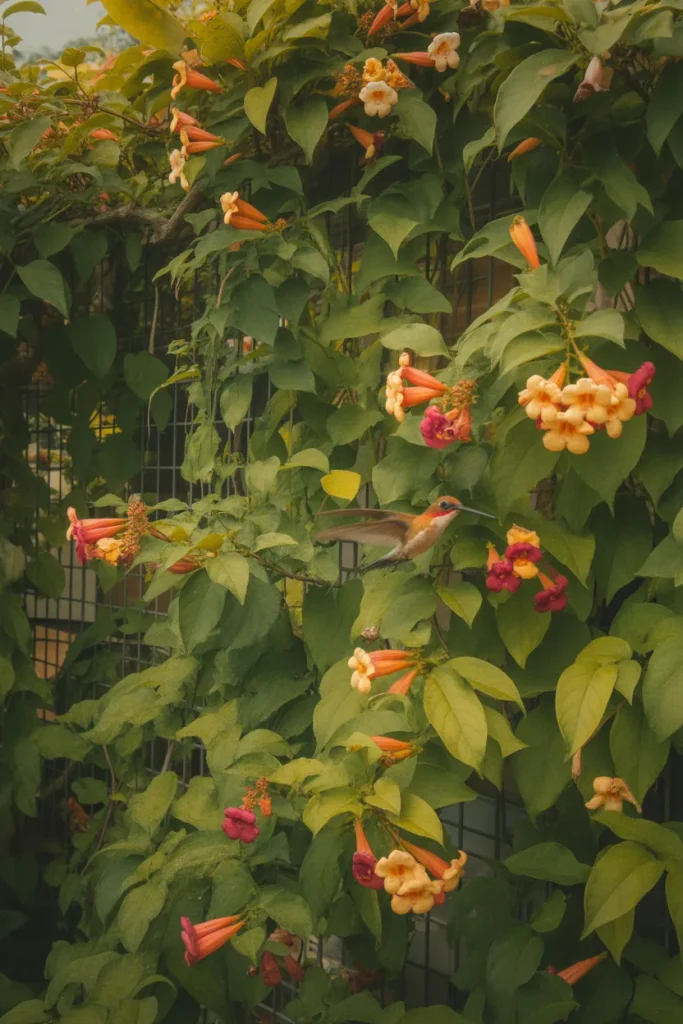
Summers keep getting hotter. Many fence vines wilt when the temperature hits ninety five. Not crossvine. This plant laughs at heat. It stays green and shiny through droughts, heat waves, and blazing sun. The flowers come in spring and look like little trumpets in shades of orange, red, and yellow. Hummingbirds go nuts for them.
Crossvine attaches to fences with little claw like tendrils. You do not need to tie it. It grows about ten to fifteen feet tall, which is perfect for a six foot fence. It does not eat your house like some aggressive vines.
Plant crossvine in full sun to part shade. Water it once a week for the first summer. After that, you can honestly forget about it. This plant is native to the southeastern United States, so it belongs here. No invasive worries, no diseases, no fuss. Just a green fence that turns into a flower show every April.
14. Nasturtiums for a Low Fence That Kids Can Eat
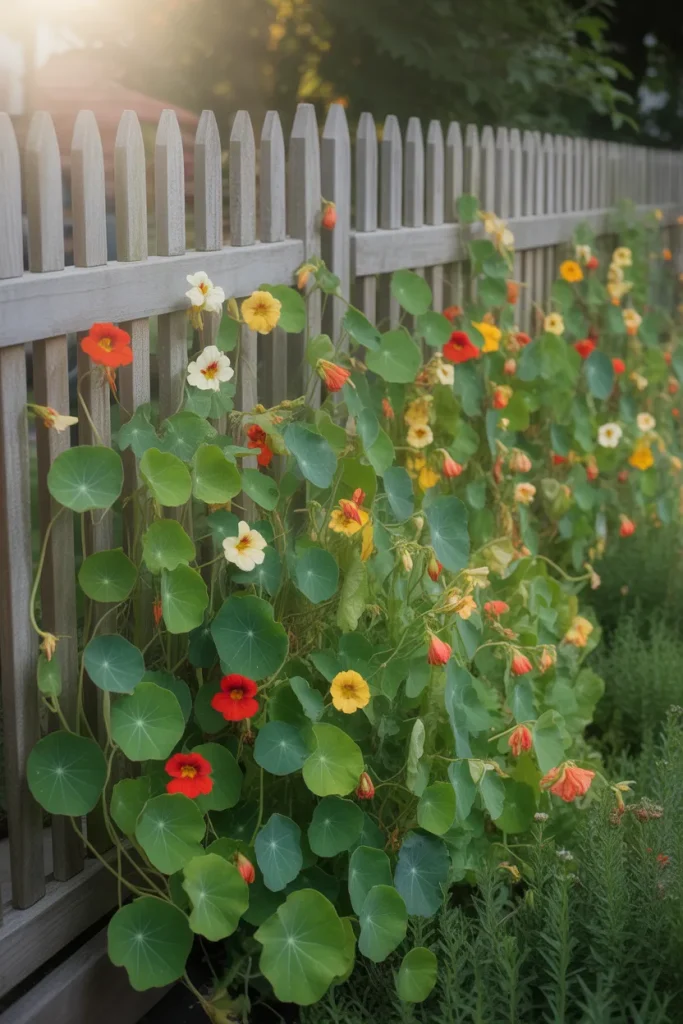
Not every fence is eight feet tall. Maybe you have a short picket fence or a little wire border. That is where nasturtiums shine. They do not climb like real vines, but they sprawl and weave through fence gaps. The round leaves look like tiny lily pads. The flowers come in warm reds, oranges, and yellows.
Here is the fun part. Every bit of a nasturtium is edible. The flowers taste peppery, like a mild radish. The leaves add zip to salads. Kids love picking the bright blooms and popping them in their mouths. It feels like a magic trick.
Plant nasturtium seeds right in the ground next to your fence after the last frost. Push them half an inch deep. Do not fertilize. Rich soil makes more leaves and fewer flowers. Poor soil gives you blooms all summer. Water only when the leaves look droopy. That is it. Nasturtiums are the easiest plant on this list.
15. Creeping Fig for a Tight Green Carpet on Solid Fences
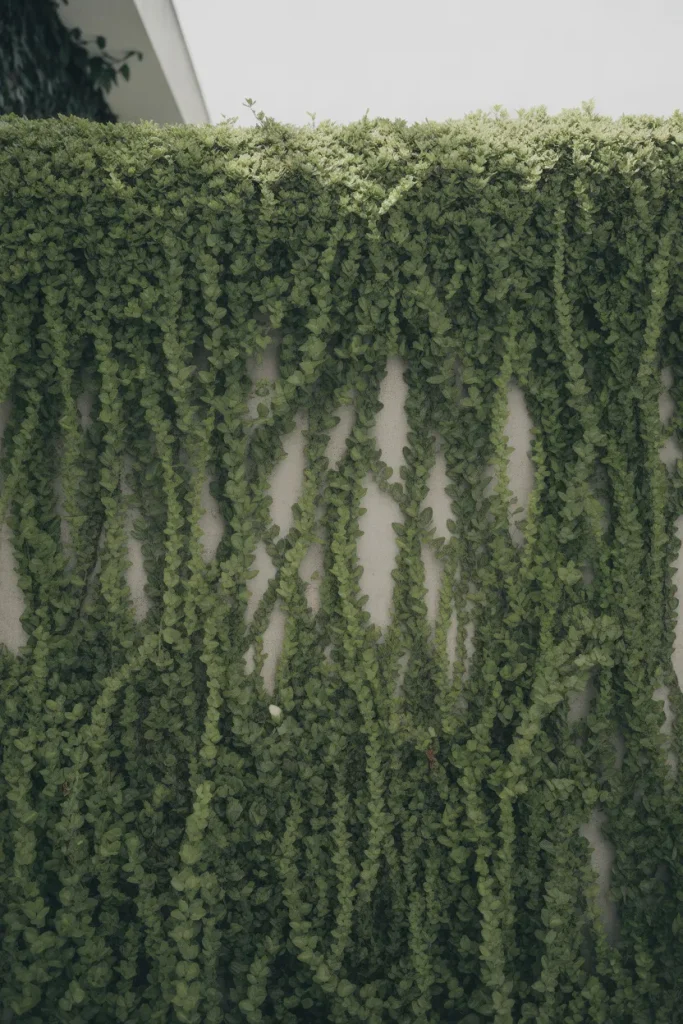
Do you have a solid wood or concrete fence that looks bare? Creeping fig is your answer. It does not make big leaves or flowers. Instead, it presses tiny green leaves flat against the fence like a coat of paint. The effect is a smooth, velvety green surface that looks manicured without any work.
Creeping fig attaches with sticky roots that do not damage sound wood or masonry. It grows slowly at first, then speeds up to two feet per year. In three years, a bare fence becomes a living sculpture. The leaves stay green all year in warm climates. In cold winter zones, creeping fig dies back and regrows in spring.
The only catch is trimming. Creeping fig will eventually grow over the top of your fence and down the other side. Once a year, take hedge clippers and shear it back like a haircut. That keeps it looking neat. If you ignore it for five years, you will have a green blob instead of a fence line.
Conclusion
Your fence does not have to be just a fence anymore. You have fifteen ways to turn that boring boundary into something alive, beautiful, and useful. Whether you want the sweet smell of star jasmine on summer nights, the red fire of Boston ivy in autumn, or the peppery taste of nasturtium flowers in your salad, there is a plant here for you.
Start small. Pick one idea that fits your sun and your soil. Plant it this weekend. Water it when you remember. Talk to it if you want, but you do not have to. Plants want to grow. They just need a chance.
The best time to plant a fence vine was five years ago. The second best time is tomorrow morning. Go get some dirt under your nails. Your future self will sit on the patio, look at that green living fence, and thank you for starting today.