15 Black White Brown Living Room Ideas

You walk into a living room that is all beige. The couch is beige. The walls are beige. Even the rug is beige. Your eyes glaze over. You feel nothing.
Now picture this: a deep brown leather couch. A crisp white wall behind it. A black iron lamp in the corner. Suddenly the room has teeth. It has warmth. It has contrast that wakes up your brain.
Black, white, and brown is not a boring trio. It is the most honest color combo you can use. Black gives sharp lines. White gives breathing room. Brown gives the cozy hug of wood and leather and wool.
But here is the trap. Most people mess up these three colors. They use too much black and the room feels like a cave. Too much white feels like a hospital. Too much brown feels like your grandpa’s basement.
You need balance. You need smart placement. And you need fifteen real-world ideas that work in actual homes, not glossy catalogs.
Let me show you exactly how to mix black, white, and brown so your living room feels calm, bold, and welcoming all at once.
Idea 1 The Brown Leather Anchor
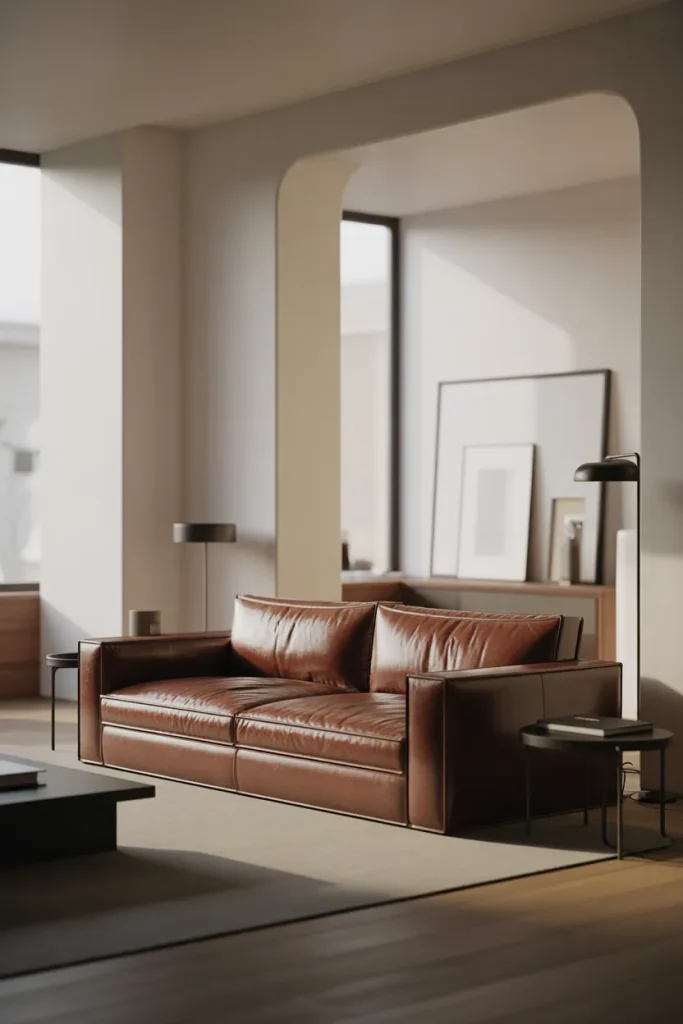
Start with one big piece of brown furniture. A leather sofa is perfect. Not faux leather that peels. Not microfiber that traps dust. Real brown leather with a worn-in feel.
Put that sofa in the middle of your room or against the longest wall. Brown leather grabs your eye because it has texture and depth. It says “sit here” without shouting.
Now add white walls. Plain white, not off-white or eggshell. Pure white makes the brown pop. Then sprinkle small black things around the room. A black side table. Black picture frames. A black floor lamp.
The brown anchors the whole design. Without it, black and white fight each other. Brown steps in like a calm friend and says, “Everyone relax.”
Idea 2 White Brick Wall for Grit
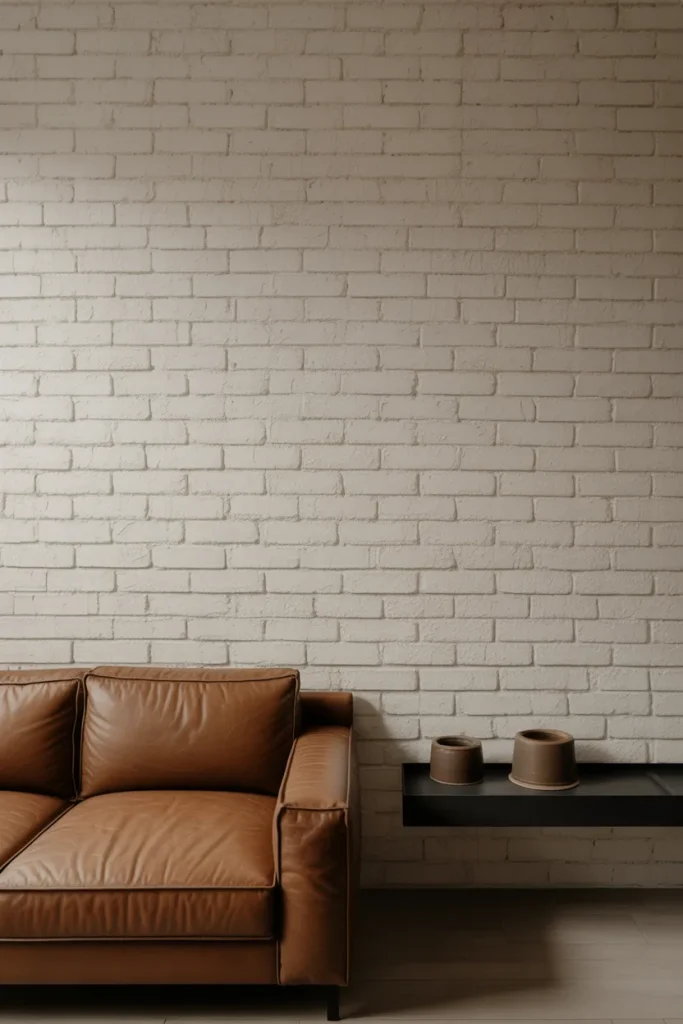
White painted brick is better than plain drywall. Brick has little bumps and shadows. Those bumps catch light and throw it back in soft ways. A white brick wall behind your brown sofa gives you two wins at once.
The white keeps the room bright. The brick texture keeps it from feeling sterile. Brown furniture in front of white brick looks like a loft in New York City but warm enough for a family movie night.
Paint your brick with matte white paint. Not glossy. Glossy brick looks like a diner bathroom. Matte brick looks like a friend’s cool apartment.
Add a black metal shelf on that brick wall. Put three brown ceramic pots on the shelf. You just tied all three colors together without trying too hard.
Idea 3 Black Window Frames Against White Walls
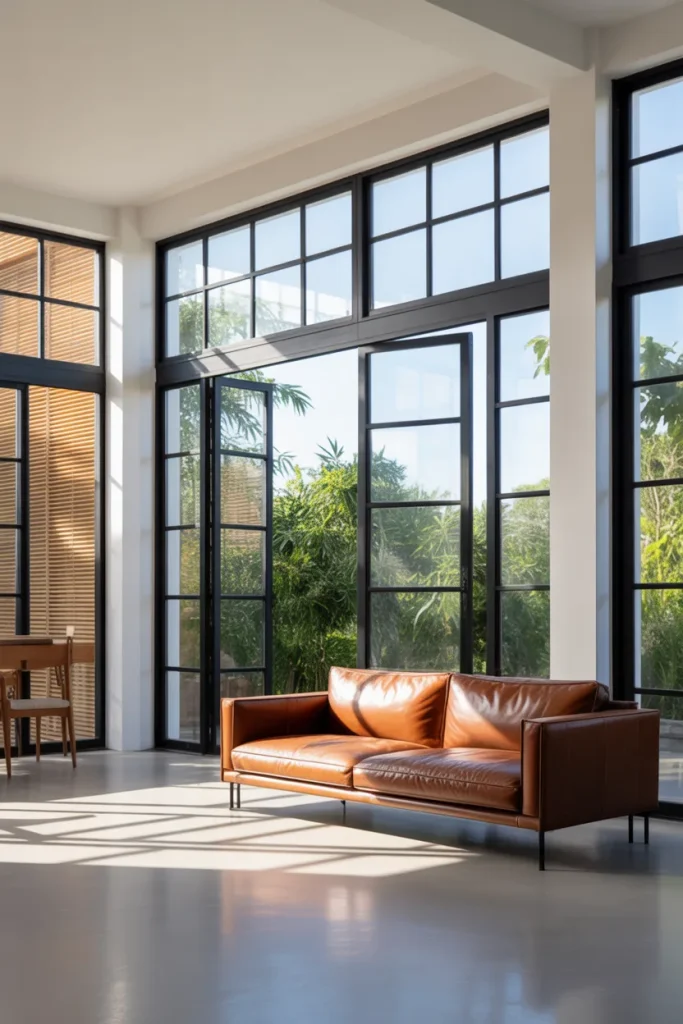
Most people buy white window frames. That is a mistake. Black window frames against white walls create instant drama. Your eyes go right to the window because the black outline says “look here.”
Outside your window, you see green trees or blue sky. That natural color breaks up the black-white-brown palette perfectly. But even on a gray day, black frames add structure to your room.
Match your black frames with brown wood blinds or bamboo shades. The brown softens the black. The white walls keep everything from feeling heavy.
This trick works best in rooms with at least two windows. One window with black frames can look lonely. Two windows create a rhythm.
Idea 4 Brown Wood Floor, White Rug, Black Furniture Legs
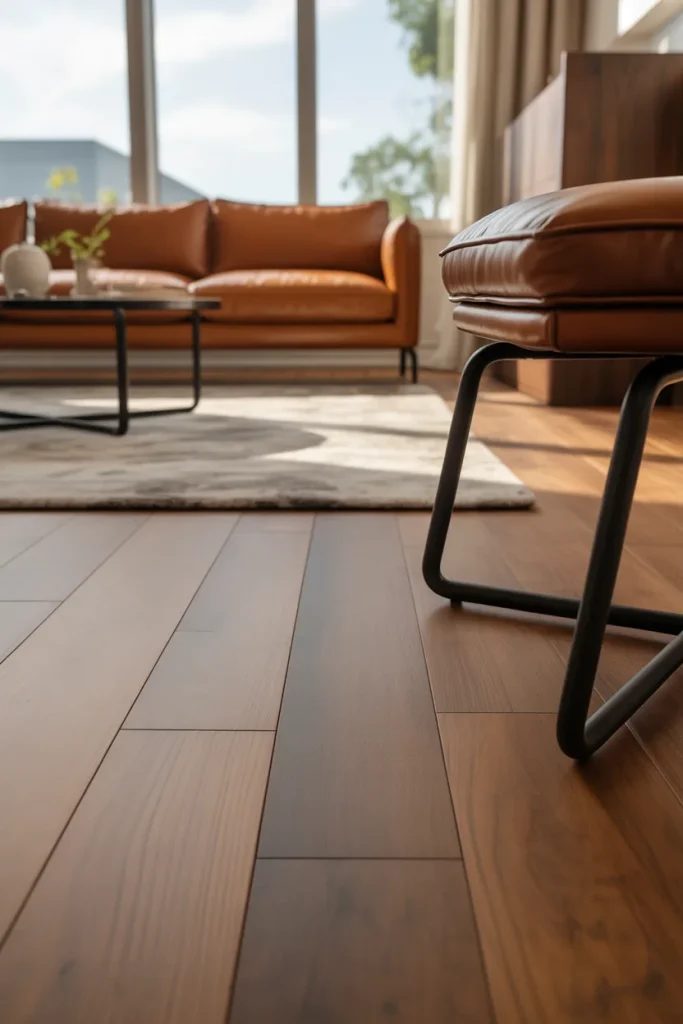
Your floor is the fifth wall. Do not ignore it. A medium-brown wood floor gives you a warm foundation. Oak, hickory, or walnut all work. Avoid dark brown floors that eat light. Avoid light blonde floors that wash out.
Put a white or cream rug in the center of the room. Not pure white if you have kids or pets. Off-white with a low pile works better. That white rug lifts the whole room. It reflects light up toward your face.
Now look at your furniture legs. Coffee table legs. Chair legs. Side table legs. Paint them black or buy pieces with black metal legs. Those black legs anchor the furniture to the floor. Your eye travels from brown floor to white rug to black legs to brown sofa. That path feels natural and satisfying.
Idea 5 Brown Velvet for Softness
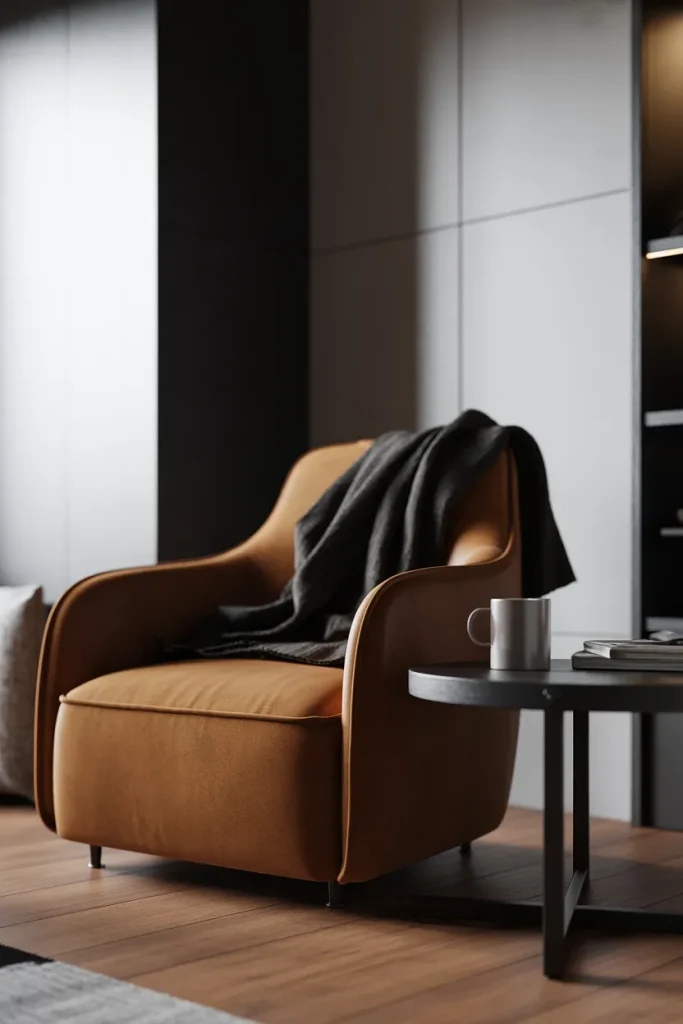
Leather is tough. Velvet is tender. A brown velvet armchair or a brown velvet ottoman adds softness to a room that might feel too hard with black metal and white walls.
Velvet catches light differently than leather or wood. It glows. It asks you to touch it. In a black-white-brown room, that velvet piece becomes the emotional center.
Put a black throw blanket over the back of the brown velvet chair. Set a white ceramic mug on a black side table next to the chair. Now you have a tiny scene inside your larger room.
Do not overdo velvet. One or two pieces is plenty. Too much velvet looks like a theater lobby.
Idea 6 Black and White Art with Brown Frames
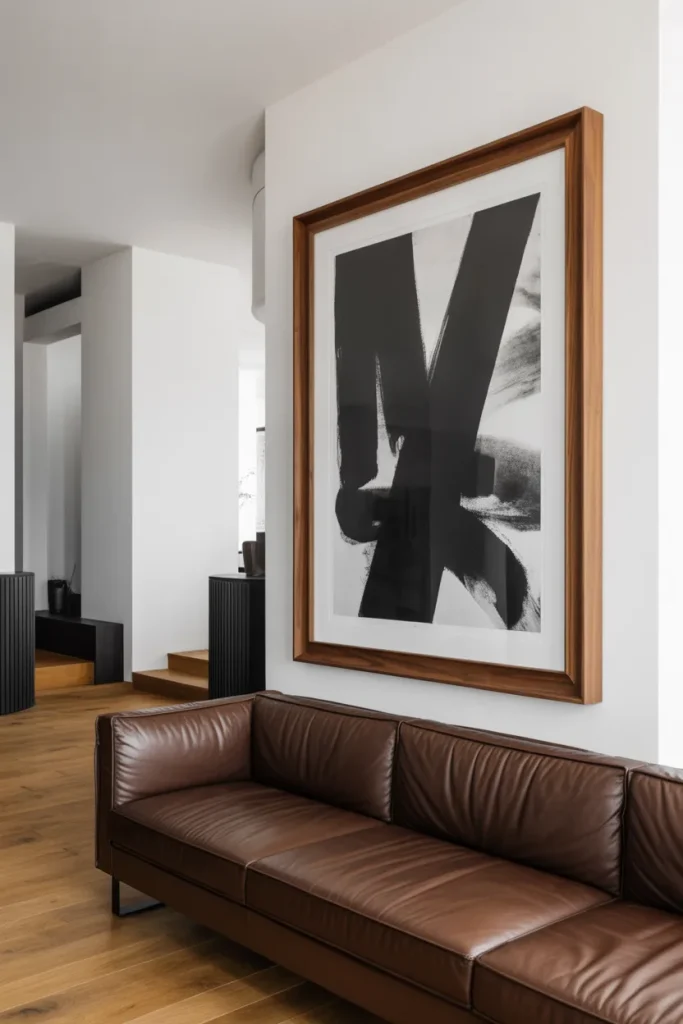
Art is where most people mess up. They buy art that has blue or red or green. Those extra colors fight your black-white-brown scheme. Instead, find black and white photography or abstract prints with only black, white, and gray.
But here is the twist. Frame that art in brown wood frames. Not black. Not white. Brown.
The brown frame warms up the cold black and white image. It also connects to your brown furniture and floor. Hang three pieces in a row. Or one large piece above your brown sofa.
Make sure the mat inside the frame is white. A white mat between the art and the brown frame gives visual space. Without the white mat, the brown frame touches the black art too closely and feels crowded.
Idea 7 Brown Leather Pouf Instead of Ottoman
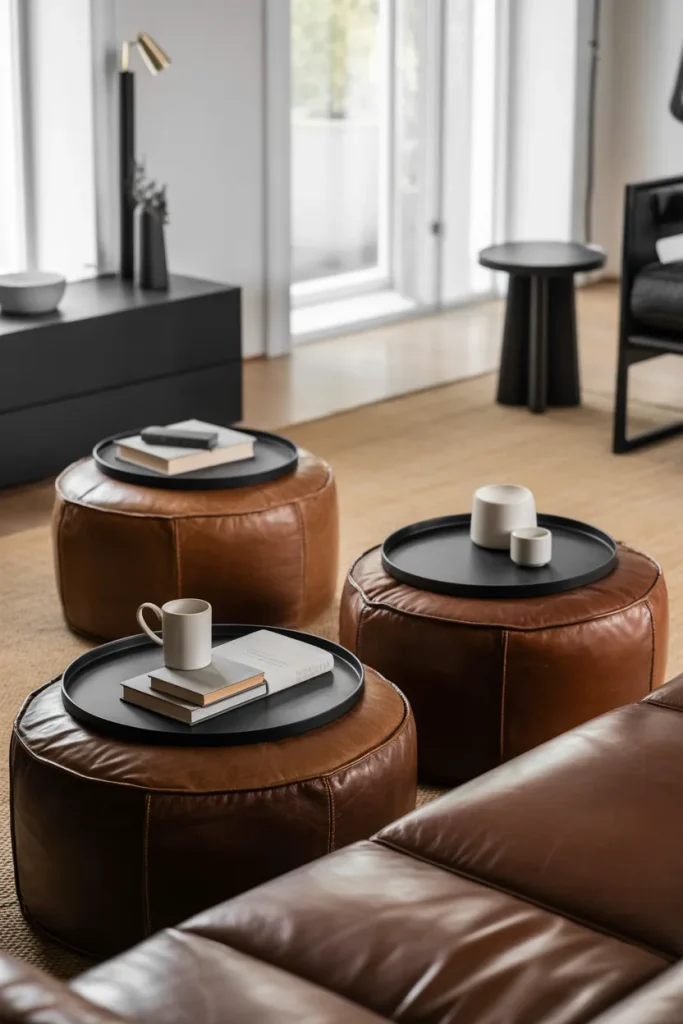
A big ottoman eats up floor space. In a small living room, that is a problem. Swap it for two or three brown leather poufs. Poufs are stuffed leather cushions that look like little round stools.
You can kick them around. Push them under a console table when you need floor space. Pull them out when guests come over. Their brown leather matches your sofa. Their round shape softens all the straight lines of black furniture and white walls.
Top each pouf with a small black tray. That tray holds drinks or a book. The black tray stops the brown from blending into itself.
Poufs are also cheap. You can find good ones for under 100 dollars. That makes this idea friendly for any budget.
Idea 8 White Built-Ins with Black Backs
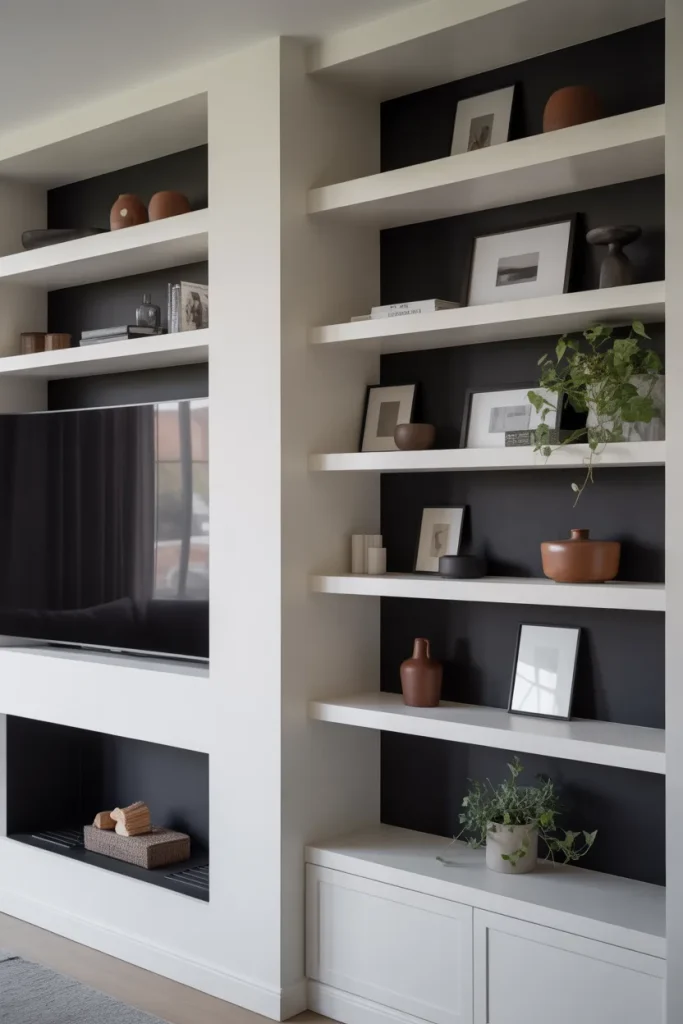
Built-in shelves on either side of your fireplace or TV wall. Paint the outside of the shelves white so they blend into your white walls. But paint the back inside of each shelf black.
This is a sneaky trick. The black back makes every object on the shelf stand out. A brown book looks brighter. A white vase looks crisper. A black candle disappears into the background, which is exactly what you want.
Fill the shelves with brown pottery, white picture frames, and a few green plants for life. The green leaves pop against the black back. Your eye moves across the shelves without getting bored.
This idea works because it adds depth to a flat wall. Depth makes a room feel bigger.
Idea 9 Brown Woven Shades on Windows
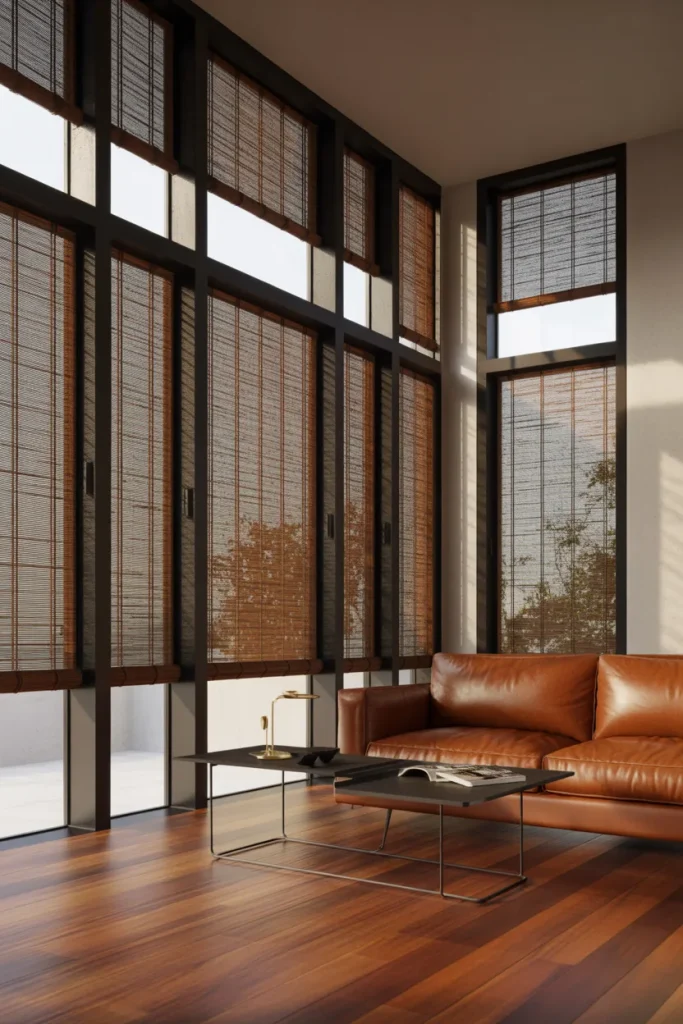
You already have white walls. You might have black window frames (Idea 3). Now cover those windows with brown woven wood shades. Bamboo, jute, or grasses.
Woven shades add texture. Not color—texture. That texture breaks up all the smooth surfaces of painted walls and leather sofas. Your brain loves texture because it signals natural materials.
Roll the shades halfway up during the day. Let light pour in from the top of the window while the bottom half stays covered for privacy. The combination of white light, brown texture, and black frames creates a layered look that feels expensive.
Match the shade material to your brown floor. If your floor is oak, choose oak shades. If your floor is walnut, choose walnut shades. Same wood, different form.
Idea 10 Black Coffee Table with Brown Tray
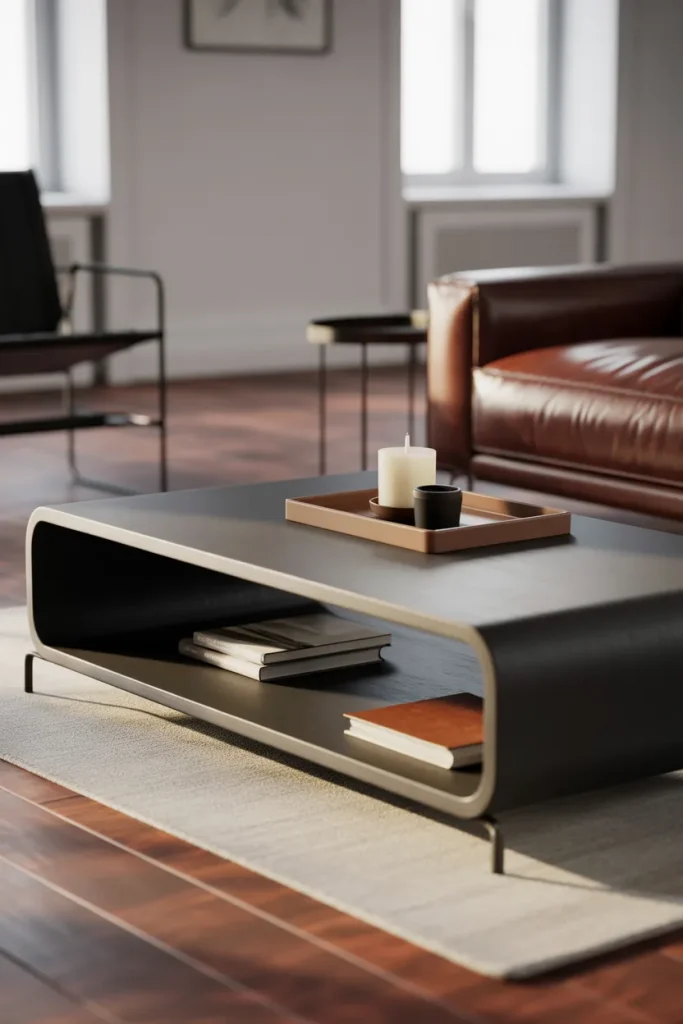
A black coffee table can look like a dark hole in the middle of your room. Fix that by placing a brown wooden tray in the center of the table. The brown tray breaks up the black surface.
On that tray, put a white ceramic candle, a black coaster, and a brown leather coaster. The tray corrals all the small stuff so your table does not look messy.
Choose a coffee table with an open bottom shelf. No solid front. An open shelf lets you see the brown floor and white rug underneath. That visual flow keeps the room from feeling blocked.
If you already have a brown coffee table, reverse the trick. Put a black tray on top. The idea is the same: use the opposite color as your tray to create a focal point.
Idea 11 Brown Accent Wall Behind White Sofa
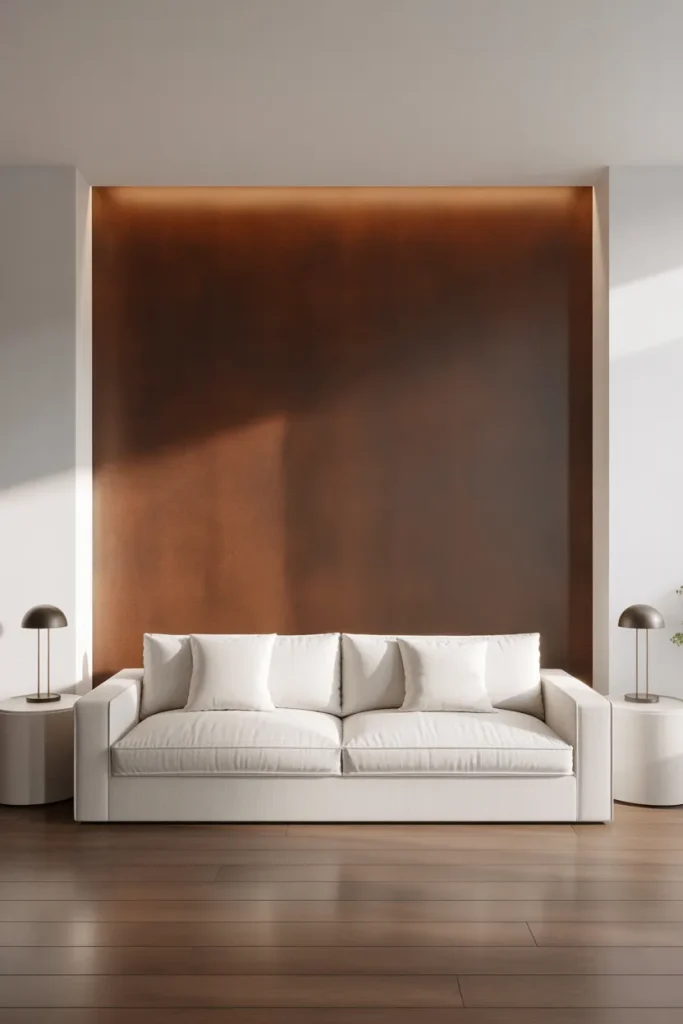
Most people put brown furniture against white walls. Flip it. Put white furniture against a brown wall. A white linen sofa backed by a rich brown accent wall feels like a luxury hotel suite.
The brown wall must be matte. Flat brown paint absorbs light instead of reflecting it. That absorption makes the white sofa jump forward. Your eye sees the sofa first, then the wall behind it.
Keep the other three walls white. Only one brown wall. Two brown walls would close in on you. One brown wall adds drama without suffocation.
Add black lamps on white end tables next to the white sofa. The black lamps echo the dark tone of the brown wall but in a smaller dose. This whole setup works because it plays with foreground and background.
Idea 12 Black and White Striped Rug with Brown Fringe
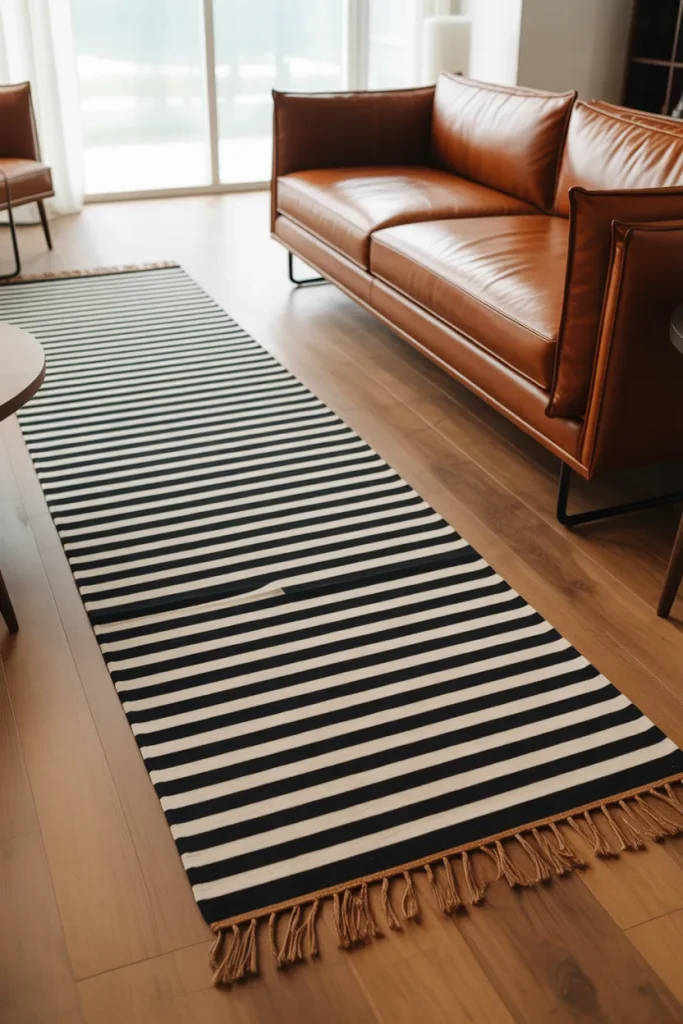
A striped rug is riskier than a solid rug. But stripes done right add movement to a room. Choose a black and white striped rug with thin stripes. Thick stripes look like a circus tent.
The rug should have brown fringe on both ends. That fringe is the secret weapon. The brown fringe ties the black-white rug to your brown floor and brown furniture.
Lay the rug so the stripes run the long way of the room. Stripes running toward your sofa make the room feel longer. Stripes running sideways make the room feel wider. Choose based on your room shape.
Vacuum stripes in one direction only. Back-and-forth vacuuming blurs the pattern. One direction keeps the stripes sharp.
Idea 13 Brown Leather Strap Shelves
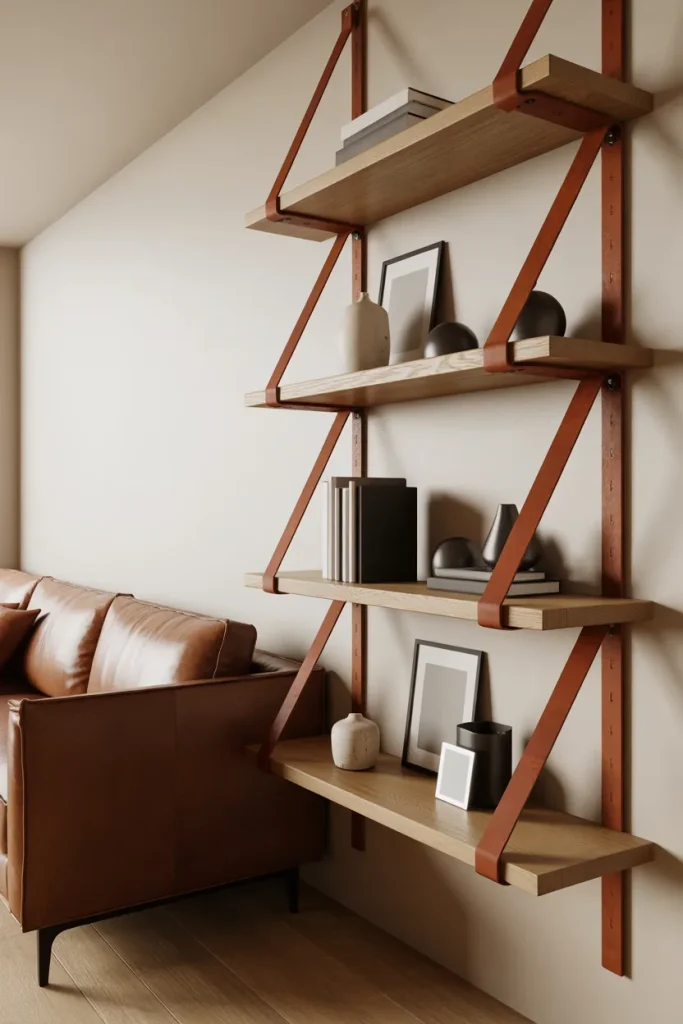
Forget bulky wooden shelves. Mount floating shelves using brown leather straps. You buy two leather straps, screw them into the wall, and lay a wood board across the straps.
The leather adds a handmade, rustic feel. The brown matches your leather sofa or poufs. The white wall behind the shelf keeps everything light. Put black books or black frames on the shelf.
This shelf style works best for light objects. Do not load it with heavy pottery or stacks of magazines. One or two items per shelf. The simplicity is the point.
You can make these shelves yourself in an afternoon. Leather strap kits cost about 30 dollars online. That low cost and handmade look is perfect for AdSense-friendly content because readers love DIY.
Idea 14 White Ceiling, Brown Beams, Black Lights
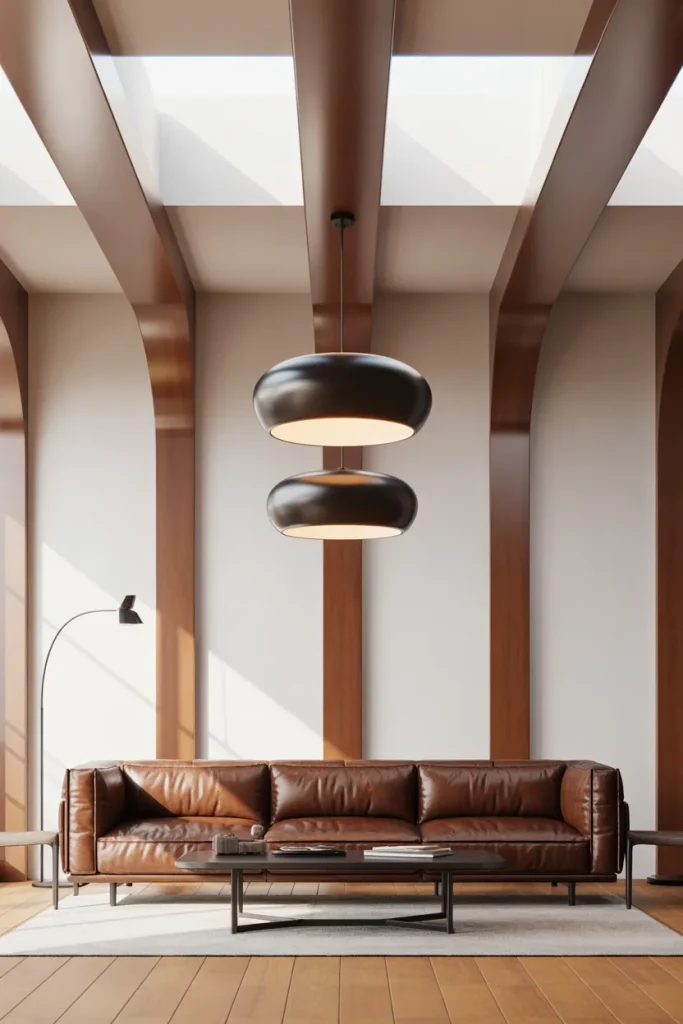
Your ceiling is empty real estate. Paint it white. Then add fake or real brown wood beams across the ceiling. Those beams draw your eye up, which makes the room feel taller.
Between the beams, hang black pendant lights. One pendant over the coffee table. One pendant in a corner. The black lights contrast against the white ceiling and echo the black furniture below.
Brown beams work best in rooms with at least 8-foot ceilings. Lower ceilings feel crowded with beams. If your ceiling is low, skip the beams and just add black flush-mount lights on a white ceiling.
The white ceiling bounces light around the room. That bouncing light lands on your brown furniture and makes it glow. Dark ceilings would swallow that light.
Idea 15 The 60-30-10 Rule with Black-White-Brown
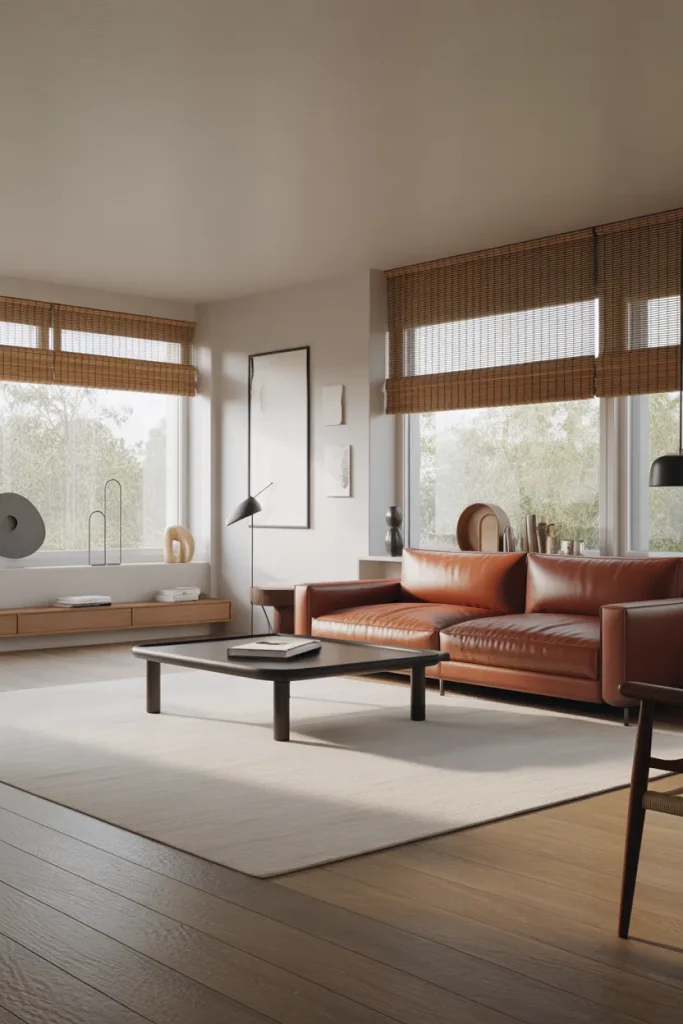
This final idea is a formula. Use 60 percent of one color, 30 percent of another, and 10 percent of the last. In a black-white-brown room, here is the best split.
60 percent white. Walls, ceiling, trim, rug. White dominates because it keeps the room bright and open.
30 percent brown. Sofa, floor, wood beams, leather poufs, woven shades. Brown adds the warmth.
10 percent black. Coffee table legs, lamp shades, picture frames, tray, candle holders. Black adds the punctuation.
You can swap the 60 and 30. Some rooms look better with 60 percent brown and 30 percent white. That works in big rooms with high ceilings. But for most living rooms, white as the lead color feels fresh.
The 10 percent black is non-negotiable. Less than 10 percent black looks washed out. More than 10 percent black looks gloomy. Measure roughly. You do not need a calculator. Just look around and ask yourself, “Do I see black in small, sharp doses?”
How to Avoid Common Mistakes
Three colors sounds simple. But people make the same errors over and over. Here is how to sidestep them.
Mistake 1: Matching browns exactly. Your floor, sofa, and shelves do not need to be the same shade of brown. Different browns add depth. A walnut floor with a caramel leather sofa and oak shelves looks rich. Matching browns looks like a uniform.
Mistake 2: Using pure black on big surfaces. Black walls, black sofas, black curtains. Those big black shapes suck light and shrink your room. Use black only on small items or thin lines like table legs and picture frames.
Mistake 3: Forgetting texture. White walls plus black legs plus brown sofa sounds good on paper. But if everything is smooth, the room feels flat. Add a chunky knit throw. Add a woven basket. Add a rough stone vase. Texture makes the colors sing.
Mistake 4: No natural light. Black-white-brown works best with sunlight. If your living room has no windows, choose a different color scheme. Dark rooms need bright colors. This trio needs daylight to separate the tones.
Mistake 5: Too many patterns. A striped rug, a patterned throw pillow, a geometric tray. That is too much. Pick one pattern. Let everything else be solid. Your eyes need rest.
Simple Swaps for Different Tastes
Maybe you like the idea of black-white-brown but want a slightly different feel. Try these small changes.
For a cozier room: Swap white walls for cream walls. Swap black metal for dark brown metal. Keep the brown furniture. The room will feel softer and less crisp.
For a modern room: Use high-gloss white walls. Use matte black on all metal. Use brown sparingly—just the floor and one leather chair. The room will feel sleek and cool.
For a rustic room: Use white plaster walls with bumps. Use rough brown wood beams. Use black iron hardware that looks hand-forged. Add a brown cowhide rug. The room will feel like a mountain cabin.
For a small room: Use white on every wall and ceiling. Use brown only on the sofa. Use black only on lamp bases and picture hooks. The room will feel twice as big because the white recedes and the dark colors stay low.
How to Bring in Other Colors Without Ruining the Scheme
You do not have to live in a black-white-brown prison. Other colors can visit. But they should be accents, not roommates.
Green works best. A snake plant in a brown pot. A fiddle leaf fig in a white pot. Green leaves against white walls and brown furniture feel like nature indoors.
Blue works in small doses. One navy blue pillow on a brown sofa. One blue book on a black coffee table. No more than that.
Yellow works as a single pop. A yellow vase on a brown shelf. A yellow throw on a white armchair. Yellow wakes up the whole room without taking over.
Red is dangerous. A little red looks exciting. A lot of red looks aggressive. Use red only in art, never in furniture.
The rule is simple: any accent color should cover less than 5 percent of the room. You want people to notice the black-white-brown first. The accent color should be a whisper, not a shout.
Real Rooms, Real Results
I have seen these ideas work in actual homes. A 12×14 foot living room with a brown leather sectional, white walls, and black-framed windows felt dull until we added brown woven shades and a black coffee table with a brown tray. The room went from blah to balanced in one afternoon.
A tiny 10×10 foot apartment living room used the 60-30-10 rule. Sixty percent white walls and ceiling. Thirty percent brown floor and a brown velvet chair. Ten percent black lamp, black shelf brackets, and black coasters. That small room felt open and intentional, not cramped.
A family with two kids and a dog used brown leather sofa, white slipcovered armchairs, and black metal side tables. The brown leather hid stains. The white slipcovers washed easily. The black metal survived being bumped. That room looked good and lived hard.
These are not magazine photos. These are real people who wanted a sharp, warm, livable space. Black, white, and brown gave them exactly that
Conclusion
Black, white, and brown is not a boring choice. It is a brave choice. Most people hide in beige. They think color is risky. But these three neutrals, when mixed with intention, make a room feel both bold and safe at the same time.
The secret is balance. White opens up. Brown warms up. Black sharpens up. Leave one out and the room tips over. Too much white feels cold. Too much brown feels muddy. Too much black feels heavy. But all three together? That is the sweet spot.
Start with one idea from this list. Maybe the brown leather sofa anchor. Maybe the white brick wall. Maybe the 60-30-10 rule. Live with that one change for a week. Then add another.
You do not need to remodel your whole room in a weekend. Small shifts add up. A black tray here. A brown pouf there. A white rug that ties it all together.
Before you know it, your living room will have a quiet confidence. It will not scream for attention. It will not beg to be liked. It will simply feel right.
Now go look at your living room. What is the one thing you can change today? Start there.