15 Kitchen Countertop Ideas That Actually Work
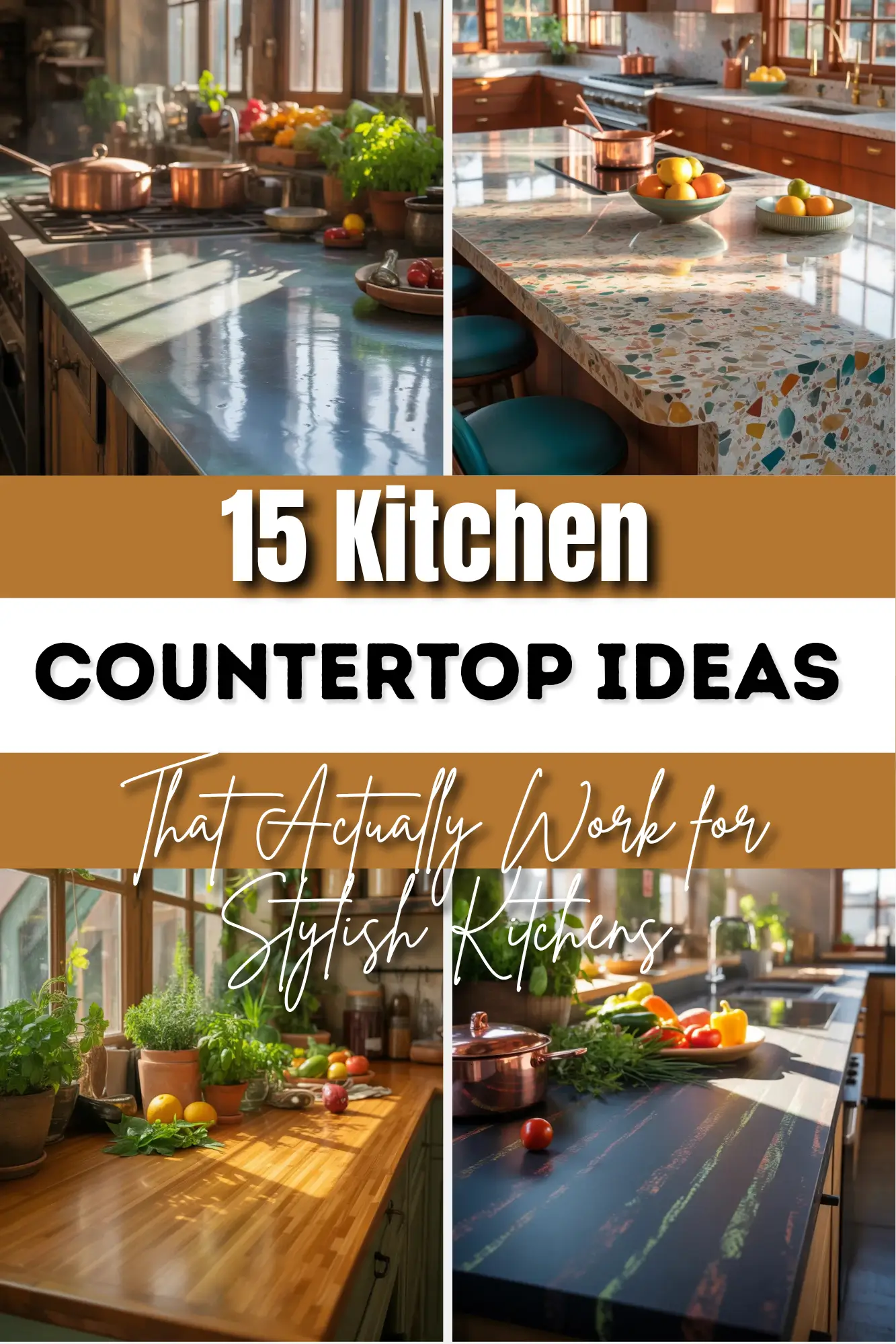
You slice a lemon. Juice drips everywhere. Your kid sets down a hot pan. Your countertop takes all the blame without saying a word. That slab has to be tough, pretty, and easy to clean. But with so many choices, where do you start?
I’ve been inside hundreds of kitchens. Some countertops cracked within a year. Others looked brand new after a decade. This list gives you fifteen solid options. Each one has a real job to do in your home. No marble that stains if you blink. No cheap plastic that warps. Just smart picks for real cooking families.
Let’s jump in.
1. Butcher Block Warmth
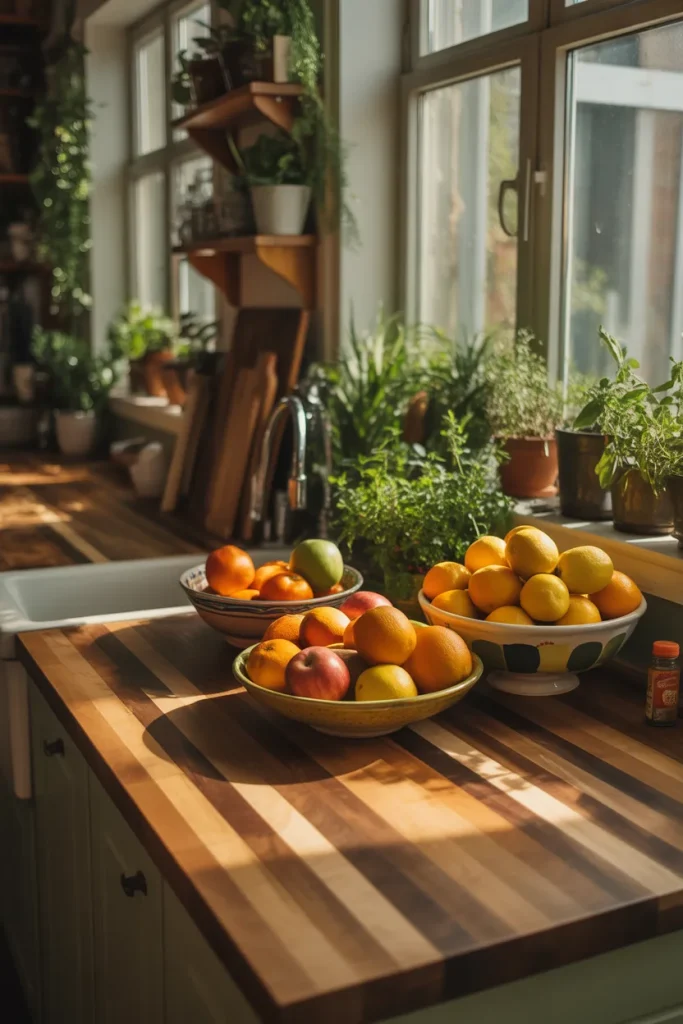
Butcher block brings wood into your kitchen. Maple and walnut are the most common. The surface feels warm, not cold like stone. You can cut right on it if you want. Knives don’t get dull fast because wood gives a little.
The downside? Water is its enemy. A wet sponge left overnight leaves a dark ring. You must oil it every month with mineral oil. That takes ten minutes. Some people find it soothing. Others forget and end up with cracked wood.
Cost runs 60 per square foot. That’s mid-range. If you like a lived-in look that develops character over time, butcher block works. Scratches just add story. Sand them out later.
2. Quartz Toughness
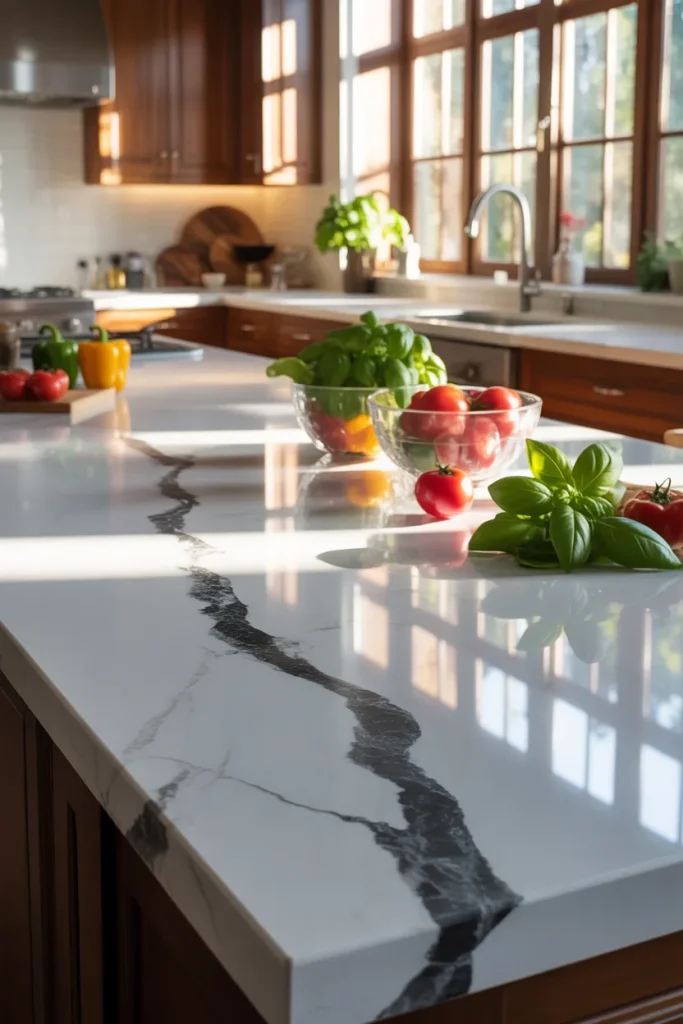
Quartz is crushed stone mixed with resin. That means no pores. Spilled red wine sits on top. You wipe it away like nothing happened. No sealing needed. Ever.
Colors go from pure white to deep black. Some quartz looks exactly like marble but without the headaches. It resists scratches, stains, and heat pretty well. But a screaming hot pan right off the stove can still leave a mark. Use a trivet.
Price sits at  150 per square foot. It’s not cheap. But you save money on sealers and cleaners. Families with kids love quartz because juice boxes and ketchup don’t stand a chance.
3. Soapstone Old School Charm
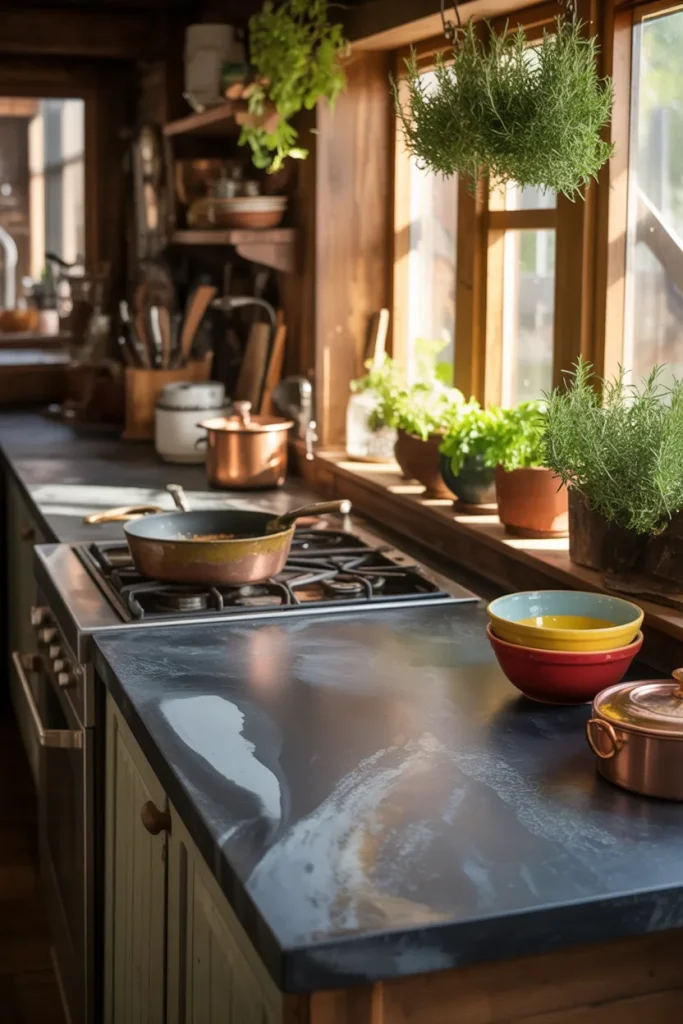
Soapstone feels smooth like a bar of soap. That’s where the name comes from. It’s a natural stone that doesn’t stain. Acidic stuff like vinegar or tomato sauce just beads up.
The cool thing? Soapstone doesn’t burn. Set a hot cast iron pan right on it. No problem. Small scratches can be sanded away or left alone to form a soft patina. Some people love that aged look.
Downside? It’s soft. A heavy pot dropped from two feet can chip an edge. Also, you have to rub mineral oil on it to darken the color. Without oil, it stays light gray. With oil, it turns deep charcoal.
Cost runs 120 per square foot. It’s a niche choice for people who want something different from granite.
4. Stainless Steel Restaurant Style
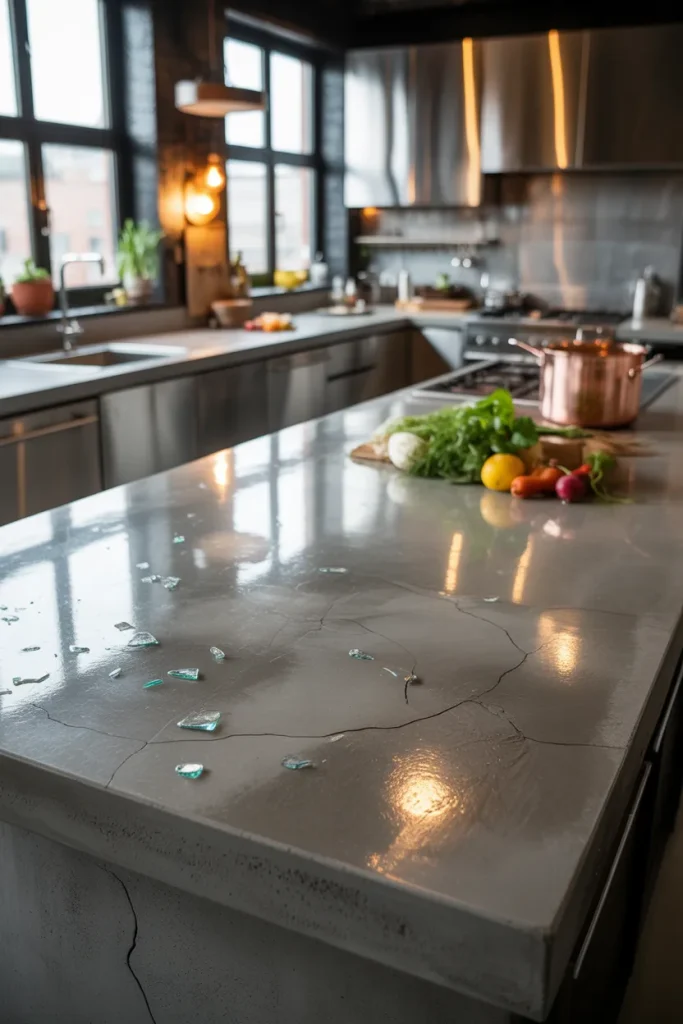
Walk into any restaurant kitchen. What do you see? Stainless steel. Chefs beat it up daily. It doesn’t care. You can scrub it with steel wool. You can drop a frozen turkey on it. Hot pans? No sweat.
Stainless steel also fights bacteria because the surface has no cracks. That’s why hospitals use it too.
But here’s the catch. It shows every fingerprint and water drop. You’ll wipe it down constantly if that bothers you. Also, it dents. A dropped knife leaves a tiny dimple. Some call that character. Others call it annoying.
Price is 100 per square foot. It works best in modern or industrial style kitchens.
5. Concrete Industrial Edge
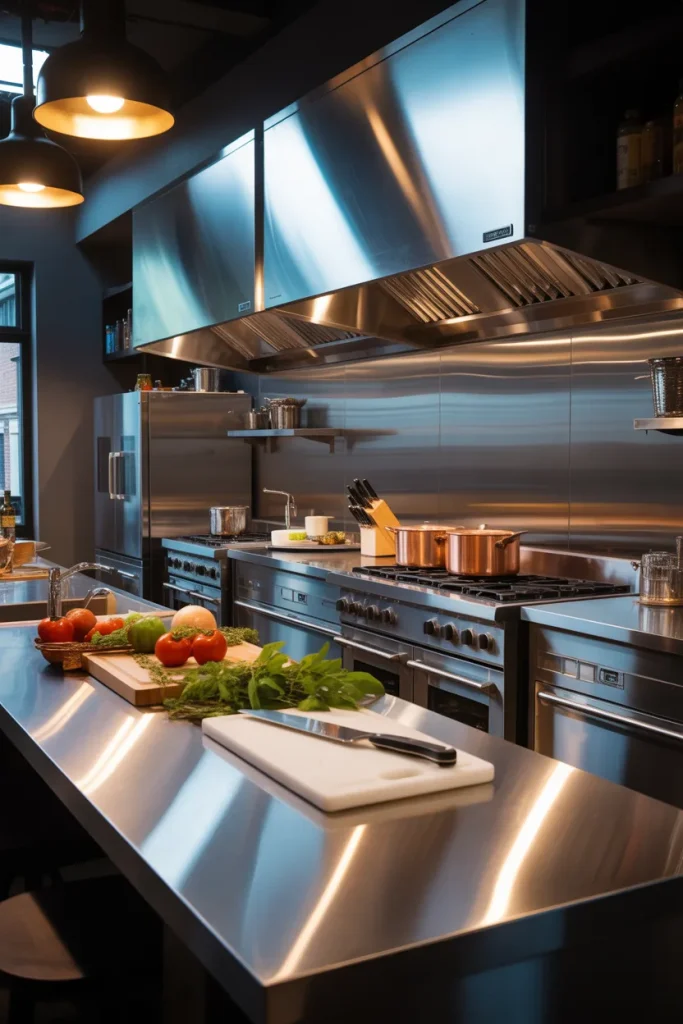
Concrete countertops are poured right in your kitchen or made off-site then installed. You can add color, embed glass chips, or leave it plain gray. The look is bold and raw.
Heat doesn’t hurt concrete. Neither do knives if you don’t chop like a maniac. But concrete cracks. Tiny hairline fractures show up as the house settles. Some people seal them. Others let them show.
You must seal concrete every year or two. Otherwise, red wine leaves a shadow. Also, concrete is heavy. Your cabinets need extra support.
Cost: 135 per square foot. It’s a DIY dream for brave homeowners. But getting a smooth, bubble-free finish takes skill.
6. Laminate Budget Hero
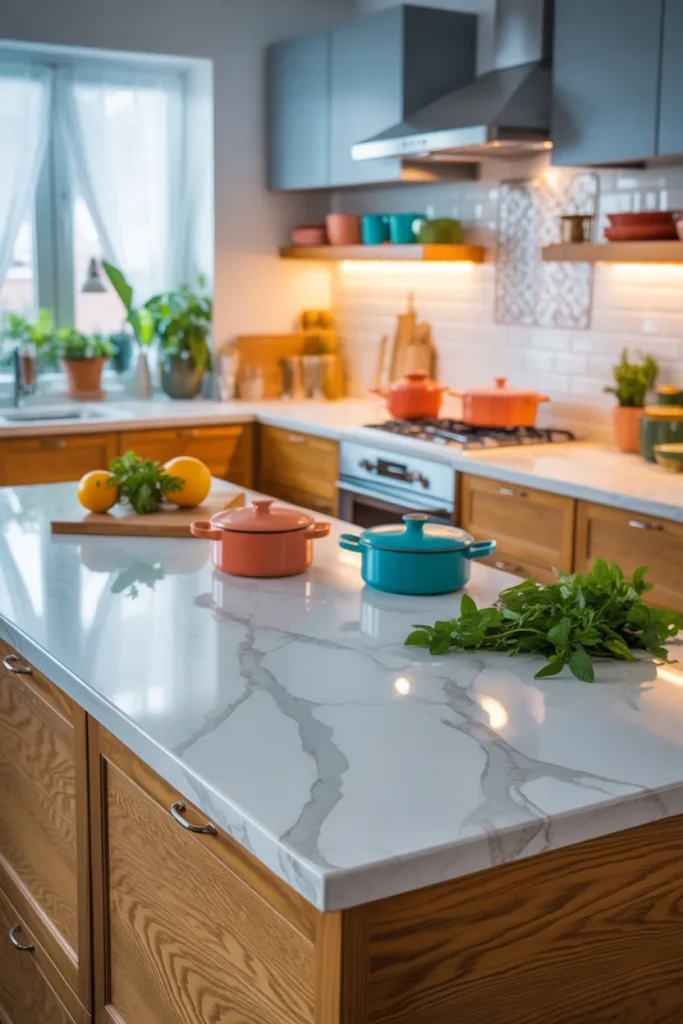
Laminate is layers of paper and resin pressed together over particle board. It’s the cheapest countertop you can buy. Prices start at $10 per square foot. That’s hard to beat.
Modern laminate looks way better than your grandma’s yellow speckled version. You can get patterns that mimic marble, wood, or concrete. The surface resists stains and cleans with soap and water.
The bad news? Laminate burns. A hot pan leaves a permanent scar. It also scratches easily. Don’t chop directly on it. And once water gets into a seam or chip, the particle board swells like a sponge.
Still, for a rental or a tight budget, laminate works fine. Just treat it gently.
7. Marble High Risk High Reward
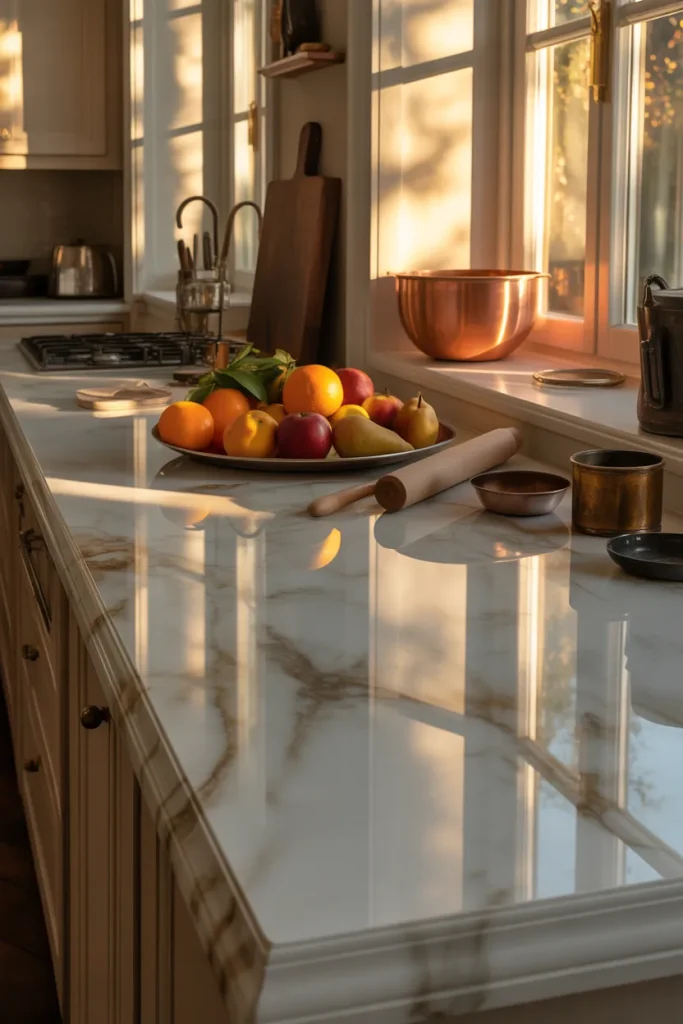
Marble is beautiful. No other stone has those soft veins and deep gloss. Pastry chefs love it because it stays cool for rolling dough.
But marble is a diva. Lemon juice eats holes in the surface. Red wine leaves a pink ghost. Scratches show up from just sliding a plate. You have to seal it every few months, and even then, accidents happen.
Some people love the “lived in” look. They call the marks patina. Others cry when their brand new marble gets its first stain.
Cost runs 250 per square foot. Only buy marble if you accept that it will change over time. If you want perfect forever, pick quartz.
8. Recycled Glass Sparkle
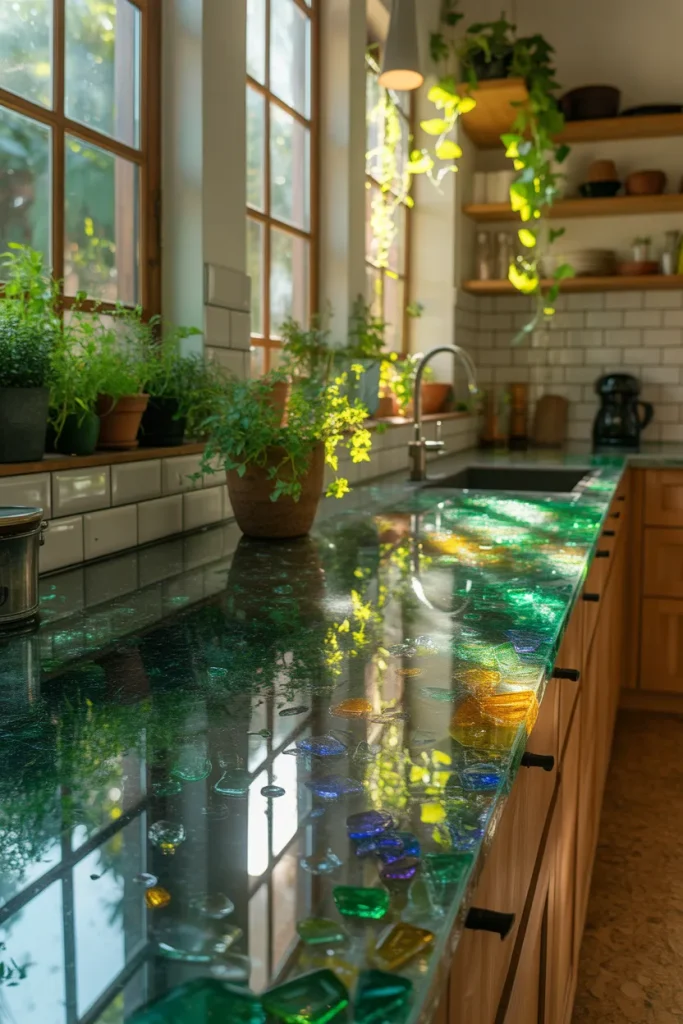
Recycled glass countertops mix crushed glass with cement or resin. The result looks like tiny colorful gems frozen in place. Light bounces through them. Your kitchen gets a unique sparkle.
These counters resist stains and heat pretty well. They also make you feel good because old bottles and jars get a second life.
Downsides? The cement version needs sealing. The resin version costs more. Also, sharp glass edges can feel rough if the finish isn’t polished smooth.
Price: 120 per square foot. Great for eco-friendly homes or anyone who wants a conversation starter.
9. Solid Surface Seamless Look
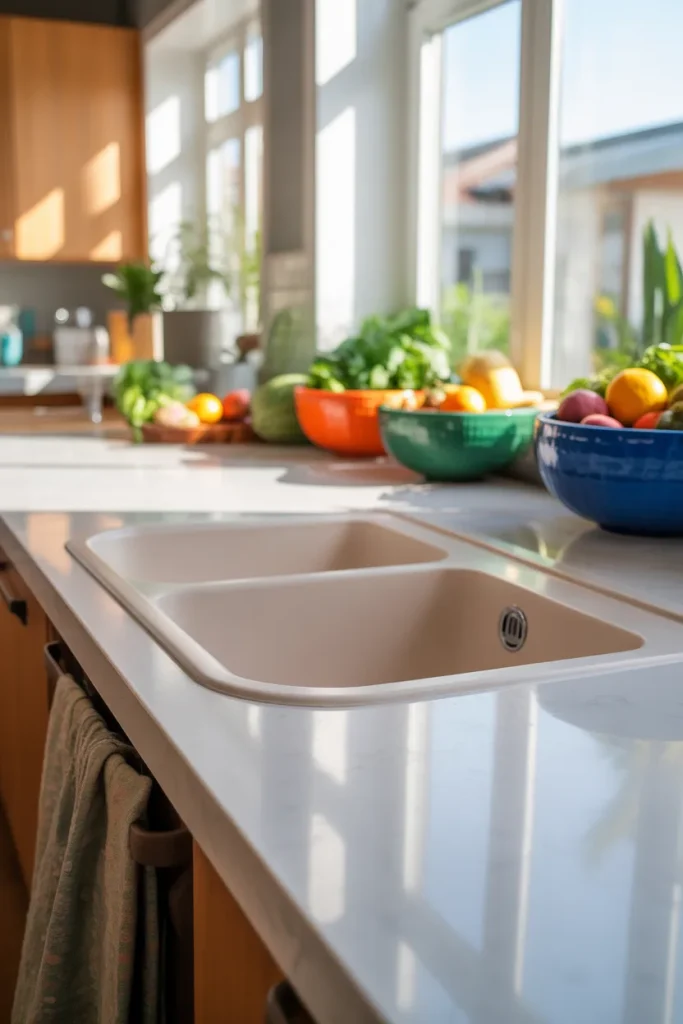
Solid surface is man-made from acrylic or polyester. Think Corian. The magic is seams. You can join pieces so perfectly that the counter looks like one single sheet.
You can also shape it into curves, sinks that disappear, or built-in drainboards. Scratches sand out with a scouring pad. Burns sand out too.
But solid surface isn’t heatproof. A hot pan melts it. Always use a trivet. Also, it can scratch easier than quartz.
Cost: 85 per square foot. It’s a middle-ground choice. Many hospitals and labs use it because it’s non-porous and easy to fix.
10. Slate Dark and Durable
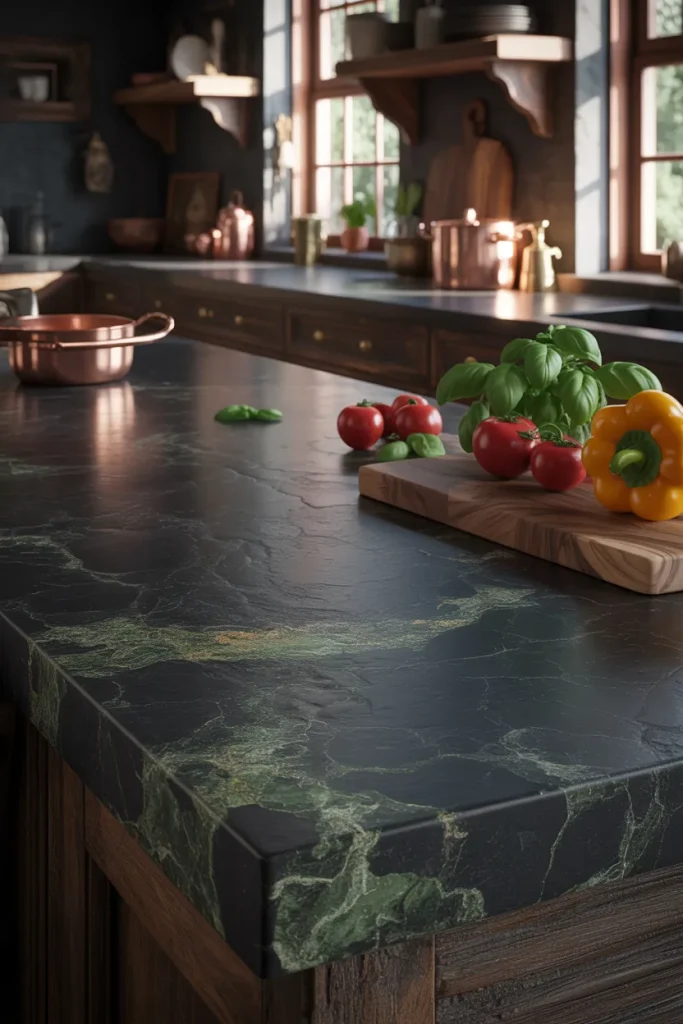
Slate is a natural stone often used for floors or chalkboards. As a countertop, it comes in deep grays, greens, or purplish tones. The surface feels slightly textured.
Slate doesn’t stain. It doesn’t burn. It doesn’t scratch easily. You can put a hot pan anywhere. Spilled coffee sits there until you wipe it.
The only real drawback? It’s dark. That means crumbs and dust show up clearly. You’ll sweep more often. Also, the texture can feel rough to some people. You can buy polished slate that feels smoother.
Price: 100 per square foot. A solid choice for rustic or modern farmhouse kitchens.
11. Porcelain Super Hard
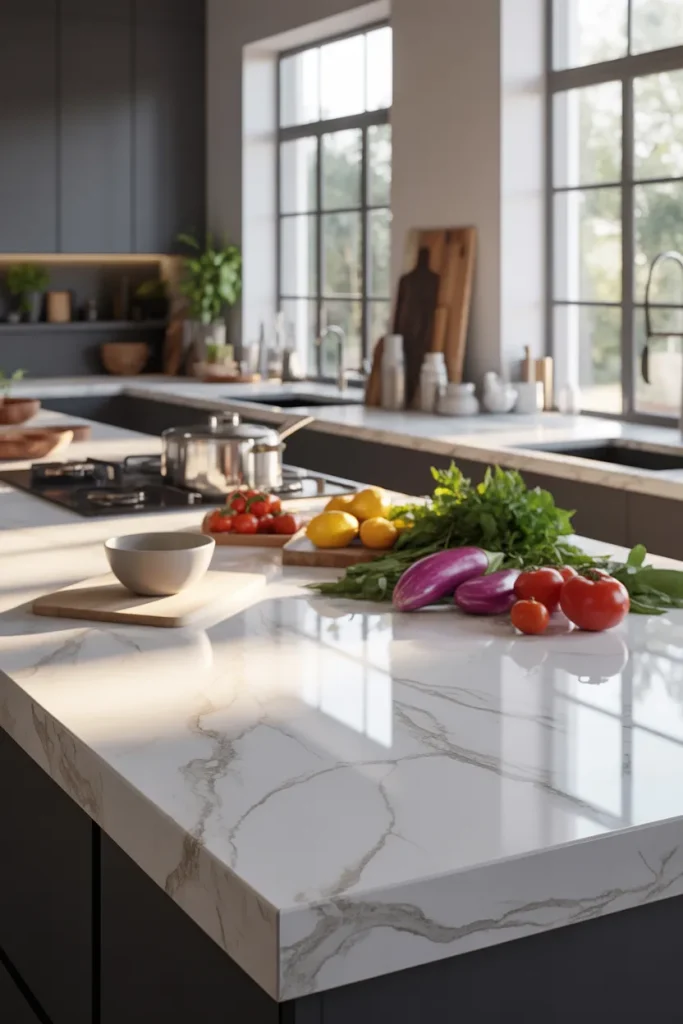
Porcelain is the same stuff as high-end floor tiles. But now it comes in huge slabs for countertops. It’s fired at insane temperatures, so heat doesn’t bother it. UV light won’t fade it. Spills wipe right off.
Porcelain can look like marble, concrete, or wood. The patterns are printed digitally, then baked in. It’s nearly impossible to scratch or stain.
Weakness? Porcelain is brittle on the edges. A hard knock can chip a corner. Also, cutting directly on it will dull your knives fast. Always use a board.
Cost: 120 per square foot. It’s gaining popularity because it gives you marble looks without marble fuss.
12. Bamboo Fast Growing Green
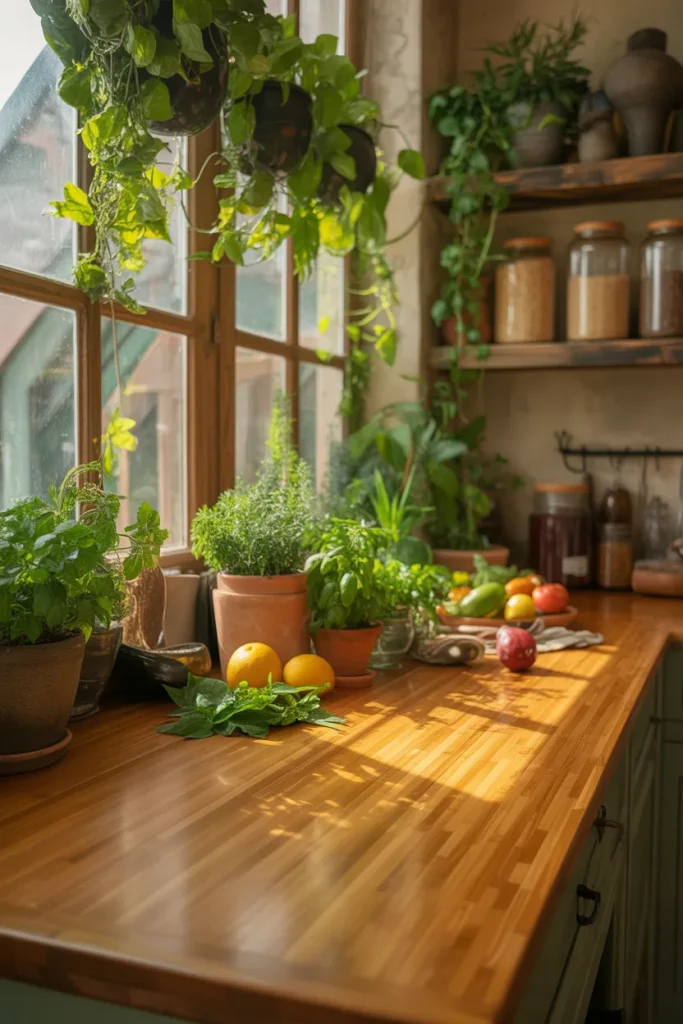
Bamboo isn’t wood. It’s grass that grows three feet per day. That makes it super renewable. Bamboo countertops look similar to butcher block but with a tighter grain. The color is usually light honey.
You can sand and oil bamboo just like wood. It resists water better than oak or maple because the fibers are dense. Knives stay sharper on bamboo than on stone.
Downsides? It can still water stain if you ignore spills. Hot pans leave marks. And cheap bamboo boards sometimes have glues that weaken over time.
Price: 50 per square foot. A great budget green option for light to medium cooking.
13. Zinc Soft Metal Patina
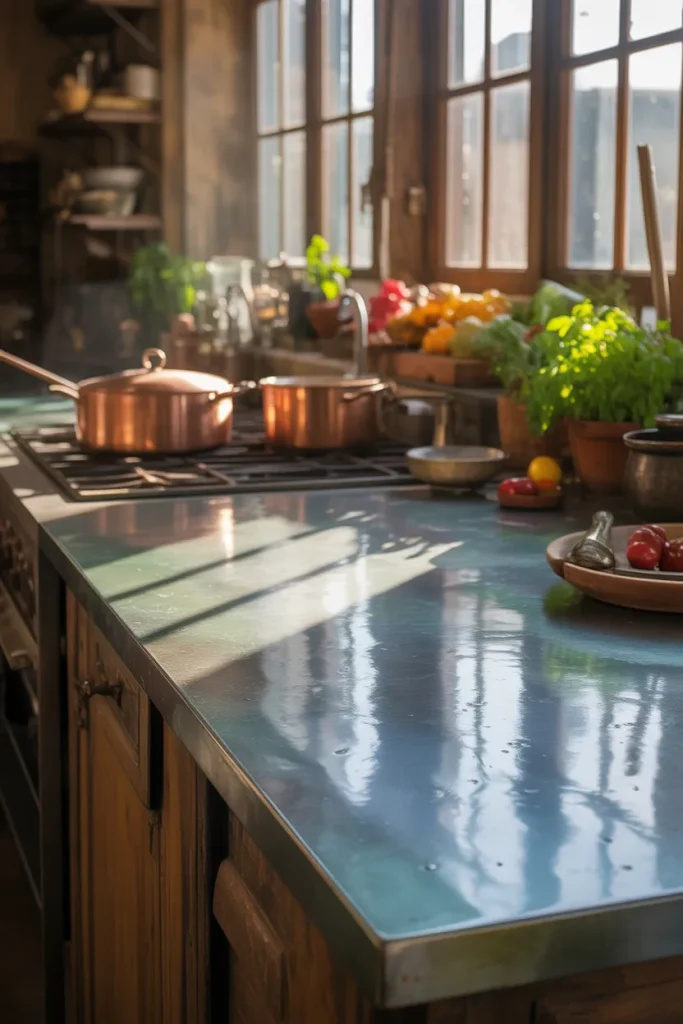
Zinc is a gray metal that changes color over time. It starts bright and silvery. Then it darkens to a soft pewter. Spots where you touch often get darker faster. That’s called patina.
Zinc is naturally antibacterial. It also hides scratches because the metal oxidizes and blends them in. Hot pans are fine. Dents add character.
But zinc is soft. A fork dropped from counter height leaves a ding. Acidic foods like citrus can leave light marks. Some people love the evolving look. Others want everything to stay the same.
Cost:  200 per square foot. It’s pricey and rare. Best for serious cooks who treat their kitchen like a workshop.
14. Paper Composite Eco Weirdo
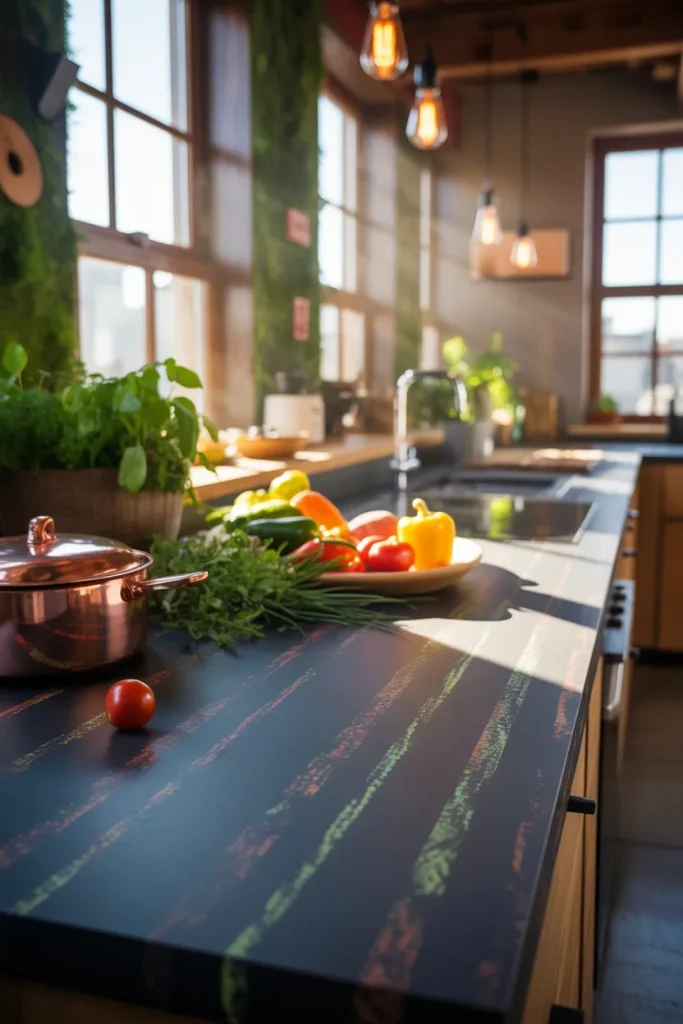
Paper composite sounds fake. But it’s real. Recycled paper mixed with resin gets pressed into hard slabs. The result looks like dark stone or slate. Colors are usually black, brown, or gray.
Paper composite resists stains, heat, and scratches incredibly well. You can put a hot pan on it. You can chop veggies directly. It’s also lightweight compared to stone.
The catch? It fades in direct sunlight. Don’t put it near a sunny window unless you want two-tone counters. Also, it’s expensive for what feels like fancy cardboard.
Price: 150 per square foot. A conversation piece for green homes or modern lofts.
15. Terrazzo Retro Comeback
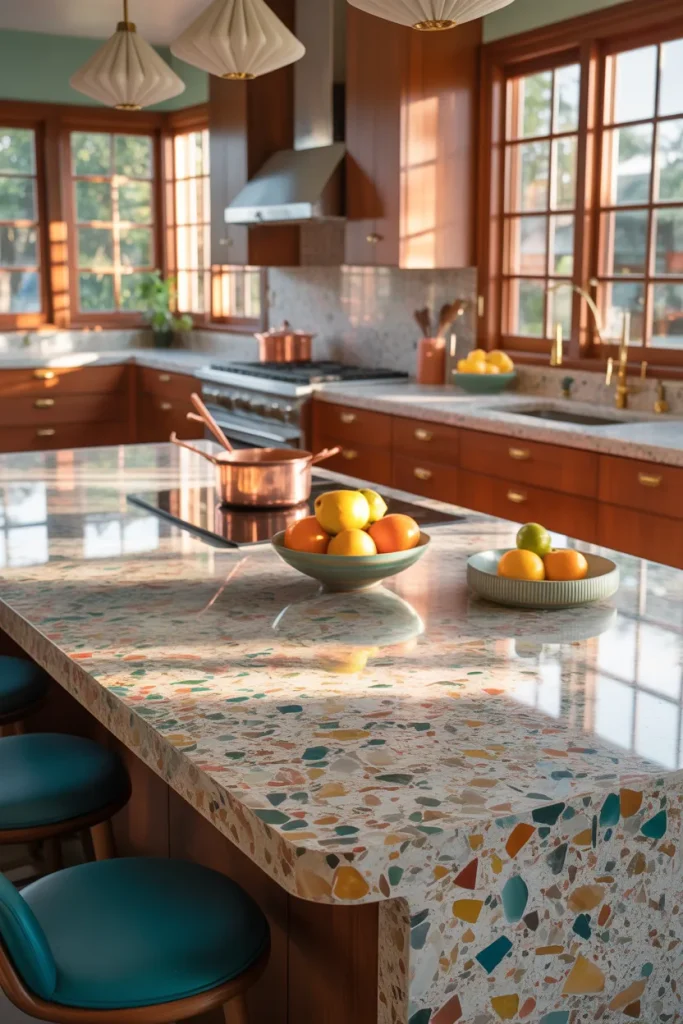
Terrazzo was huge in the 1950s. Now it’s back. Chips of marble, glass, or granite get mixed into cement or resin, then polished smooth. The result looks like confetti trapped in stone.
Terrazzo handles heat, stains, and scratches pretty well. The resin version needs no sealing. The cement version needs yearly sealing. You can even add glow-in-the-dark chips for fun.
Downside? The surface can feel slightly bumpy if not polished perfectly. Also, it’s heavy. And cheap terrazzo looks like a school hallway.
Price: 100 per square foot. Great for mid-century modern or eclectic kitchens.
Which One Fits Your Kitchen?
Think about how you actually cook. Do you boil pasta every night? You need stain resistance for tomato sauce. Do you bake bread on weekends? Marble’s cool surface helps dough. Do you have three kids under ten? Quartz or stainless steel survive chaos.
Budget matters too. Laminate costs less than a dinner out per square foot. Marble costs as much as a plane ticket. Be honest about what you can spend.
Maintenance is the hidden cost. Butcher block needs monthly oiling. Concrete needs yearly sealing. Quartz needs nothing but a sponge. Choose a level of work you’ll actually do.
Final Thoughts
Your countertop works harder than any other surface in your house. It holds hot pots, sticky juices, sharp knives, and wobbly wine glasses. Pick one that matches your cooking style, your patience for cleaning, and your bank account.
The fifteen ideas above cover every need. Want cheap and cheerful? Laminate. Want tough and carefree? Quartz. Want weird and wonderful? Paper composite or terrazzo.
Walk into your kitchen right now. Look at what you have. What bothers you most? Stains? Scratches? Boredom? Let that problem guide your choice. Then pick a countertop that solves it.
A great countertop doesn’t scream for attention. It just takes the heat, wipes clean, and stays quiet while you make dinner. Now go find yours.