15 Stone Kitchen Island Ideas
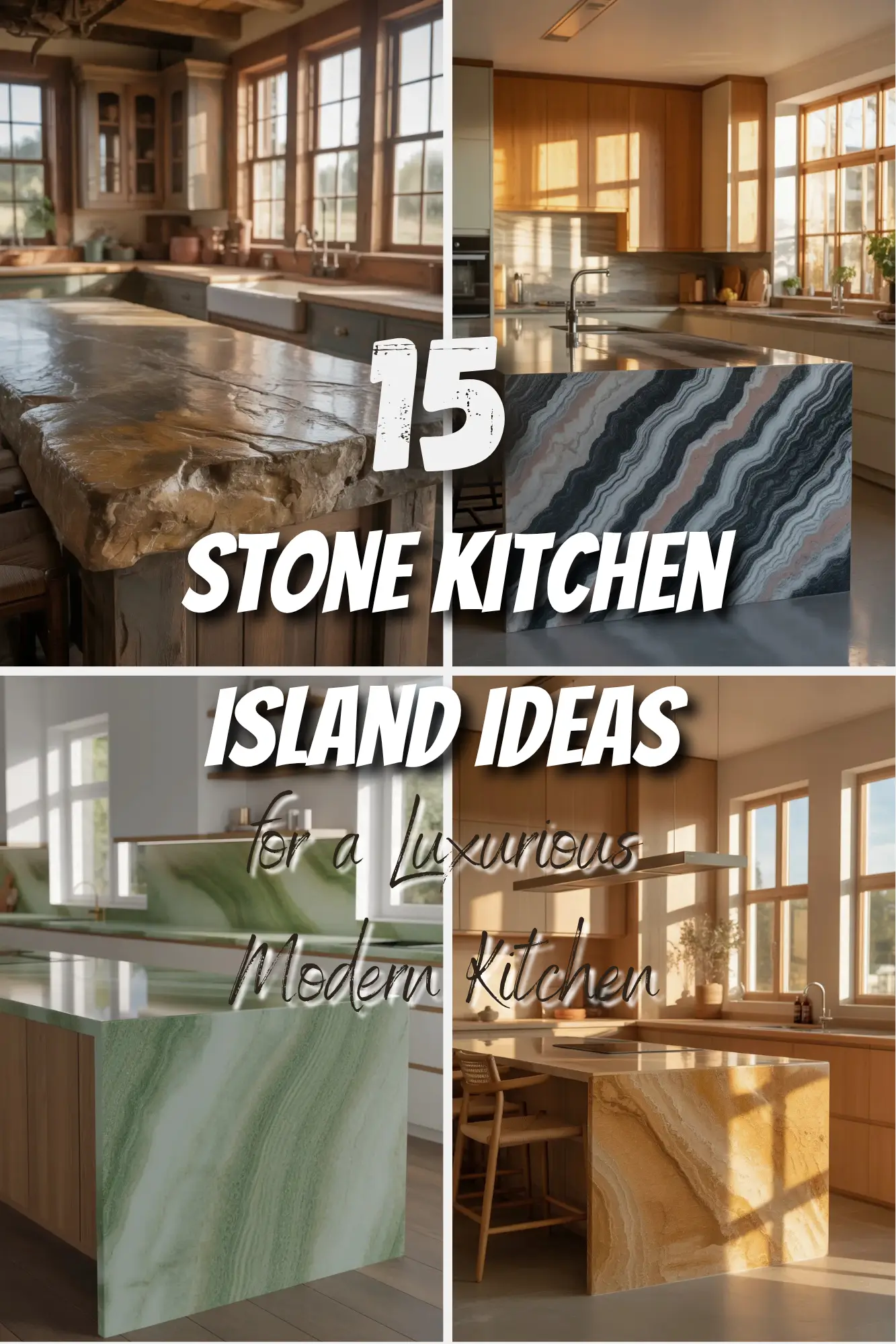
You slap a hot pizza box on your kitchen island. Then you drip tomato sauce. Then you forget to wipe it up. With the wrong countertop, that sauce leaves a ghost stain forever. But with the right stone? You just breathe and wipe. That is the power of a stone kitchen island.
A kitchen island is not just a table in the middle of the room. It is where cereal bowls land before school. Where homework gets sticky with glue. Where friends lean while you chop onions and cry. So the surface has to work hard. Wood scratches. Laminate peels. Tile grout traps crumbs like a trap. But stone? Stone fights back. It takes heat, spills, and elbows without whining.
You have fifteen different ways to use stone on your island. Some are fancy. Some are rugged. Some cost less than you think. But every single one changes how your kitchen feels and works. Let us walk through them one by one. No boring lists. Just real ideas you can actually use.
1. Honed Granite That Hides Fingerprints
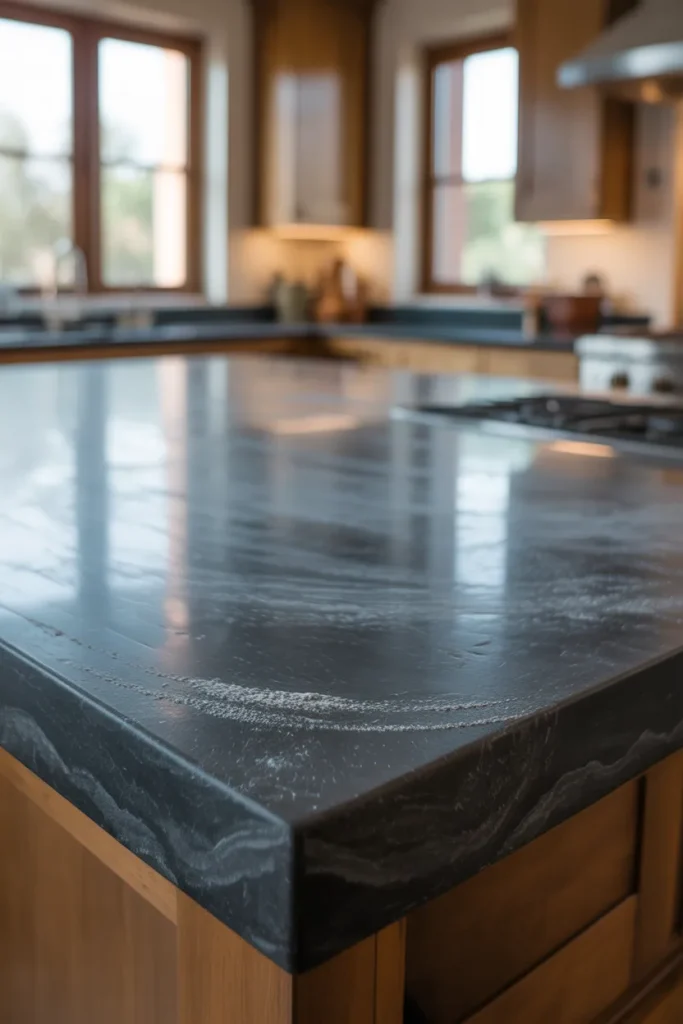
Most people buy polished granite because it shines like a mirror. Big mistake. That shine shows every wet glass ring and every greasy finger. Instead, ask for honed granite. Honed means they grind the surface until it feels smooth like a river rock. No shine. No glare. You can leave a sticky jam knife on it, and nobody sees a mark.
Honed granite works best for busy families. Your kids can drag their backpacks across it. You can knead dough without the dough sliding around. Plus, the soft, flat look feels modern but not cold. Choose a dark color like Absolute Black or a charcoal gray. Then watch how you stop wiping the island every five minutes. Freedom.
2. Soapstone That Acts Like Old Denim

Soapstone does not try to look perfect. It arrives with a soft, gray look that reminds you of an old pair of jeans. When you rub your hand over it, it feels almost waxy. That is because soapstone has natural oils inside it. Those oils also make it non-porous, which is a fancy way of saying nothing soaks in.
You can put a hot pan right on soapstone. No trivet needed. You can spill red wine. It just sits there until you wipe. The cool part? Soapstone scratches, but those scratches look like character. Some people even sand the scratches out. Others let the stone grow darker and richer over time. Either way, your island starts telling a story.
3. Marble With a Leathered Finish
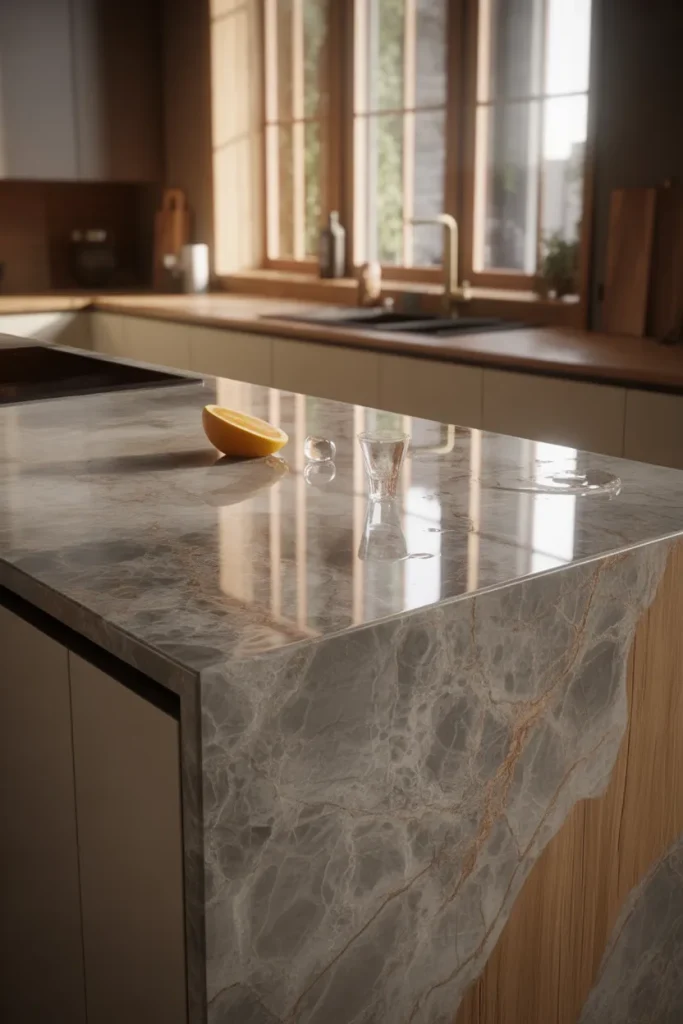
Wait, marble? The stone that stains if you look at it wrong? Yes, but only if you buy polished marble. Polished marble is soft and needy. It etches from lemon juice. It absorbs oil. It throws a fit. But leathered marble is a different animal. The leather finish comes from brushing the stone with diamond-tipped brushes. That process closes up the tiny holes where spills sneak in.
Leathered marble also feels bumpy like orange peel. That bumpy texture hides crumbs and water spots. You get the beautiful veins of marble without the drama. Use it on a small island if you are nervous. Or go all in on a big slab. Just remember to seal it once a year. That is one afternoon of work for years of peace.
4. Slate That Costs Half the Price
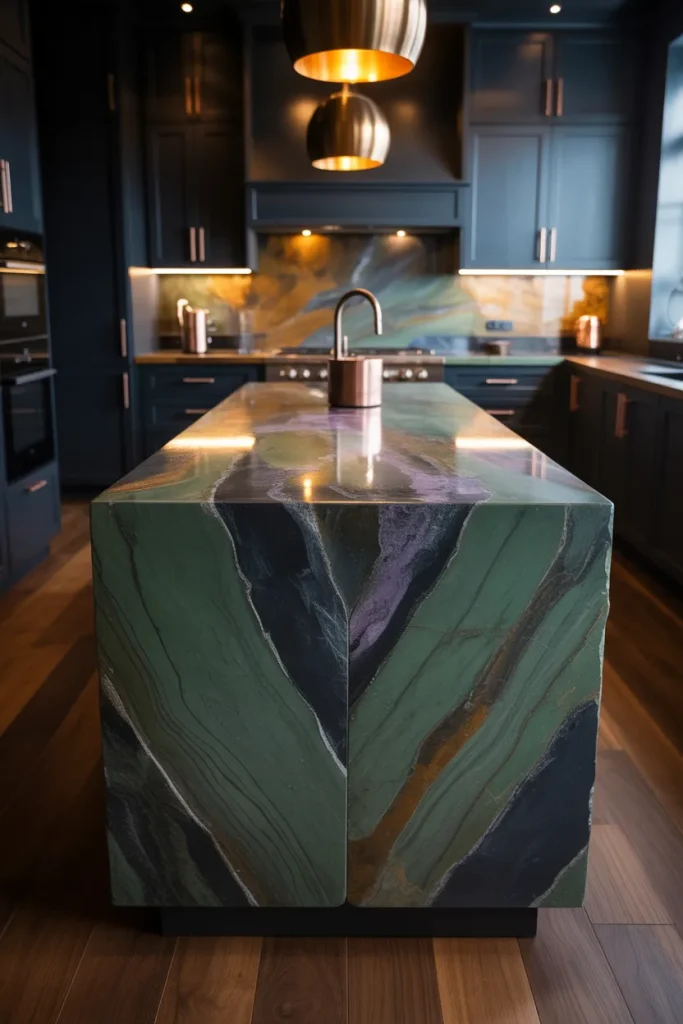
Everyone runs to granite or quartz. They skip slate because they think it is just for floors. But slate makes a killer island top. It comes in deep greens, charcoals, and purples that nobody else has. Slate also laughs at heat. You could put a roasting pan straight from a 450-degree oven onto slate. Nothing happens.
Slate does not need fancy sealing either. A little mineral oil every few months keeps it happy. The best part? Slate often costs half what granite costs. You can find remnants from flooring jobs for almost nothing. One warning: slate can chip on the edges. So ask the fabricator to round the corners. That small fix makes the stone last for decades.
5. Quartzite That Fools Everyone
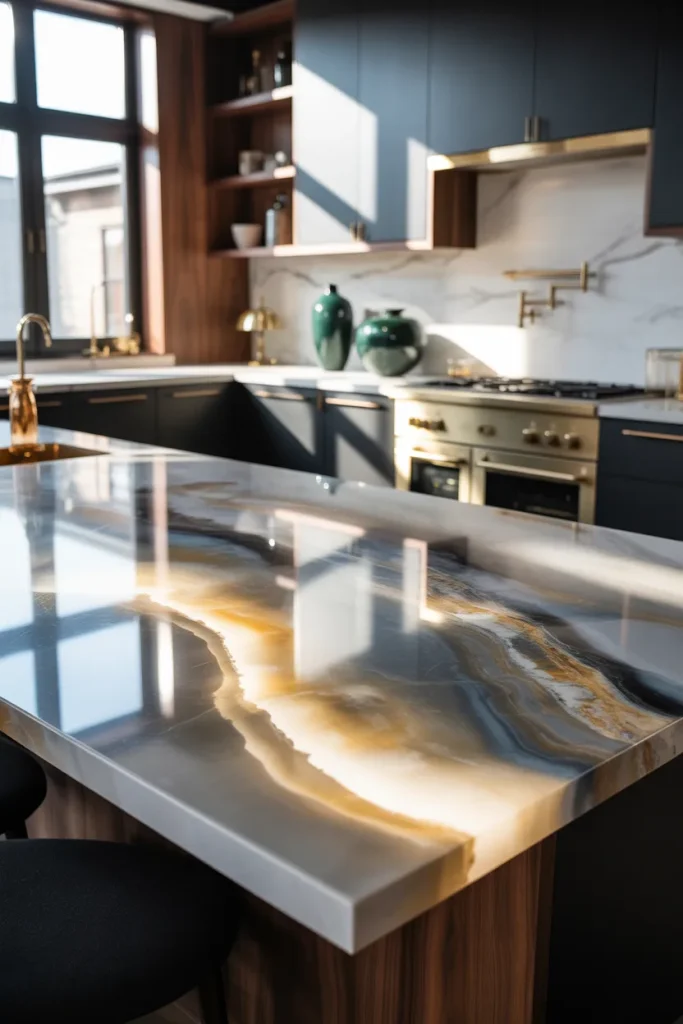
Quartzite sounds like quartz, but it is not the same. Quartz is man-made in a factory. Quartzite is nature’s own superhero. It looks like marble but acts like granite. The stone starts as sandstone and then cooks under crazy heat and pressure underground. When it comes out, it is harder than granite. Harder than knives. Harder than your mother-in-law’s opinions.
You can drag a cast iron pan across quartzite. No scratch. You can spill beet juice. No stain. The only downside is price. Quartzite sits near the top of the stone mountain. But if you want marble’s pretty veins without the babysitting, quartzite is your answer. Just make sure the slab is real quartzite. Some sellers lie. Take a glass marble and scratch it on a corner. If the marble leaves a mark, it is not real quartzite.
6. Limestone Tumbled for Old-World Feel
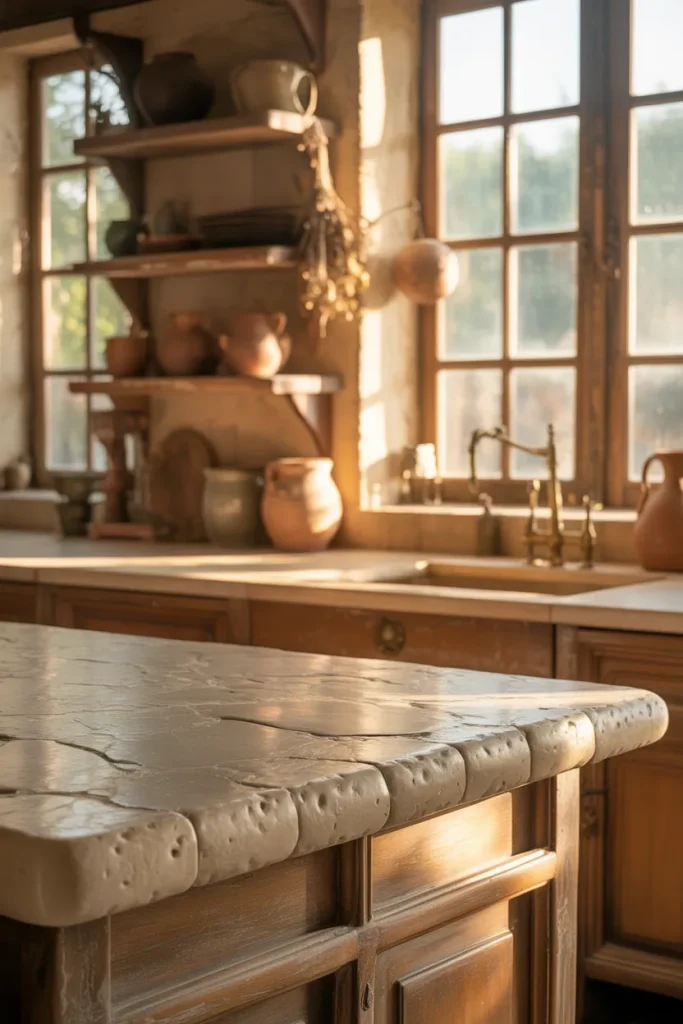
Limestone feels soft and creamy. It reminds you of old European farmhouses where bread rose on wooden boards. But raw limestone stains faster than a white shirt at a spaghetti dinner. Tumbled limestone solves that. Tumbling means the stone goes into a machine that knocks off the sharp edges and closes the pores.
The result looks aged and worn in a good way. You get small indentations where the stone chipped during tumbling. Those little dips catch light and shadow. Use tumbled limestone if your kitchen style is rustic or cottage. Pair it with open shelves and a farmhouse sink. Just seal it twice a year with a penetrating sealer. That small habit keeps your island looking like a million bucks.
7. Basalt That Brings the Drama

Basalt is volcanic rock. It is what happens when lava hits cold water and freaks out. The stone ends up black as coffee and dense as a brick. Basalt handles anything you throw at it. Hot oil? Fine. Frozen meat? Fine. Your kid hammering a toy truck on it? Also fine.
But basalt is not just tough. It is beautiful in a dark, moody way. Pair a basalt island with light cabinets and white walls. The contrast will make your kitchen look like a magazine. One thing to know: basalt shows dust. You will see every crumb. So if you are a messy cook, maybe pick a lighter stone. But if you love cleaning as you go, basalt rewards you with sleek, modern vibes.
8. Travertine Filled and Honed
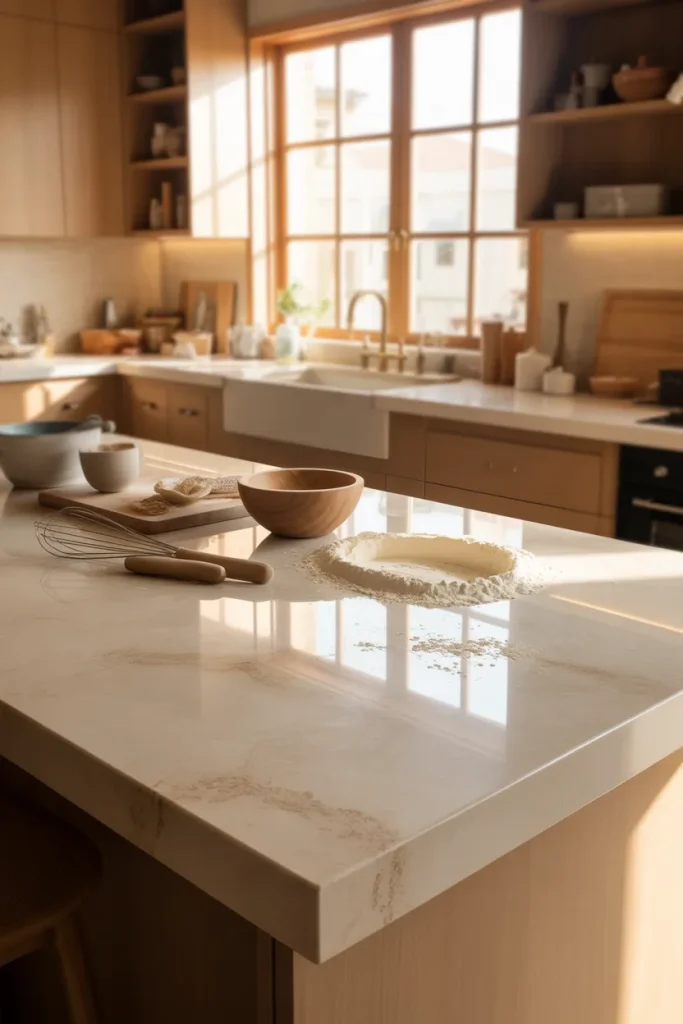
Travertine has tiny holes like Swiss cheese. Raw travertine traps salsa and peanut butter in those holes. Gross. But when you buy filled and honed travertine, workers pack resin into every hole and then sand the surface flat. Now you have a creamy, beige stone with zero hiding spots for bacteria.
Filled and honed travertine feels warm under your arms. It does not suck heat from your food like some stones. Put a warm pie plate on it, and the pie stays warm longer. Use this stone if you bake a lot or have cold hands. The soft beige color also hides crumbs better than white or black. Just reseal every two years. Easy.
9. Pietra Cardosa From Italy
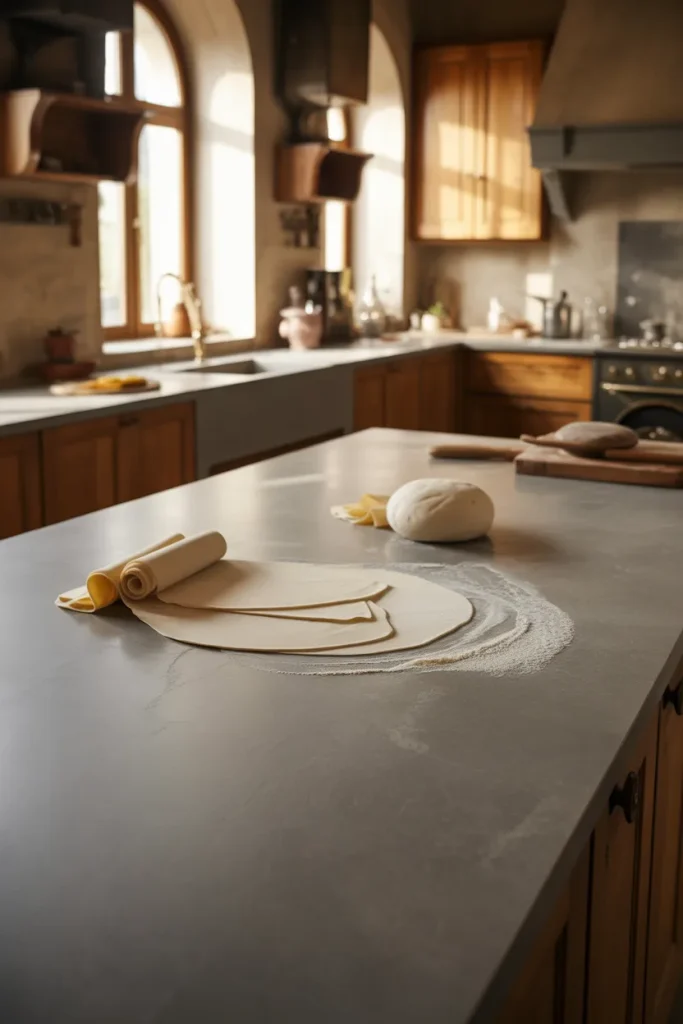
Pietra Cardosa sounds fancy because it comes from Italy. But it is actually a gray siltstone that behaves like a cheaper version of soapstone. It has a smooth, matte finish that never looks shiny. It also resists acid, so lemon juice and vinegar do nothing.
Italian cooks have used Pietra Cardosa for hundreds of years. They roll pasta directly on it. They set hot pans on it. They wipe it down with water and a rag. That is it. No special cleaners. No expensive sealers. The stone costs more than slate but less than quartzite. Order a sample first because the gray color ranges from almost white to dark thundercloud. Pick the one that matches your cabinets.
10. Recycled Glass and Stone Composite
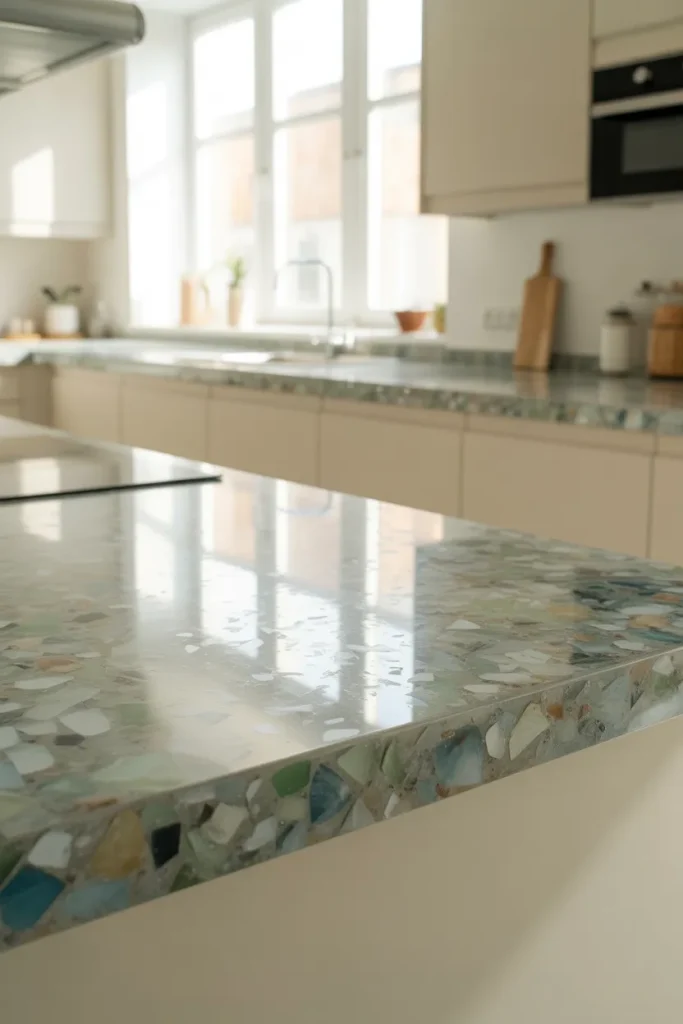
This one is not a single stone, but a mix of crushed stone and recycled glass held together with resin. The result looks like a galaxy of tiny sparkles. You can get it in any color because the factory adds pigments. Green glass chips with white stone. Blue glass with black stone. Pink even, if that is your thing.
The composite surface is non-porous, which means zero sealing. Ever. Spills sit on top until you wipe. And because it has stone in it, you get the weight and feel of real rock. The price sits between laminate and granite. Big box stores sell it under names like Ice Stone or Vetrazzo. One catch: do not put a screaming hot pan directly on it. The resin can scorch. But a trivet solves that.
11. Sandstone With a Water-Repellent Coat
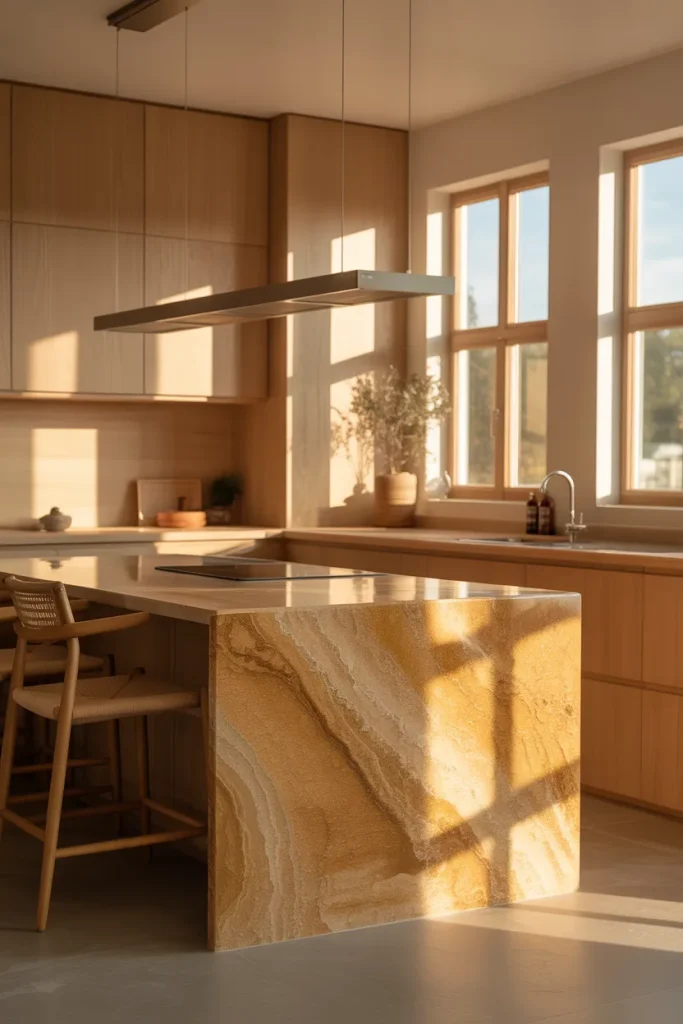
Sandstone is beautiful but thirsty. A raw sandstone island would drink your coffee like a sponge. But you can buy sandstone that comes pre-treated with a water-repellent coating. The coating fills the pores without changing the look. You still see the tiny sand grains and the warm tan colors.
Treated sandstone works well for kitchens that do not see heavy chopping. Think breakfast nook islands or bar-top islands. The stone feels slightly grippy, so glasses do not slide. Keep a small bottle of stone-safe sealer under your sink. Spray it once a year. That is the only special care. And because sandstone is common, prices stay low.
12. Onyx Backlit for Night Owls
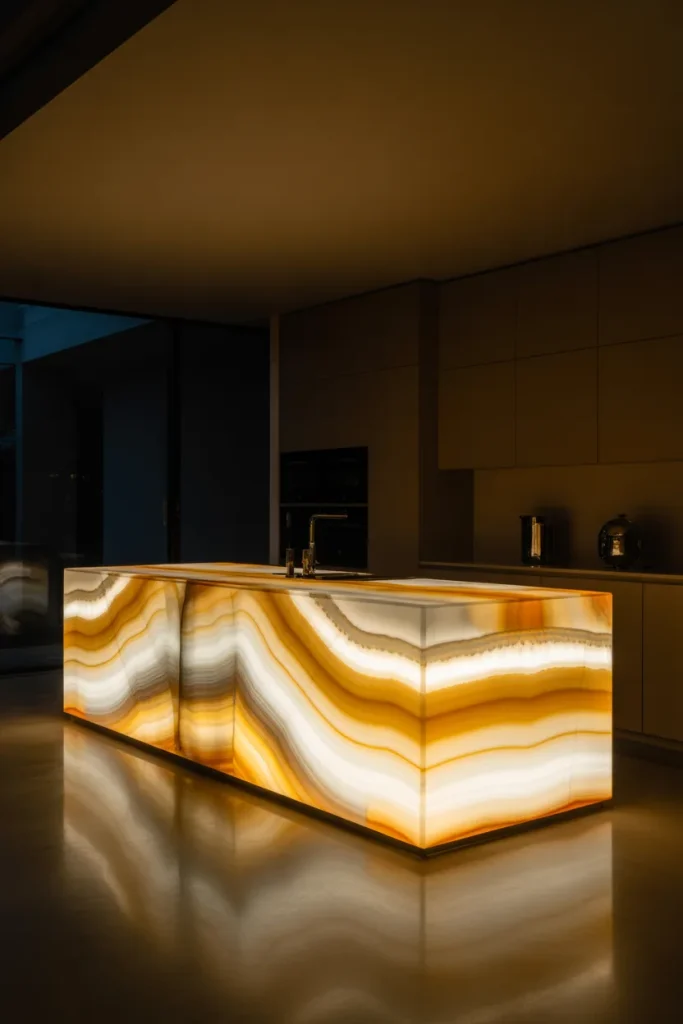
Onyx is not a tough stone. It scratches if you look at wrong. It stains from water. So why put it on an island? Because you do not put it on the whole island. Instead, you install a thin slab of onyx as a vertical panel on the island’s front or as a small insert. Then you put LED lights behind it.
When you turn on the lights at night, the onyx glows like a sunset. You see swirling bands of orange, gold, and white. It turns your island into a piece of art. Use onyx only where nobody will spill or chop. Keep it away from the sink. Clean it with a dry microfiber cloth. This idea is for show, not for work. But sometimes a kitchen needs a little magic.
13. Serpentine That Fights Acid
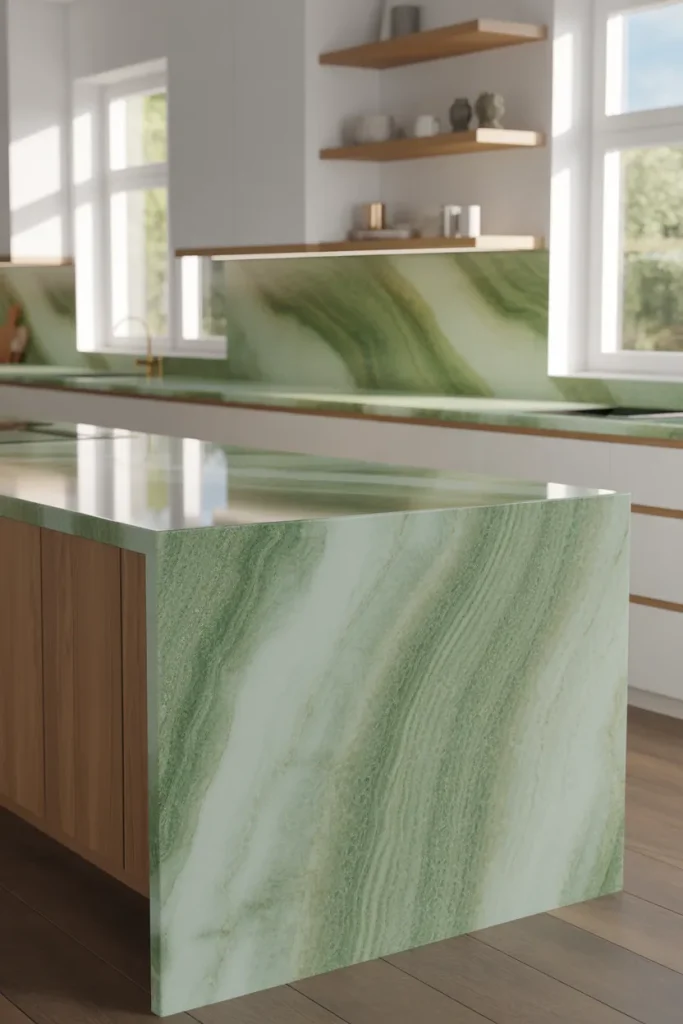
Serpentine is a green stone that looks like snake skin. It has a waxy feel and high levels of magnesium. That magnesium makes it resistant to acid. You can spill lemon juice, wine, or soda. The stone does not flinch. Serpentine also handles heat like a champ.
The green color ranges from pale mint to deep forest. Pair it with white cabinets for a fresh, springtime look. Or pair it with dark wood for a moody den vibe. Serpentine is less common, so you may need to hunt for a fabricator. But the hunt pays off because nobody else on your block will have a green stone island. Just seal it when you first install it. After that, you are done for years.
14. Gneiss (Pronounced “Nice”)
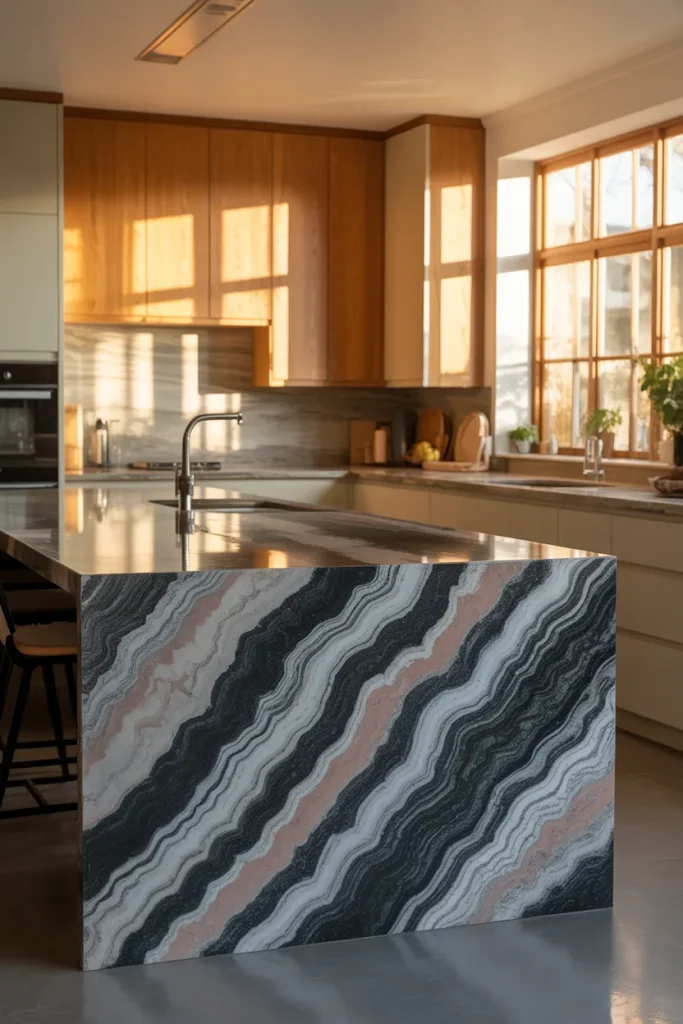
Say the word slowly. Gneiss. It sounds like “nice” because it is nice to work with. Gneiss forms when granite gets cooked again deep in the earth. The second cooking creates wavy bands of black, white, and pink. Those bands look like moving water frozen in time.
Gneiss is harder than granite. It does not chip. It does not scratch. It barely stains. You can treat it like a workhorse and it will thank you by looking better every year. Use gneiss if you have a large island where the whole family gathers. The wavy pattern hides messes well. Clean it with dish soap and water. No special potions needed.
15. Fieldstone Slabs for Farmhouse Soul
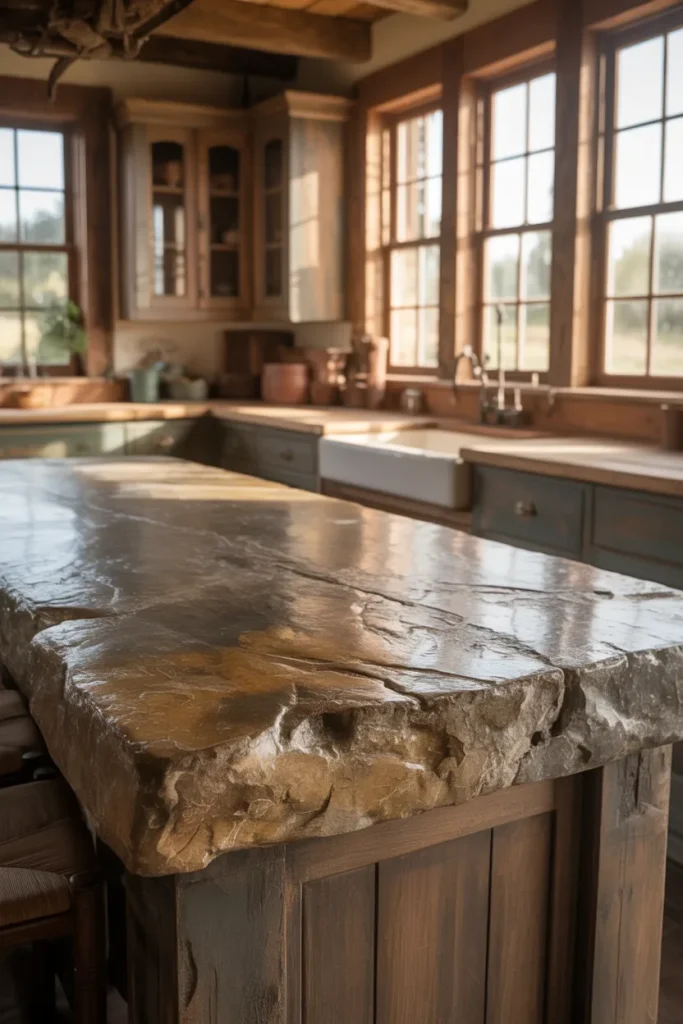
Fieldstone is what farmers pulled from their fields for hundreds of years. It is rough, uneven, and full of character. Most people use fieldstone for walls or fireplaces. But you can cut fieldstone into thick slabs for an island top. The surface will not be flat like a factory countertop. It will have dips and ridges.
That uneven surface is perfect for rolling dough because the dough does not stick. It also hides every crumb and spill. You do not clean a fieldstone island. You brush it with a stiff broom. Seal it with a penetrating sealer every year to keep water out. This idea only works if your kitchen is already rustic or farmhouse. But if it is, fieldstone will make your island the heart of the home.
Conclusion
You now have fifteen real stone ideas. Some are tough. Some are beautiful. Some cost little. Some ask for more care. But every single one beats a cheap laminate or a scratched wood top.
The best stone for your kitchen island is the one that fits your actual life. Do you have three kids who eat while standing? Get honed granite or soapstone. Do you bake bread on weekends? Try leathered marble or fieldstone. Do you want to impress guests with something wild? Backlit onyx or serpentine will do the trick.
Walk into a stone yard with this list in your hand. Touch the samples. Run your fingernail across them. Imagine your messy, beautiful, noisy life happening on that surface. Then pick the stone that says “yes” to all of it. Your island will still be there in twenty years, holding up pizza boxes and homework and memories. That is the whole point.